Home » economy (Page 3)
Category Archives: economy
How much Prosperity?
Around 2009 economist Tim Jackson wrote a book called “Prosperity without Growth” that attracted the attention of policy makers worldwide. Maybe the excitement was mainly in the academic community, but I do know that Tim Jackson was sought after by policy makers and politicians for several years after the publication of his work. I assume the latter were looking for advice about ways to institute policies that would ensure deep systemic change. Of course they did not get any useful information. Jackson’s answers only showed what had to be done, not how to do it. That ‘how to’ is the preserve of politicians and, ultimately us, the electorate.
This brings me to the real reason for failures of governance. Us. We. The. People. Many years ago I had a brief interview with the foreign minister of a country and asked him why he did not implement what we both agreed would be a common sense measure to enhance regional food security at practically no cost. The helplessness implicit in his reply was illuminating. One of the ‘aha’ moments of my life. “Bring me a mandate,” the minister said, “and I will gladly take this decision.” In that moment, like cascading coins from a slot machine, the realization dawned. In democracies, it is us. We have to use our starling intelligence, as members of the swarm to mould societies as we wish. In travels through many countries I’ve noticed that where people sit back and complain about the government, the corruption, the lousy politicians; they are not doing anything much to change the status quo.
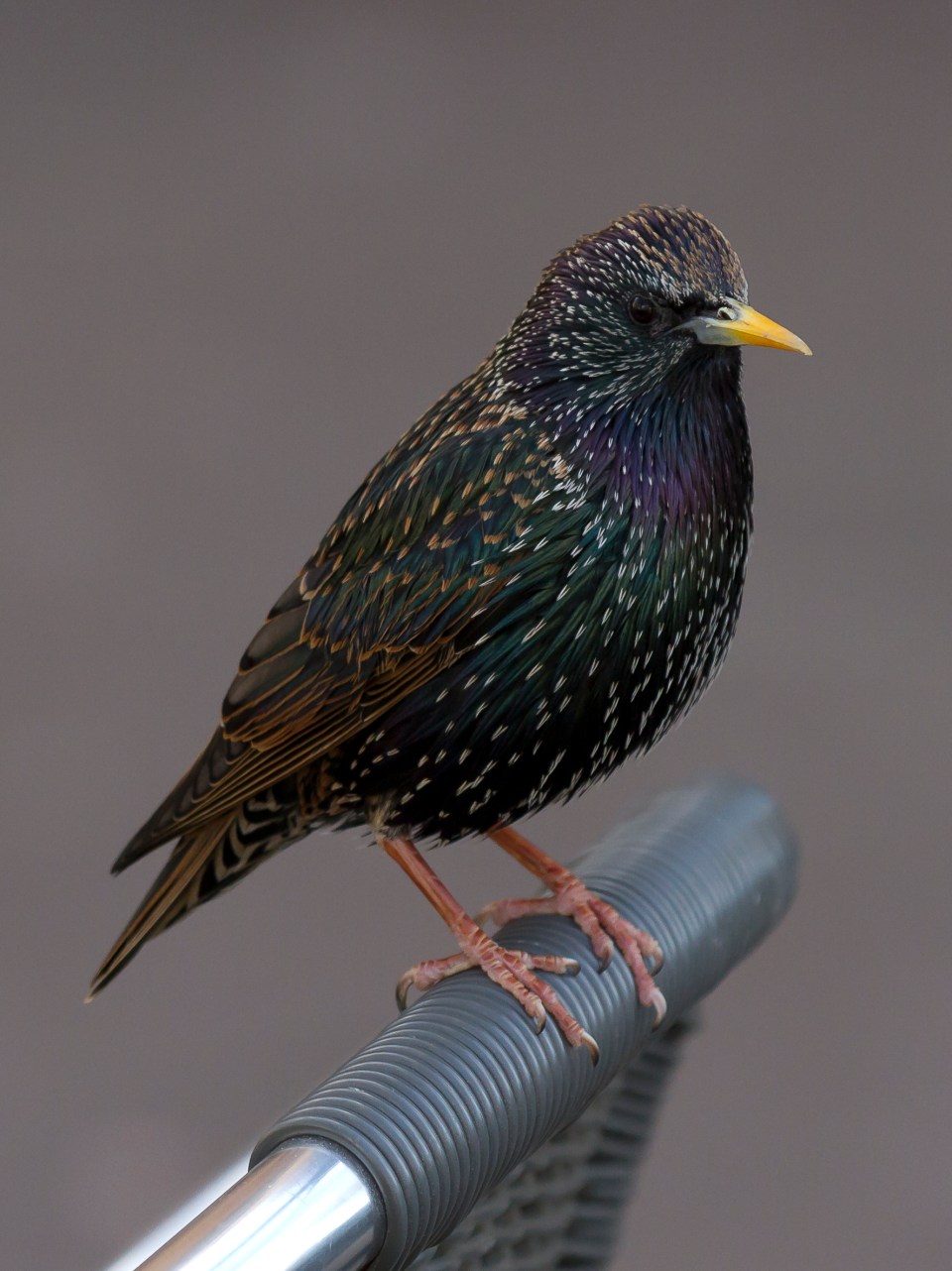
Starling image courtesy Wikipedia
In the words of George Monbiot, writing in the Guardian, we have only the one planet, but we’re living a four-planet lifestyle. In 2018 Earth Overshoot Day fell already on the 1st of August. This is the earliest date since the practice began in the 1970s, calculated by the WWF and the Global Footprint Network. This is the date when humanity’s annual demand on Nature exceeds what the Earth can regenerate over the entire year. In other words, this is the date when we begin to rob the bank. And most of us, good people, in our struggle to provide a comfortable life for our families, in ensuring livelihoods for our children, are totally oblivious to this. So before the politicians act, we have to change ourselves, reduce our demands on the planet. Sometimes this can mean enriching our lives by doing more with less. And very often this change begins with an inward journey that only we can make. No politician can ever do this for us. The transformation that the world needs is inside of us. All of us.
Stewardship of the Earth – R.I.P. Simba
Many years ago, I was shocked when an economist friend of mine (not you, Larry) said “so what?” in response to my moaning about arctic sea ice loss and the threat of extinction to polar bears. The economist in question is a thoughtful, gentle human being who would never think of himself as cruel or unkind. But he was thinking in terms of economic resources for human needs and, like a lot of people, myself included, who are stuck in their heads (i.e. nurture their intellect and take pride in it), they see themselves as thinking people, and therefore naturally superior – unthinkingly superior – to all other living things.
I came to humility rather late in life. This late-found humility was triggered by a number of factors; the increasing number of vegetarians and vegans in my circle of acquaintance, the anti cow-slaughter movement in India, increasing evidence of methane emissions from cattle farming for meat, and a video about South African Anna Breytenbach who has made interspecies communication her life’s work. I had always appreciated animal pets as sentient beings, but Breytenbach’s work, in particular, brought me to see them at eye level so to speak, dispelling any vestigial notion of superiority. Yes, we can think faster, outwit them in IQ tests, juggle, ride bicycles, add numbers, make wars – and exploit our planet – much better than they ever can. Despite all this, if we don’t recognise them as sentient beings with as much right to live as we do, then we put our own humanity, and humankind, at risk.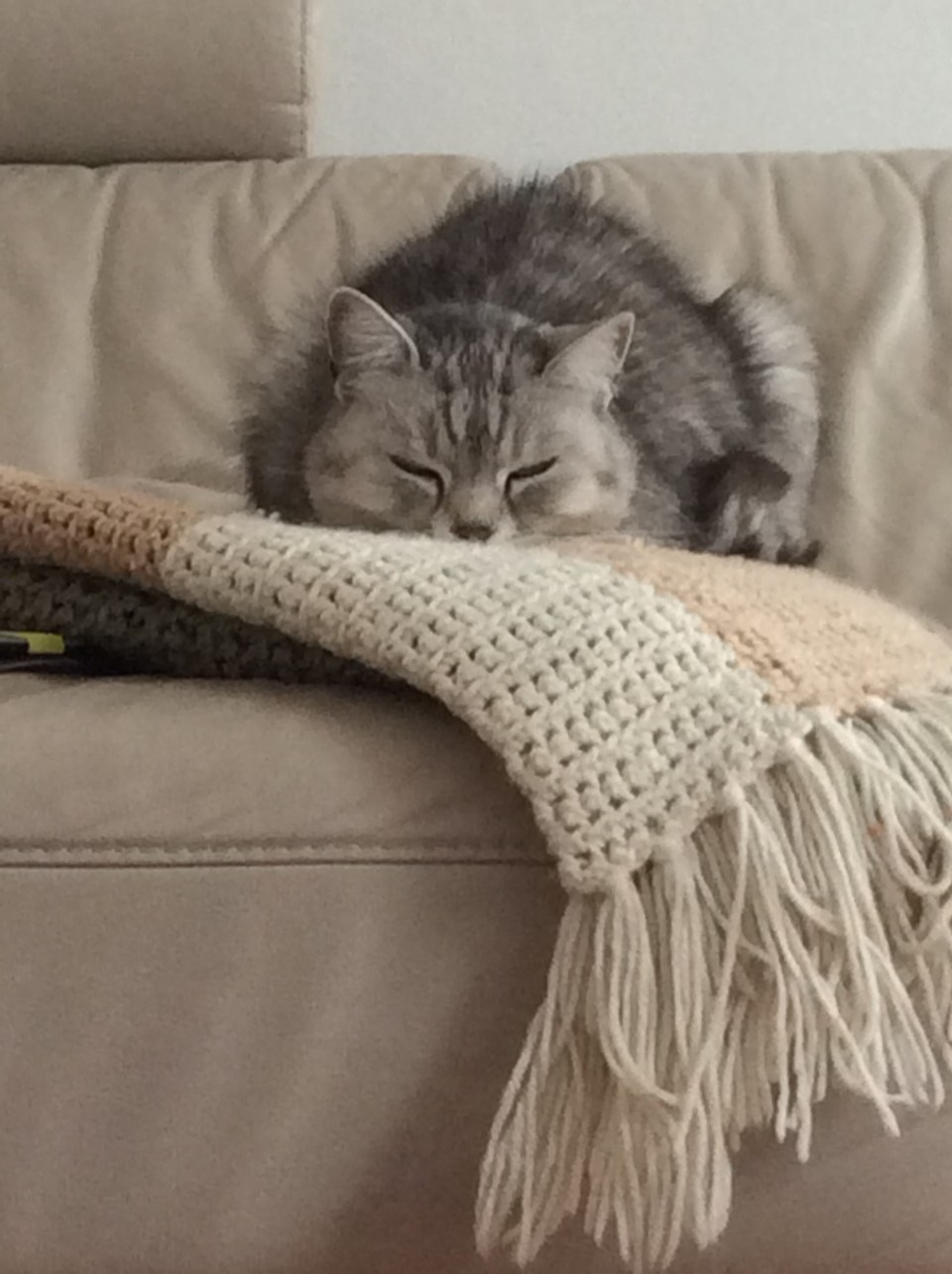
A friend recently remarked on the number of stray dogs in her neighbourhood. She complained that animal rights activists were busy protecting the rights of the dogs, while ignoring the plight of poor people in the same area who were struggling to eke out a living. I neglected to point out at the time that a government that does not respect the rights of animals as sentient beings is much less likely to respect the rights of economically powerless people. Take the case of infrastructure. When have rich people ever lost their homes and land to make way for a dam? If you can show me an example, I would wager they were richly compensated and ended up materially better off than before. Never so in the case of the poor. The same applies to roads. An eight-lane highway is deemed necessary and land is appropriated, very often from people who can never afford to use that highway.
And so I come in this roundabout way to the fact that Simba died two nights ago. This blog posting is a mark of respect to the passing of a much loved animal. She was only a cat, but she was a sentient being. R.I.P. Simba.
A Gift to Gaia
The world is full of stuff and many parts of the world are drowning in it. Except for those parts of the world where people don’t have any stuff at all. Nothing to speak of.
Within our family, we stopped giving stuff as gifts quite some time ago. Nowadays, we mark occasions such as birthdays, anniversaries and significant celebrations with the gift of time.
The planet has plenty of time to spare, even though humanity does not. In a few hundred years, or a thousand years, even if mankind has pursued its current illusion of prosperity to oblivion, the planet will sedately roll on, and prosper without us. Just as it prospered long after the last dinosaur ceased to exist.
When Isaac Watts wrote his hymn, based on the 90th Psalm, he was not thinking of humanity’s self-induced annihilation as he composed the following lines.
Time like an ever rolling stream, bears all its sons away
They fly forgotten as a dream, dies at the opening day.
For those ‘successful’ busy people who have no time at all to spare, here’s a suggestion for a gift of stuff that’s actually a gift to the planet and buys us time. This gift has the added benefit of helping people who don’t have much stuff at all. Here’s a link to an Impact Calculator from Solar Aid. With enough gifts like these, perhaps one day we can sit down with Gaia and have the last laugh together.

Image: courtesy greenlightplanet.com
Soccer as Development: Rooting for Senegal
Aristotle famously said, one swallow does not a summer make. In the same vein, one could also say, eleven soccer players do not a nation make. Nevertheless, the collective pride of a nation gathers behind its soccer team once every four years while millions of people take heart or lose hope when their national team scores goals or is defeated. One way of looking at soccer is as a proxy war. Much better to slug it out on the soccer field than on the battlefield. But to my mind there’s a connection between soccer and development as well.
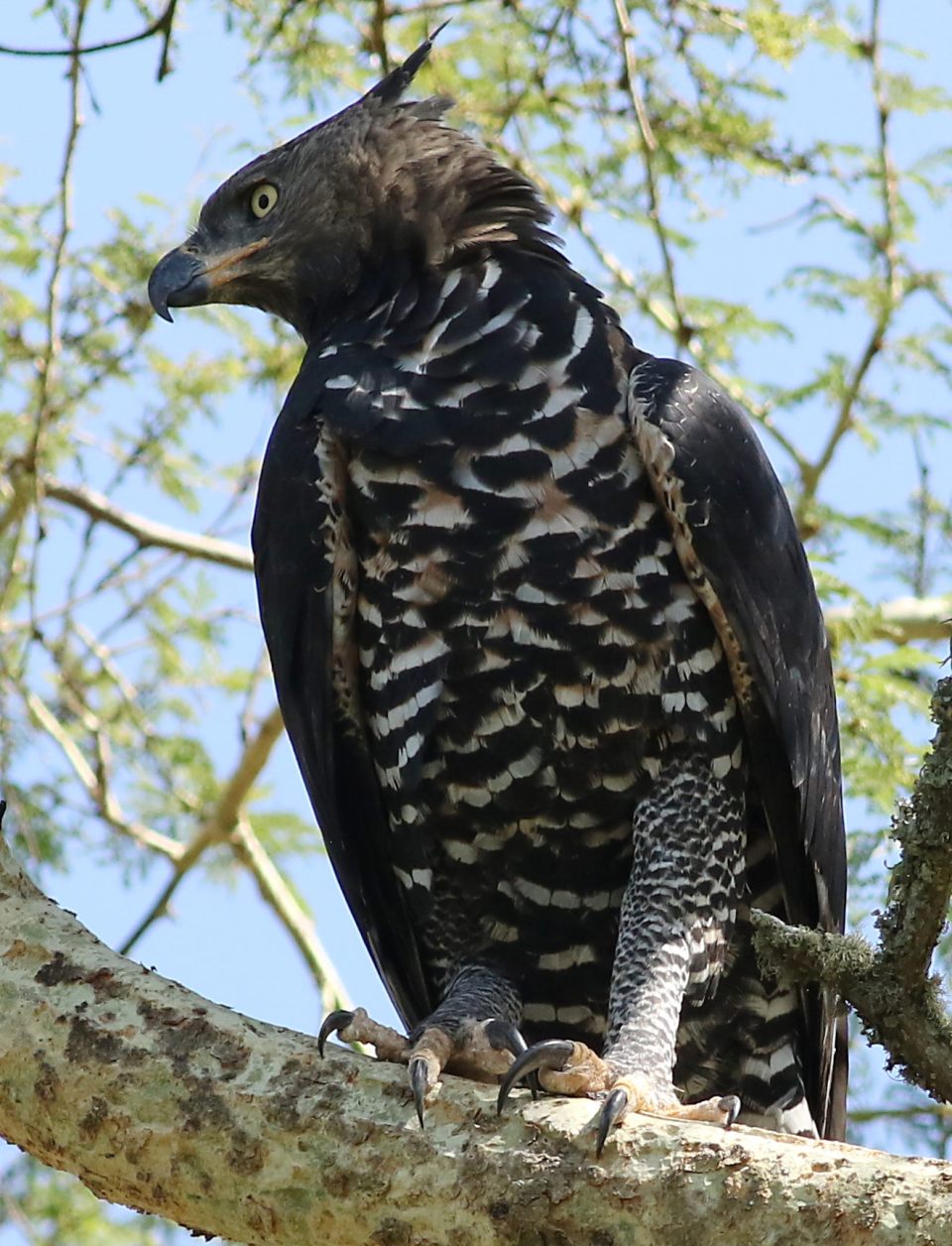
African Crowned Eagle, Senegal. Image courtesy Wikimedia Commons.
Economic development has a lot to do with collective confidence. Way back in 1990, Cameroon’s Roger Milla became an international star on the World Cup stage in Italy that year. He was one of the oldest players on the field, and his habit of doing a victory dance in corner field after scoring a goal made him a celebrity worldwide, not only among soccer fans. It was during these World Cup weeks that I drove to Schärding, a small town in Upper Austria, close to the German border, to spend a weekend exploring a newly opened bicycle path between Schärding and Passau in Germany. In the evening, after a long ride, when I entered the Gasthaus where I had taken a room for the night, the owner behind the bar did a double take and shouted, “Schau, schau. Der Roger Milla ist da.” Look, look, there’s Roger Milla. Everyone turned around to look, some cheered, and I could think of nothing better to do than imitate Roger Milla’s victory dance. The evening went off very well after that. Some of the regulars in the room seemed to think I really was Roger Milla and asked me how come I spoke such good German. (I was born in India, by the way and none of my friends think I even remotely resemble Roger Milla).
When I describe this incident, people ask me: how did you feel? Wasn’t that terribly racist?
Wait a minute, I tell them. Don’t be so quick with the R word. In a part of the world where there are few visible minorities, most people tend to be ethnically challenged. They see only themselves and other people like them, and everyone else is simply ‘the other.‘ This ethnic ignorance is the source of strength of divisive political leaders; the Orbans, the Kaczynskis, and the Petrys of Central Europe. To give an example of how I see it; I recently went on a field trip with a bunch of bird watchers. Where I only saw sparrows and the occasional bul-bul, they saw flycatchers, minivets, drongos, three kinds of woodpecker, kingfishers and many, many more. So too, with the ethnically challenged. Until they learn to see human life in all its rich variety, they will see only two kinds of people: us and them!
So that’s why I wish the Senegal team does well on the soccer field and even hope they win the World Cup, for maybe then, even the most ethnically (or ornithologically) challenged among us will finally realize: there are not only sparrows in Senegal, there are crowned eagles too.
Suffer the little Children: A New Testament Reminder
St. Mark, Chapter 10.
13. And they brought young children to him, that he should touch them: and his disciples rebuked those that brought them.
14. But when Jesus saw it, he was much displeased, and said unto them, Suffer the little children to come unto me, and forbid them not: for of such is the kingdom of heaven.
15. Verily I say unto you, Whosoever shall not receive the kingdom of God as a little child, he shall not enter therein.
16. And he took them up in his arms, put his hands upon them, and blessed them.

Image courtesy dailymail.co.uk
Terrible things are done, mostly by dictatorial governments, to children everywhere, especially to the children of the poor, the powerless and the dispossessed. However, when an official spokesperson for a country that likes to think of itself as a beacon of freedom and the rule of law says, “I can say it is very biblical to enforce the law,” then that person has surely never heard that the law is an ass; that laws were made for people rather than the other way round; that war crimes are committed by people who say, “I was only obeying the law. I merely followed orders.”
It is biblical to obey the law… Image courtesy Youtube.
Transportation: The Weight of Fear
Consider me. Or consider yourself. Presumably an average human being of average weight. These averages vary considerably in different parts of the world, from 60 kilos or less, to 90 kilos or more. Looking back at the various means of transport that I have commonly used in the past five decades, I made a list of their approximate weights for comparison. My own weight has changed (increased!) by 5 kilos during this period, from 75 to 80 kg.
Bicycle: Throughout my schooldays, I used a single speed bicycle to take myself (40 to 65 kg.) to school and back. I assume bicycles weighed around 25 kg. in those days. In any case, the means of transportation was around a third of my own body weight. I loved the song of the open road. Most days I arrived at school in a lather of sweat, but no one really bothered about that.
My first job was as a travelling salesman and the most efficient way to do this at the time was with a motorbike or scooter. Traffic congestion was not yet a problem in the 1970s to 90s. I loved the song of the open road. Most days I arrived at work or at a customer feeling dapper and cool, even though a bit windblown. The weight of the motor-scooter or motorbike I owned or rode at various times in this period varied from 130 to 150 kg. My own weight at this time was a svelte 75 kg.

250 cc Jawa 2-stroke motorcycle ca. 1972. Image, coutresy jawa.eu
From the late 70s to the 1990s my preferred mode of transport was a private car. I loved the song of the open road, although traffic was constantly increasing. Loved to drive long distances on holiday. Car weights varied from 840 kg (1976 first generation VW Golf) to 1400 kg (same model 25 years later) to 1700 kg (minivan). In spite of long distance holiday travel with family, 90% of the annual miles were clocked commuting to work and back. i.e. 1000s of kilometers with just one occupant. i.e. using 1400-1700 kg to transport 80 kg of human being. Forget the song of the open road! Most daily commutes were exercises in creeping through congested streets and highways, impatiently waiting to get to work or home.
From the early 2000s onwards, my thinking about the daily commute evolved (?) as follows. Car (1700 kg, 40 minutes), bus (kg irrelevant, 80 minutes), bicycle (16 kg., 70 minutes). The bicycle was definitely a step forward in efficiency and economy. It cost practically nothing, and also gave added health benefits, although I arrived in a lather at work, as I did in my school days, and had to repair to a toilet for a cat-wash and a change of clothes.
Around 2005, I began to yearn for pedal assist on my bicycle and began to look around for electric models. There were none available as far as I could see. Sometime in 2006, I found a German website on the internet that advertised an electric bicycle with a 1 year guarantee, a 7 kilo NiCad battery pack, and no range specifications. I was tired of a steep hill on my daily commute (36 km per day), so I ordered the bike sight unseen and two weeks later, took delivery of a giant cardboard carton with MADE IN CHINA printed on the sides. It weighed 32 kg with battery, had seven gears and was a real pain to carry up and down to the cellar where I stored it overnight.

Image courtesy Pedalandpower.com
But it did the job nicely. The hill was a problem no more. And the range was around 30 km. Unfortunately, NiCad batteries suffer from a memory effect, and I could not charge it in the office for the ride home, so I got minimal assistance on the dreaded hill with a fading battery.
Ah, the perfect solution! Sometime around 2008, I saw a beautiful 24-speed KTM with the cutest little Li-ion battery that was good for 60 kms of pedal-assist riding. By this time, I had moved homes and my daily commute had increased to 50 km. Here was the answer to my commuting problems. The KTM bicycle weighed 22 kg, I weighed 80 kg., and the electricity cost me around €0.30 for 100 km (30 cents). My friends considered the electric bike expensive. It was expensive, in bike terms, but in reality cost about as much as the annual service of the average 1700 kg. monster. Maybe that’s comparing apples and oranges, you say. But such comparisons are ok when you’re riding an apple, and have gotten rid of the orange. Needless to say, I sold the 1700 kg. monster and have lived happily ever after.
Nowadays people tell me, you can’t ride around on a bicycle at your age! It’s too dangerous to ride a bicycle in this murderous city traffic. True. But I wear a helmet and try to ride cautiously. I’m happy carrying my current 79 kg. on two wheels weighing 22 kg., and wouldn’t dream of carrying it in 1700 kg. as I used to do. The difference in weight (ca.1,678 kg) I like to think of as the weight of fear. That’s quite a lot of fear to carry around in one’s life. Best to get rid of it!
See this author’s page at Amazon.com to read more of his work
Climate Action Tracker
The Climate Action Tracker posts regular progress reports on how well various countries are doing to adhere to the Paris Agreements. It tracks emissions from 32 selected countries and the list of the good, the bad, and the ugly is quite surprising even to this seasoned watcher.
Only two countries are on track to fulfil the Paris goal, of limiting emissions to keep global temperatures from rising above 1.5 degrees C; Gambia and Morocco.
The second best choice made in Paris was, if not 1.5 degrees, then at the least 2 degrees C. Just 5 of 32 countries meet this target. Bhutan, Costa Rica, Ethiopia, India and Philippines. All of the remaining 25 countries fall into the category of emitters that will lead to a world of 3 degrees warming or more. See the original list here.
Of course this predicator of doom and gloom relies only on official government policies. The reality on the ground may be a bit different in many of the countries on the list. For example, despite their governments, a few cities, power companies and private individuals already find it cheaper to produce unsubsidised renewable energy, a trend that will speed up, just a cell phone sales did in developing country markets worldwide.
See this author’s page on Amazon.com to read more of his work
Unbroken News
Continuing the series on breaking news that deserves a bigger audience, here’s Bill Gates with a few facts about the world of today.
Today, more people are living healthy, productive lives than ever before. This good news may come as a surprise, but there is plenty of evidence for it. Since the early 1990s, global child mortality has been cut in half. There have been massive reductions in cases of tuberculosis, malaria, and HIV/AIDS. The incidence of polio has decreased by 99 percent, bringing the world to the verge of eradicating a major infectious disease, a feat humanity has accomplished only once before, with smallpox. The proportion of the world’s population in extreme poverty, defined by the World Bank as living on less than $1.90 per day, has fallen from 35 percent to about 11 percent.
See the full article from Foreign Affairs here.
See this author’s page at Amazon.com to read more of his work
Breaking News – the news is broken
Most media outlets seem to operate under the principle that bad news is good news or alternatively, good news is not news. They may be right, in terms of profitability. But they are definitely wrong, in terms of the collective well-being of humanity. This blog is not dependent on readership or advertising revenues, so it can afford to print good news without fear of losing its readership. So here for a start is good news from the energy front.

Floating solar photovoltaic facility outside Nagoya producing power for Apple supplier. Image: courtesy Clean Technica
All of the electricity used by two of the world’s largest corporations, Apple and Google, were from renewable sources by the end of 2017. This is a remarkable achievement, considering that each of these companies uses more electricity than many small nations, not least to power immense data centers scattered around the world. So now, if you have worries about the amount of personal data Facebook & Co. are collecting about you because of their opaque terms of usage, rest assured that they’re not polluting the planet in the bargain.
But seriously, there’s lots of impressive news in the energy area alone. Here’s a chart, courtesy of National Resources Development Center, showing how prices have come down for major clean energy technologies.

Chart from NRDC: click to enlarge
Since clean energy is one of the basic requirements for human development, there’s not much stopping world-wide implementation, is there? Capital for investment? It’s increasingly concentrated in the hands of a few–rich corporations and rich individuals. So are we ordinary mortals totally helpless? No, not at all. But we have to make smart choices as customers. We can enrich our lives, and the planet in the process, by getting off the mindless consumption lifestyle that the glossies would have us aspire to.
In one hour, the earth receives more solar energy than the world uses in one year. Now that’s good news and worth repeating, even if its not new. So why are companies producing more dirty diesel cars and building more fossil fuel power plants? Because switching technologies means moving out of comfortable niches of expertise that would otherwise become useless; it would mean new investments, experimenting with new technologies, and why should they take all these risks when customers are flocking to buy new models anyway? As engine size and horse power of new automotive offerings increase, so do their profits, and they see even less reason to invest in new technologies. It’s only we, the customers, who can break this vicious cycle.
English speaking news readers tend to digest information from an overwhelmingly anglocentric or eurocentric point of view. Hence I was not surprised recently to hear a friend accuse the Chinese of polluting the planet when actually, despite (or perhaps because of) a totalitarian regime, they are doing more to clean up the earth than any other nation. For example, the southern Chinese city of Shenzen alone runs a fleet of 16,000 (yes, thousand) electric buses; more than the rest of world combined. So while air quality in Beijing might be abysmal, this past winter, particulate pollution was 50% less than in the previous year. This from no less a source than the US Embassy in Beijing! One reason for the lower levels of pollution might be that China installed more than 53 GW of solar power in 2017.
The above facts don’t make me an apologist for an autocratic government where power is increasingly concentrated at the top. This is undoubtedly a very worrying tendency, one that is being seen in several other large countries like India, Russia, Turkey, China and the United States. In the US case, its robustly democratic political system has been hijacked by corporate lobbies. Nevertheless there is good news coming from each of these countries, and I will try to highlight these bright spots in future posts.
See this author’s page at Amazon.com to read more of his work.
A Georgian ode to Austria
In June last year I wrote a blog entitled “Living in Limbo–A Streetside Portait” about a man who stands outside the local supermarket and sells the Augustin newspaper. He’s a refugee from Georgia and used to teach philology back home. I cannot communicate well enough with him to know why he had to leave his home. Perhaps he’s a political refugee and is reluctant to talk about it. Today he handed me a story, photocopied from an old edition of the Augustin. Since his German is very halting, I presume someone translated it for him. Whatever the case, the writer comes across as intelligent, well-read and sensitive, and the story deserves a wider audience. Hence I’ve translated it into English and posted it here. I hope you enjoy his story. I’ll simply call the writer Wassili.

Georgian Mountains. Image: courtesy Wikimedia Commons
The Man and the Mountain
I’m no longer a stranger here now. I feel I’m in familiar surroundings. I have many acquaintances who call me by name when they talk to me, which pleases me no end. No one knew me in those days, when an elderly man, Herr F., invited me to his villa. He was eighty years old, but still active and full of joie de vivre. His energy would have put many a younger man to shame. His villa was near Neustadt. He called the Augustin office one day to ask for ‘permission’ to take me to Neustadt. He arrived at the Augustin office in his car to pick me up at the appointed time. This was a great honour to me; such a great honour that it was embarrassing.
I remember another occasion when I felt such embarrassment; it was a very cold day. I had no gloves and I was selling newspapers. I noticed someone staring, and then approach me holding out a pair of gloves, obviously intending to give them to me. I refused, pretending I was not cold, but that was wrong. It’s normal for Austrians to look at strangers, but I only understood much later that it’s even more embarrassing to refuse warmth and gestures of goodwill.
Herr F and I drove in his car. It was an old Ford, but very well maintained. He was in high spirits. We joked and laughed a lot. He showed me his villa. Then he took me out to lunch at a restaurant in the mountains. We ate well and drank a little. Herr F was the first person in Austria who reminded me of the words of the 12th century Georgian poet Schota Rustaweli who said: Never forget the duty of friendship to a friend who shows you his heart, for all paths are open to him.
Several days passed before Herr F. came to see me again. “Wasil,” he said, laughing. “You’re Stalin. And I’m Hitler.”
“No Herr F. That’s impossible. The two of them didn’t like each other. They were enemies. We, however, like and respect each other.” Herr F. smilingly agreed. He knew who Stalin was. I’d spoken about him that day at lunch in the mountains. Stalin was Georgian, from Gori. This place is known for its delicious apples and its Stalin Museum. Many foreigners think Stalin was Russian and when they learn he was Georgian, they come to visit the museum.
I haven’t seen Herr F. for several months now. I’m now selling the Augustin at another location. I have neither his telephone number nor his address in Vienna. What do I know about this man who gave me, a stranger arrived in Vienna, such a memorable day? Who knows if he is in trouble, and if so, how I can help him? Who knows where he is now? Perhaps he’s busy and no longer remembers this simple newspaper seller.
There are perhaps many people who think like me. Perhaps the mountain also thinks so; the mountain that rises five hundred meters in front of me, and spends its time thinking. When no one comes to me to buy a newspaper for a long time, the mountain and I look at each other. I think of the time I worked in a school, with a book in one hand, und taught children Georgian language and literature. Now I’m learning to live, or rather, learning how not to be a stranger in a land where I must live.
Sometimes in autumn the mountain is covered in fog– and it seems to be thinking. Just as I do. A big mountain can think more than the small one can. People are like that. The more they think, the more the fog bothers them. I’m talking about the mountain that stands before me. There are vineyards on its flanks, but I see no one there. I wonder how anyone can produce wine on such steep slopes. Georgia too is a land of mountainous vineyards. Grapes grow there too; grapes that are nurtured like children.
In the country where I was born and grew up, one can see mountains, precursors of the Caucasus. I visited these mountains often in my childhood. I went alone, sat down somewhere under a bush, and looked down fondly at my village, loving every single settlement as far as I could see. You small Austrian alpine mountain, I think. It’s your fault that I’m homesick at the sight of you. I love you too. Even though I’ve not known you so well, I love you from a distance. There will come a time when I’m closer to you. For then, if you allow me, I’ll look on your fields and meadows from above, just as I did as a child, silently and wordlessly turning to the land I used to say: I love you, Georgia! With the greatest respect then, I would then humbly say: I love you, Austria.
See this author’s page at Amazon.com to read more of his work
 aviott