Home » economy (Page 4)
Category Archives: economy
A Million Cars at Sea
Ever wanted to go on an ocean liner? Cruise ship advertisements idealise the high life to be had on the high seas. What they never say is how much ships pollute. The average ship runs on low grade oil, which can be likened to a sludge that emits more particulate matter than a million cars; more sulfur than seven million cars. And that’s just one cruise liner!
Several Scandinavian ferries now run on hybrid diesel-electric systems but, as in most advances in electric propulsion these days, China is taking the lead, as a cargo ship with a 2.4 MWh battery pack launches in Guangdong. Ironically, the ship will be used to transport dirty coal!
A new all-electric cargo ship with a massive 2.4 MWh battery pack launches in China
Car makers have a problem. They don’t admit it yet. Or maybe they do admit it to themselves, although not in public. Why should they, when enough people are buying bigger cars? Global car sales in 2017 were close to 90 million vehicles in all categories, including SUVs and light trucks. That’s roughly 1 car for every 77 people. Less than 1% of these were electric. How many more cars do we need? Car companies are powerful entities that are in the business of selling dreams; dreams of freedom, of the joy of the open road, dreams of independence. The irony is that as we buy into the dream, we destroy the very foundation on which our dreams are based.
See this author’s page at Amazon.com to read more of his work.
Life After IIASA 1975-2013: Five Years On
February 2018 will mark five years after my retirement from IIASA. These five years have been full of new experiences, travel and writing. My wife and I have also attempted during this time to modify our lifestyle to be as carbon neutral as possible. Measures include living without a car, using a bicycle for shopping and public transport for travel where possible. Trips by air are unavoidable in the lifestyle we’ve chosen, and we’ve attempted to offset this carbon by buying solar panels for a farm school in India and a solar farm in Austria, 8 KW in all. These panels will apparently offset around 8 tons annually, but there’s still more to be done.
I first heard about sea level rise in a talk by paleo-climatologist Herbert Flohn at IIASA sometime in the late 1970s. At that time, many of the information requests that the IIASA library received were about global effects of a nuclear winter in the aftermath of nuclear war. Research themes changed quickly; interest moving to carbon dioxide emissions from fossils fuels, global warming, acid rain and stratospheric ozone.
In the intervening years, the reality of human-induced global warming has been accepted by all but the most ideologically blinkered societies worldwide. Travelling through parts of rural India soon after retirement in 2013, I saw repeated instances of people taking actions to adapt to climate change; water harvesting to compensate for unprecedented droughts, reforestation efforts; introduction of organic farming methods and drought resistant crops. I’d like to think that much of the credit for these adaptation and mitigation actions goes to studies by IIASA and other research institutions worldwide; scientific studies whose results filtered down over decades through the media and drew attention to these problems early on. There’s no way to prove this, and some of the water harvesting systems I saw were really ancient structures brought back into use. See more about that here
Efforts in 2015 and 2016 to help establish a rural education and vocation center failed for a very positive reason. The five acres of land (2 hectares) that had been donated to us for school use by a well-wisher is worth approximately € 300,000 (€65,000 per acre at today’s prices). The donated property was fertile agricultural land and classified as such. The local administrative authorities refused permission to reclassify the plot for use as a school and insisted that the land remain in use for agriculture. This was a positive outcome, because one of our reasons for this choice of location of a school was to prevent displacement of the rural population by expensive housing projects that would only benefit urbanites.
However the effort was not wasted. Since then our local partners have decided to build an organic farm on the land and use the experience gained to encourage the farming practices of communities in neighbouring villages. One function of this farm would be to develop markets for organic produce. We discovered several small companies in the area that offer free midday meals to their workers. They were happy to find a local supply of good vegetables. One enterprising factory owner offered his workers three free meals a day, sourcing all the vegetables from his own backyard. The vegetables he showed us were grown in plastic tubs lined with mats made of nutrient-rich hemp fibers. In fact, the method is so successful that he gives away growing kits free to any of his workers who want one for their own families’ use.
An encounter in early 2017 with a conservationist who runs a hatchery for Olive Ridley turtles on the sea coast near Chennai city led me to Tiruvannamalai, a town 200 km to the south-west. Here is an organic farm school where text-book sustainable living is practiced in the most lively and joyous manner possible. There are around 100 children in the school, ranging in age from 8 to 18. The links below will give an idea of activities at the school.
http://www.marudamfarmschool.org/
https://yourstory.com/2017/12/2-lakh-trees-ngo-regenerating-forest-tamil-nadu/
http://www.theforestway.org/greening/planting.html
In addition to organic farming, environmental conservation and education, the school also works with villagers in the surrounding countryside, reforesting the hill that dominates the temple town, planting around 15,000 trees a year. The school’s efforts inspired us (myself and a few friends in India) to help them become energy self-sufficient, adding 5 KW of solar panels to the three they already had. Together with battery backup, the school is now completely independent of the grid. (photo attached).
This activity led me to a thought. If IIASA’s work ultimately inspired these kinds of sustainability acts, what about IIASA’s own carbon footprint? IIASA’s alumni are scattered all over the world. What if we joined together, wherever we are, and worked to offset IIASA’s carbon emissions? Such actions would benefit our own communities, wherever we may happen to live. To kick-start this effort, I’ve decided to fund the planting of 1000 trees in 2018 through the farm school mentioned above. If each tree sequesters 25 kilos of carbon (as a rule of thumb, regardless of species), this would offset 25 tons of the Institute’s annual carbon emissions.
Should this be a formal organized effort? Readers’ suggestion welcomed here. All we would need is a virtual platform where one can document one’s own efforts and have a running tally. Ultimately the goal is to achieve carbon neutrality, not only for the Institute, but also for the communities in which each one of us lives. But, as for so many initiatives, IIASA could be a starting point.
On a personal note, the years since retirement have been very fulfilling. Thanks to my wife’s job, we were able to spend 2 idyllic years on an island paradise near Hong Kong. This provided background material for a work of fiction, Grace in the South China Sea. There are two sequels in the pipeline (The Trees of Ta Prohm, and Heartwood), to appear in 2018. Look for the earlier books and announcements on the Amazon author page here.
See this author’s page at Amazon.com to read more of his work.
Snow Farms and Ice Stupas for a Warming Planet
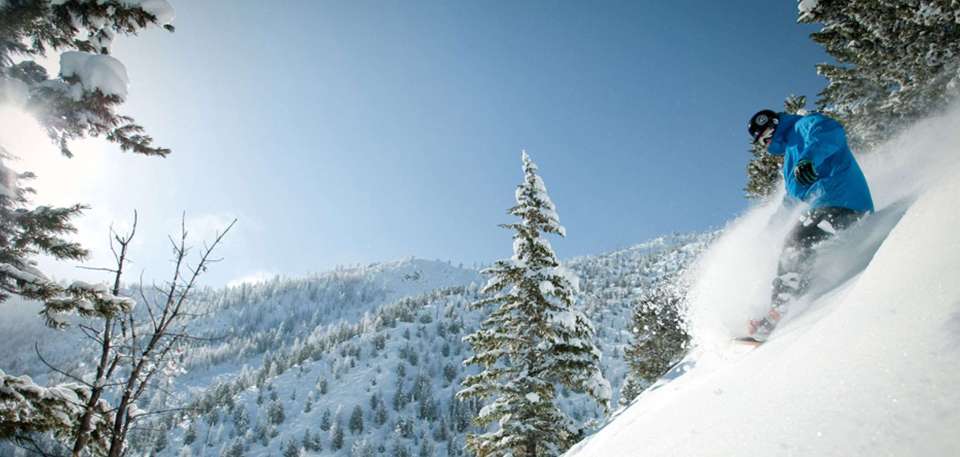
Image courtesy wintersportcompany.com
A recent article in a Salzburg newspaper talked about the bleak future for winter sports in Austria. As snow becomes ever scarcer on the lower slopes of alpine regions, those communities that rely on income from winter tourism are looking around for alternatives to keep their economies going. Ski trails are increasingly carpeted with artificial snow that serves the purpose but cannot compete with the magic delight of snowflakes from heaven. A custom that has gained traction in recent years is snow farming. In effect, the practice is very simple. Snow is piled up during winter months in convenient natural depressions called snow depots and covered with a mix of wood chips and sawdust. The depot is then blanketed with a white covering that further insulates the reserve and preserves up to 80% of the snow through the summer months. The heat of evaporation from the moistened wood chips actually helps cool the bulk of the snow reserve. Austrian snow harvesting programs are for the benefit of the tourism business, but in the high altitudes of Himalayan Ladakh, engineers and environmentalists are creating artificial ice stupas and glaciers as a survival mechanism to provide water for village communities in the spring and summer months.
When religious leaders step outside their core business of spiritual leadership and meddle in secular affairs, then perhaps they should take their cue from the Tibetan monk in the video above. True religion should promote harmony, protect nature and improve livelihoods instead of preaching. As can be seen from the video above, reverence naturally follows.
The Power of Place: Why we travel

Hermitage Museum. Image: courtesy travelrussia.com
On a visit to St. Petersburg many years ago (for an idea when, it was called Leningrad then), emerging from the Hermitage Museum and Winter Palace, eyes dazed and unfocussed after marvelling for two days at the sheer wealth of the collections, our official tour guide told us something that stayed in my mind ever since. You know, she said, St. Petersburg was always much more than the home of royalty. It was a natural home of the arts and literature. For example, after WWII and the total destruction of the city, with more than three million of its population either dead or displaced, the city was like a living tomb. Within a few years, the city was repopulated by uneducated peasants from the surrounding countryside. These new immigrants succumbed to the magic of the city and within a generation, Leningrad/St. Petersburg became a city of the arts and culture once more.
Sacred grove around an Indian temple
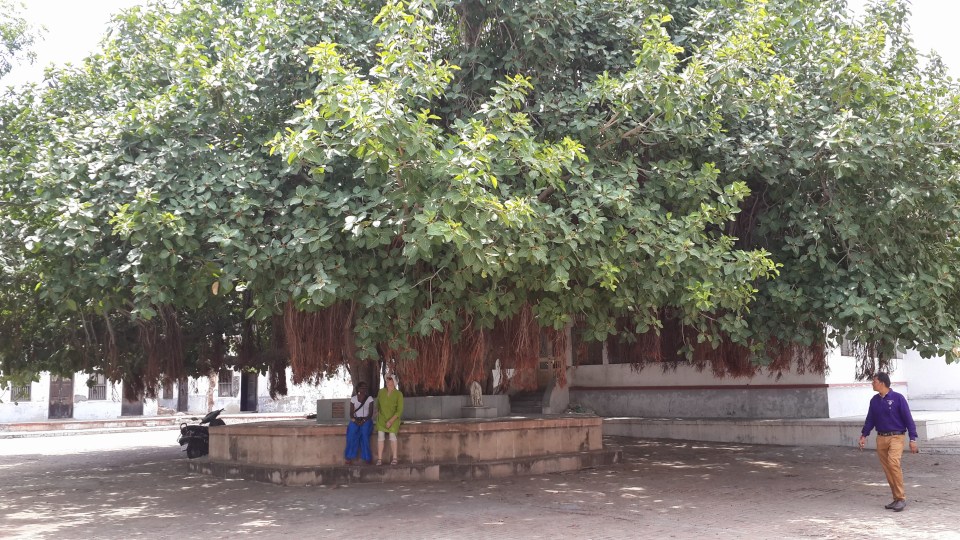
I can’t judge the accuracy of the tour guide’s information, but I understood what she meant. There are points on earth that are imbued with a power of place that are impossible to ignore. For example, I have walked through an ancient grove in southern Sweden and felt a certain reverence in that hushed spot. In India, temples are often perched on top of hills or mountains and exude a sense of spiritual calm. In northern Bali, near the small town of Bubunan, there is a spot near the sea where a a group of Tibetan monks suddenly turned up one day. When asked what they were doing, they said they were simply visiting an important location, where several powerful spiritual meridians intersect. The spot where they stood to meditate was a rock on an escarpment that looked out onto a beach with a curving shoreline. It was undoubtedly a picturesque and peaceful spot.
Perhaps this is why we travel. In search of our place in the greater scheme of things. This, and the unseen pull of far off places, is what has made the tourism industry one of the largest on the planet, with an annual turnover of eight trillion dollars. Food for thought, and a reminder to tread lightly as we travel.
Advice to a Billionaire
Michael Liebreich of Bloomberg New Energy Finance calls you one of three Black Swans in the world of energy and transportation this century; the other two being Fracking and Fukushima. You are often compared to Henry Ford, Thomas Edison, Nikola Tesla, the Iron Man, and shades of Einstein. You have advised Presidents. Heads of state visit your factories to see how they could improve the lives of their citizens. You stepped in without fanfare to donate money and provide power to a hospital in Puerto Rico after the devastation of Hurricane Maria. You issue audacious challenges to yourself and to others and sometimes miss deadlines, but ultimately deliver on your promises. Thousands, perhaps millions of people, speculate against you in the stock markets, hoping to make a quick profit from your failure. So far, they’ve been disappointed. But you put your money where your mouth is, so for every one of these speculative sharks, there are a thousand eager customers for your products and millions of well-wishers who hope you can help save the planet.
And yet you feel alone and unloved. You search for a soul mate and are willing to fly to the ends of the earth to find true love. You must know that love is like a butterfly. Be still and perhaps it will land on you. There are no guarantees, but the chances are infinitely greater if you cultivate stillness. And while you wait, exchange your loneliness for the wealth of solitude. As Hannah Arendt and Plato observed: Thinking, existentially speaking, is a solitary but not a lonely business.
As the father of five children, know also that their childhood is a precious and finite resource that you could use to your benefit and theirs. Childhood ends all too soon, so help them in whatever way you can to make good choices. You seem to have done so for yourself. In the meantime, millions of people around the world wish you well, as I do.
The Power of Compassion
Met an unusual individual in Vienna last night. Spare 17 minutes to watch this video of his TED Talk from 2012. You won’t regret it. Of course it was more inspiring to meet him in person.
Feedback welcomed.
A School Playground with no Women
As parents, we all have a duty to find out what happens to our children in school. We have to protect weaker children from school bullies who might otherwise terrorize their juniors.
Imagine the school bully unchecked after a playground fight. “You,” he shakes a menacing fist at a defiant runt. “Don’t dare talk back to me again, or else…” he pulls a knuckle duster from his pocket and shoves it in the little boy’s face. “Or else you’ll have a bloody lip…” The little boy, whose name is Cutter, looks around to the smirking head boy sitting on the playground fence for support, but the head boy says nothing and does not move.
“I’ll see he doesn’t talk back to you.” stammers another little boy, whose name is Kurshid. The bully shrugs, looking out of the corner of his eye at the head boy sitting on the fence. He remembers that some time ago, the head boy came to Kurshid’s aid when another bully smacked him on the head, took away all his marbles, and kicked him out of the playground. On that occasion, to everyone’s surprise, the head boy beat the bully to pulp and had him expelled from the school. Everyone knew the head boy had done this because he liked Kurshid’s marble collection.
“Now be good boys,” says the harried teacher, who knows the boys don’t respect his authority in the least. “Be nice. Don’t all gang up on the smallest because he won’t play with you,” he says, shrugs, and turns away, knowing the fighting will start again as soon as his back is turned. Meanwhile the sadistic head-boy sits on the fence and smirks gleefully. He’s just sold a knuckle duster to the biggest bully on the playground and can’t wait to see it in action.
There are no female teachers present. This scenario is playing on the world stage. Here are the real players in this drama.
Cutter – al-Thani clan, Qatar
Kurshid – Emir of Kuwait, mediator
School bully – Crown Prince Mohammed bin Salman, Saudi Arabia
head boy – Donald Trump, United States
another bully – Saddam Hussain
marbles – oil
harried teacher – UN
knuckledusters – US arms sales to Saudi Arabia
Other key actors offstage:
chief hoarder of marbles – China
school clown – Kim Jong Un
neighborhood dope dealer – Putin
anxious parents -Rest-of-the-world
A few weeks ago, the Guardian newspaper published a list of 13 demands made by Saudi Arabia and friends. Qatar is to comply with all of them within ten days, or else… (see https://goo.gl/KDdkeP)
Carbon Countdown Clock

Image:courtesy usgs
Ah, Trump. Has pulled the world’s second largest greenhouse gas emitter out of the Paris Accord. Was promised. Was to be expected. The one campaign promise that this prevaricating president did keep. The Guardian newspaper has usefully provided an online carbon countdown clock to show the world how time is running out. I believe Trump’s action might provoke the rest of the world to come together to save our common future.
https://interactive.guim.co.uk/embed/aus/2017/carbon-embed
Click on the link above to see how much time we have left.
Drinking Cocanutta Wataa–a refreshing trend
As temperatures rise around the world (think summer, think global warming!), lip-smacking ads of frosted glasses of beer, cola or other carbonated drinks appear on billboards and media screens. Plying Indian roads on a motorbike in the approaching summer of 2017 has shown one refreshing (pardon the pun) trend in the soft drinks world. Roadside stalls increasingly tend to offer locally sourced products (fresh tender coconut, palm fruit, sugar cane juice, watermelon, lassi, buttermilk and various local juices) rather than the ubiquitous glass or plastic bottled offerings of multinationals. All this without the benefit of national ad campaigns. Environmentalists at work, common sense, or simple economics?
As Harry Belafonte famously sang, it’s good for your daughter too.
Poramboke – Singing the Tragedy of the Commons
The “Tragedy of the Commons” is a term applied to the problem of shared resources in societies. All over the world, resources that are shared by all its members (the commons, e.g. public grazing lands, ponds, lakes) are in danger of over-exploitation and long-term degradation. This is what is happening to the world’s air, the oceans, the world’s fresh water, and all the other public resources that we used to take for granted as a basic human right. The world’s common resources are under siege from mighty forces; industrial, economic, demographic. It does not seem right, it is not right, for us to say that all citizens of the world (and those as yet unborn) should not enjoy the same freedoms that we do. And yet we continue to consume more, in the name of increased prosperity and well-being. The Tamil word for commonly owned public land or wastelands is “poramboke.”
How much is enough? Short question. No easy answers. I have met many interesting people recently, who are searching and finding answers, each in their unique way. The video attached above is of south Indian Carnatic singer TM Krishna, along with other eminent musicians, singing the tragedy of the commons in a song with powerful, compelling lyrics.
Poromboke ennaku illai, poromboke unnaku illai, Poromboke ooruike, poromboke bhoomikku he sings
Poromboke is not for me, it is not for you. Poromboke is for the city, it is for the Earth.
These past 3 months, as I travelled in different parts of the Tamil country, I see a powerful re-awakening of traditional values, and I will try to document some of my observations in the coming weeks.
 aviott