Home » nature (Page 3)
Category Archives: nature
A Georgian ode to Austria
In June last year I wrote a blog entitled “Living in Limbo–A Streetside Portait” about a man who stands outside the local supermarket and sells the Augustin newspaper. He’s a refugee from Georgia and used to teach philology back home. I cannot communicate well enough with him to know why he had to leave his home. Perhaps he’s a political refugee and is reluctant to talk about it. Today he handed me a story, photocopied from an old edition of the Augustin. Since his German is very halting, I presume someone translated it for him. Whatever the case, the writer comes across as intelligent, well-read and sensitive, and the story deserves a wider audience. Hence I’ve translated it into English and posted it here. I hope you enjoy his story. I’ll simply call the writer Wassili.

Georgian Mountains. Image: courtesy Wikimedia Commons
The Man and the Mountain
I’m no longer a stranger here now. I feel I’m in familiar surroundings. I have many acquaintances who call me by name when they talk to me, which pleases me no end. No one knew me in those days, when an elderly man, Herr F., invited me to his villa. He was eighty years old, but still active and full of joie de vivre. His energy would have put many a younger man to shame. His villa was near Neustadt. He called the Augustin office one day to ask for ‘permission’ to take me to Neustadt. He arrived at the Augustin office in his car to pick me up at the appointed time. This was a great honour to me; such a great honour that it was embarrassing.
I remember another occasion when I felt such embarrassment; it was a very cold day. I had no gloves and I was selling newspapers. I noticed someone staring, and then approach me holding out a pair of gloves, obviously intending to give them to me. I refused, pretending I was not cold, but that was wrong. It’s normal for Austrians to look at strangers, but I only understood much later that it’s even more embarrassing to refuse warmth and gestures of goodwill.
Herr F and I drove in his car. It was an old Ford, but very well maintained. He was in high spirits. We joked and laughed a lot. He showed me his villa. Then he took me out to lunch at a restaurant in the mountains. We ate well and drank a little. Herr F was the first person in Austria who reminded me of the words of the 12th century Georgian poet Schota Rustaweli who said: Never forget the duty of friendship to a friend who shows you his heart, for all paths are open to him.
Several days passed before Herr F. came to see me again. “Wasil,” he said, laughing. “You’re Stalin. And I’m Hitler.”
“No Herr F. That’s impossible. The two of them didn’t like each other. They were enemies. We, however, like and respect each other.” Herr F. smilingly agreed. He knew who Stalin was. I’d spoken about him that day at lunch in the mountains. Stalin was Georgian, from Gori. This place is known for its delicious apples and its Stalin Museum. Many foreigners think Stalin was Russian and when they learn he was Georgian, they come to visit the museum.
I haven’t seen Herr F. for several months now. I’m now selling the Augustin at another location. I have neither his telephone number nor his address in Vienna. What do I know about this man who gave me, a stranger arrived in Vienna, such a memorable day? Who knows if he is in trouble, and if so, how I can help him? Who knows where he is now? Perhaps he’s busy and no longer remembers this simple newspaper seller.
There are perhaps many people who think like me. Perhaps the mountain also thinks so; the mountain that rises five hundred meters in front of me, and spends its time thinking. When no one comes to me to buy a newspaper for a long time, the mountain and I look at each other. I think of the time I worked in a school, with a book in one hand, und taught children Georgian language and literature. Now I’m learning to live, or rather, learning how not to be a stranger in a land where I must live.
Sometimes in autumn the mountain is covered in fog– and it seems to be thinking. Just as I do. A big mountain can think more than the small one can. People are like that. The more they think, the more the fog bothers them. I’m talking about the mountain that stands before me. There are vineyards on its flanks, but I see no one there. I wonder how anyone can produce wine on such steep slopes. Georgia too is a land of mountainous vineyards. Grapes grow there too; grapes that are nurtured like children.
In the country where I was born and grew up, one can see mountains, precursors of the Caucasus. I visited these mountains often in my childhood. I went alone, sat down somewhere under a bush, and looked down fondly at my village, loving every single settlement as far as I could see. You small Austrian alpine mountain, I think. It’s your fault that I’m homesick at the sight of you. I love you too. Even though I’ve not known you so well, I love you from a distance. There will come a time when I’m closer to you. For then, if you allow me, I’ll look on your fields and meadows from above, just as I did as a child, silently and wordlessly turning to the land I used to say: I love you, Georgia! With the greatest respect then, I would then humbly say: I love you, Austria.
See this author’s page at Amazon.com to read more of his work
Life After IIASA 1975-2013: Five Years On
February 2018 will mark five years after my retirement from IIASA. These five years have been full of new experiences, travel and writing. My wife and I have also attempted during this time to modify our lifestyle to be as carbon neutral as possible. Measures include living without a car, using a bicycle for shopping and public transport for travel where possible. Trips by air are unavoidable in the lifestyle we’ve chosen, and we’ve attempted to offset this carbon by buying solar panels for a farm school in India and a solar farm in Austria, 8 KW in all. These panels will apparently offset around 8 tons annually, but there’s still more to be done.
I first heard about sea level rise in a talk by paleo-climatologist Herbert Flohn at IIASA sometime in the late 1970s. At that time, many of the information requests that the IIASA library received were about global effects of a nuclear winter in the aftermath of nuclear war. Research themes changed quickly; interest moving to carbon dioxide emissions from fossils fuels, global warming, acid rain and stratospheric ozone.
In the intervening years, the reality of human-induced global warming has been accepted by all but the most ideologically blinkered societies worldwide. Travelling through parts of rural India soon after retirement in 2013, I saw repeated instances of people taking actions to adapt to climate change; water harvesting to compensate for unprecedented droughts, reforestation efforts; introduction of organic farming methods and drought resistant crops. I’d like to think that much of the credit for these adaptation and mitigation actions goes to studies by IIASA and other research institutions worldwide; scientific studies whose results filtered down over decades through the media and drew attention to these problems early on. There’s no way to prove this, and some of the water harvesting systems I saw were really ancient structures brought back into use. See more about that here
Efforts in 2015 and 2016 to help establish a rural education and vocation center failed for a very positive reason. The five acres of land (2 hectares) that had been donated to us for school use by a well-wisher is worth approximately € 300,000 (€65,000 per acre at today’s prices). The donated property was fertile agricultural land and classified as such. The local administrative authorities refused permission to reclassify the plot for use as a school and insisted that the land remain in use for agriculture. This was a positive outcome, because one of our reasons for this choice of location of a school was to prevent displacement of the rural population by expensive housing projects that would only benefit urbanites.
However the effort was not wasted. Since then our local partners have decided to build an organic farm on the land and use the experience gained to encourage the farming practices of communities in neighbouring villages. One function of this farm would be to develop markets for organic produce. We discovered several small companies in the area that offer free midday meals to their workers. They were happy to find a local supply of good vegetables. One enterprising factory owner offered his workers three free meals a day, sourcing all the vegetables from his own backyard. The vegetables he showed us were grown in plastic tubs lined with mats made of nutrient-rich hemp fibers. In fact, the method is so successful that he gives away growing kits free to any of his workers who want one for their own families’ use.
An encounter in early 2017 with a conservationist who runs a hatchery for Olive Ridley turtles on the sea coast near Chennai city led me to Tiruvannamalai, a town 200 km to the south-west. Here is an organic farm school where text-book sustainable living is practiced in the most lively and joyous manner possible. There are around 100 children in the school, ranging in age from 8 to 18. The links below will give an idea of activities at the school.
http://www.marudamfarmschool.org/
https://yourstory.com/2017/12/2-lakh-trees-ngo-regenerating-forest-tamil-nadu/
http://www.theforestway.org/greening/planting.html
In addition to organic farming, environmental conservation and education, the school also works with villagers in the surrounding countryside, reforesting the hill that dominates the temple town, planting around 15,000 trees a year. The school’s efforts inspired us (myself and a few friends in India) to help them become energy self-sufficient, adding 5 KW of solar panels to the three they already had. Together with battery backup, the school is now completely independent of the grid. (photo attached).
This activity led me to a thought. If IIASA’s work ultimately inspired these kinds of sustainability acts, what about IIASA’s own carbon footprint? IIASA’s alumni are scattered all over the world. What if we joined together, wherever we are, and worked to offset IIASA’s carbon emissions? Such actions would benefit our own communities, wherever we may happen to live. To kick-start this effort, I’ve decided to fund the planting of 1000 trees in 2018 through the farm school mentioned above. If each tree sequesters 25 kilos of carbon (as a rule of thumb, regardless of species), this would offset 25 tons of the Institute’s annual carbon emissions.
Should this be a formal organized effort? Readers’ suggestion welcomed here. All we would need is a virtual platform where one can document one’s own efforts and have a running tally. Ultimately the goal is to achieve carbon neutrality, not only for the Institute, but also for the communities in which each one of us lives. But, as for so many initiatives, IIASA could be a starting point.
On a personal note, the years since retirement have been very fulfilling. Thanks to my wife’s job, we were able to spend 2 idyllic years on an island paradise near Hong Kong. This provided background material for a work of fiction, Grace in the South China Sea. There are two sequels in the pipeline (The Trees of Ta Prohm, and Heartwood), to appear in 2018. Look for the earlier books and announcements on the Amazon author page here.
See this author’s page at Amazon.com to read more of his work.
The Woodpecker’s Tongue
I read an interview with Walter Isaacson (author of Steve Jobs’ biography, among other books) the other day. In it, he says: “I’ll just tell you something small. The tongue of a woodpecker is three times longer than the beak. And when the woodpecker hits the bark at ten times the force that would kill a human, the tongue wraps around the brain and cushions it.”
This information was so startling that I had to go and look it up. Sure enough, the description is accurate. Here are two illustrations, courtesy of Pinterest and Twitter, of the woodpecker’s incredibly long tongue and the way it cushions the brain.
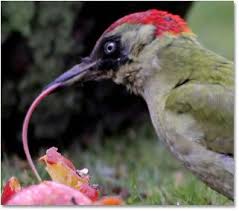
Science has revealed so much of Nature’s secrets. Yet we can be sure that there as many hidden away, waiting to be discovered. Finding this bit of information about the woodpecker’s tongue so close to the beginning of the new year made me wonder what kind of lesson I could learn from it for 2018. Here is an analogy that seems to fit the bill.
We spend increasing amounts of time on social media. Information leaps at us with the rapid fire of a woodpecker’s beak rat-a-tat-ing into a tree. This selective information explosion damages our judgement and impairs our ability to separate fiction from fact. We humans need something to cushion ourselves from the damaging impact of a continuous stream of media inputs. In our case, the woodpecker’s tongue equivalent might be enhanced interactions with the real world; talking to people around us, to family, friends, acquaintances, and people in the society we live in.
I’ve spent a great deal of time on Facebook & Co. in recent years, assuming that these interactions were somehow deepening my ties to the real world. I have undoubtedly benefitted, by being able to keep in touch with friends and relatives living in far-flung corners of the world. Despite these real benefits, the truth has gradually dawned on me that I was becoming more of a consumer and less connected to the world. The perfidious effect of social media was perfectly illustrated a few years ago when a friend came to stay for a while with his wife and new-born baby. The friend was a keen amateur photographer, as eager to record every minute of his son’s life as any first-time parent. The Eureka moment came to me when I saw he was so busy taking and uploading photographs to Facebook that he was totally oblivious to the infant screaming for a long overdue nappy change. The screaming stopped only when the harried mother emerged from the kitchen to soothe and change the baby. This is the point when we need self-awareness to wrap around the endorphin-craving pre-frontal cortexes of our brain as tightly as the woodpecker’s tongue to guide us out of harm’s way.
Snow Farms and Ice Stupas for a Warming Planet
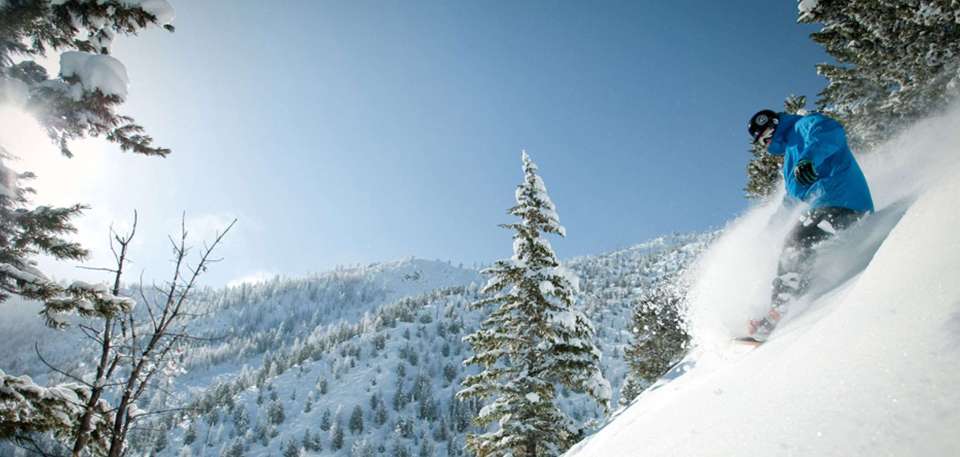
Image courtesy wintersportcompany.com
A recent article in a Salzburg newspaper talked about the bleak future for winter sports in Austria. As snow becomes ever scarcer on the lower slopes of alpine regions, those communities that rely on income from winter tourism are looking around for alternatives to keep their economies going. Ski trails are increasingly carpeted with artificial snow that serves the purpose but cannot compete with the magic delight of snowflakes from heaven. A custom that has gained traction in recent years is snow farming. In effect, the practice is very simple. Snow is piled up during winter months in convenient natural depressions called snow depots and covered with a mix of wood chips and sawdust. The depot is then blanketed with a white covering that further insulates the reserve and preserves up to 80% of the snow through the summer months. The heat of evaporation from the moistened wood chips actually helps cool the bulk of the snow reserve. Austrian snow harvesting programs are for the benefit of the tourism business, but in the high altitudes of Himalayan Ladakh, engineers and environmentalists are creating artificial ice stupas and glaciers as a survival mechanism to provide water for village communities in the spring and summer months.
When religious leaders step outside their core business of spiritual leadership and meddle in secular affairs, then perhaps they should take their cue from the Tibetan monk in the video above. True religion should promote harmony, protect nature and improve livelihoods instead of preaching. As can be seen from the video above, reverence naturally follows.
Drinking Cocanutta Wataa–a refreshing trend
As temperatures rise around the world (think summer, think global warming!), lip-smacking ads of frosted glasses of beer, cola or other carbonated drinks appear on billboards and media screens. Plying Indian roads on a motorbike in the approaching summer of 2017 has shown one refreshing (pardon the pun) trend in the soft drinks world. Roadside stalls increasingly tend to offer locally sourced products (fresh tender coconut, palm fruit, sugar cane juice, watermelon, lassi, buttermilk and various local juices) rather than the ubiquitous glass or plastic bottled offerings of multinationals. All this without the benefit of national ad campaigns. Environmentalists at work, common sense, or simple economics?
As Harry Belafonte famously sang, it’s good for your daughter too.
Saving the World, One Turtle at a time.
Statement: Olive Ridley turtles are plentiful, so they are in no danger of extinction.
Answer: Wrong. Human beings are even more plentiful, and their habitations are encroaching on the Ridleys’ nesting sites at an alarming rate.
The SSTCN* is a voluntary group that has been patrolling the beaches of Chennai, every night for four months of the year, from January to April, since 1987. That’s a lot of dedicated patrolling by a group that’s entirely voluntary and has been largely self-funded since its inception. Thanks to nature-film series like National Geographic and Universum, the life cycle of sea turtles species and their general pattern of behaviour is widely known. The adult females mate in shallow waters or out in the ocean, then stagger ashore a few weeks later to lay their clutch of eggs in pits scooped out of the sand with their flippers. They cover the eggs with sand after laying (anything from 50 to 200 hundred eggs), using their flippers to wipe out traces of the nesting site. Conservationists use these telltale smooth patches of loose sand as an indicator that there is a nest underneath.

Ridley sea turtle: Image courtesy National Geographic
The eggs hatch under the sand in around 45 days. And then another miracle occurs. The newly hatched turtles emerge from their nest and fight their way to the sea, guided by the phosphorescence of the breaking waves in faint starlight or moonlit nights. They struggle out through undulations in the sand and disappear into the waves, where perhaps one in a hundred will survive to become adults. The sand temperature at the time of hatching determines the sex of the baby turtles, with relatively cool temperatures producing males, and females emerging as temperatures rise.
Several of the students who volunteered for turtle walks in the past have gone on to play significant roles in various national and international environmental organizations. The current group of volunteers has significantly improved contacts with local fisherman. Several fishermen, formerly enthusiastic poachers, are now supporters of the conservation network. These fishermen can play a significant role in the future of conservation efforts. As human dwellings increasingly encroach close to the shoreline, the turtle hatchlings face another hazard. Lured like teenagers by the bright lights of the city, they head for the houses, away from the sea. For this reason, the volunteers patrol the beaches every night, collecting freshly laid eggs and taking them to hatcheries. Six to seven weeks later, the hatchlings are brought to the same stretch of shore and released, guided safely to the sea by the light of volunteers’ torches.
Once in the water, the young turtles face the hazards that nature has designed for them. An estimated one or two in a thousand survive, grow to adulthood, and emerge from the sea a decade later, to lay their clutch of a hundred eggs or more on the very same beach from which they entered the sea. This is a process that has gone on for a million years, and it is in the interest of mankind that they can continue to do this for centuries to come. In myriad complex ways, the future of humanity might depend on it.
*SSTCN – Students Sea Turtle Conservation Network. See their website at https://sstcn.org/ if you’d like to know more about their great work.
 aviott