Prosperity without Growth?
http://www.vincelewis.net/unsoldcars.html
Thanks to Gary Friedman for leading me to the above web page with photographs of thousands of the world’s unsold cars. Every time I walk through a car-saturated city somewhere in the world (increasingly, these cities are in Asia), I wonder when this mad and mindless proliferation will stop. Having personally experienced the dramatic improvement in quality-of-life since selling the family car a few years ago, it is definitely time for a planetary re-think. Of course a change like this is much easier when one lives in a city with good infrastructure, affordable public transportation, pedestrian-friendly built up areas, and safe bicycle paths that are separated from both pedestrians and cars.
Overproduction of cars is only the most visible and resource-consuming chunk of the overproduction of stuff in general. Which brings me to Tim Jackson’s influential book, Prosperity without Growth. In an age of quick soundbites, his message requires at least a few hours of thought to consider and digest. However, as a guest speaker in wide demand on platforms across the world, he has condensed the content of his book into 30 minutes divided in three roughly 10-minute chunks. The first part deals with the dilemma of growth; the second with exploring the economic and social systems that compound this dilemma. The third deals with avenues for change that lead to a different kind of prosperity. In the video below, hear Tim Jackson speak at a lecture in Australia in 2010.
https://www.youtube.com/watch?v=dZ3Rnfg8oUE
For those in too much of a hurry to listen to the full 35 minutes of Tim Jackson’s talk, here are some of the most important questions, thoughts and ideas that came from the talk.
How can our economy continually expand on a finite planet? The answer is deeply philosophical and deals with who we are as humanity.
More than climate change, it is biodiversity loss that is furthest beyond planetary boundaries of sustainability.
To bring the poorest nations out of poverty under current patterns of growth, you need an economy that is 200 times bigger than at present, therefore growth is unsustainable.
Income growth matters in the poorest nations. As incomes increase, that distinction weakens. Beyond a certain threshold, income growth in rich countries does not lead to better quality of life.
Constant increases in labor productivity drives people out of work unless the economy keeps expanding. Constant growth is unsustainable. The answer is to de-couple the world economy and growth, but de-growth is unstable. In a world of 9 billion people, all aspiring to western levels of income, carbon intensity needs to be reduced from 770 grams per dollar to less than 6.
The consumption of novelty is the driving force behind the increased consumption of stuff. Why do we consume much more than we need? In the words of anthropologist Mary Douglas we, as human beings, are helping to create the social world and find a credible place in it.
Consumer debt was encouraged. It led us to spend money we don’t have on things we don’t need to create impressions that don’t last on people we don’t care about; or worse still, who don’t care about us. So what was all that about?
Coming to face with planetary limits says to us that our prosperity hangs with the prosperity of those around us, as theirs does on us. Investment is a fundamental economic relationship between the present and the future.
An unrelated video entitled “Africa is Poor and 5 other Myths,” provides some pointers to avenues for change that lead to a different kind of prosperity.
Adam and Eve: the better version
Thanks to Erich Striessnig for drawing my attention to this story with a Facebook posting. According to the Old Testament version of the story, God created the earth, the waters, animals, birds and everything else in it, in the first 5 days of creation. And on the 6th day, he created man and woman, Adam and Eve. They were left to live in innocent delight in the garden of Eden. They could eat and drink all they wanted. The birds and the beasts of the earth, as well as the fruit of every tree were at their disposal. Except of course, the fruit of the tree of knowledge of good and evil. The well known story goes on to narrate that the evil serpent first approaches the “gullible” or “more easily corruptible” woman (words in quotes are my own interpretations of what the Old Testament text implies) and tempts her to eat the apple. Adam joins in the feast out of a sense of solidarity. The scales of innocence drop from their eyes. Adam and Eve realise they are naked and cover their bodies with aprons sewn of fig leaves. God finds out. God, of course, is angry. In the book of Genesis in the Old Testament, Adam comes across as a snitch and weak character. He immediately blames the woman, “the woman whom thou gavest to be with me, she gave me of the tree, and I did eat.” Whereupon, God turns to the woman and asks, “what is this that THOU hast done?” Thereby laying the blame for mankind’s ills squarely in the lap of womanhood for all time.
Historians of the Bible were always convinced that the story of Adam and Eve was based on other, older legends about creation. However, until recently, there was apparently no written or historical evidence to prove it. The so-called Ugaritic clay tablets were found in Syria in 1929 and partially translated in the 1970s. Ugaritic is a northwestern Semitic language and the clay tablets were discovered by French archaeologists in Ugarit (modern day Ras Samara, Syria) in 1929. American scholar Cyrus Gordon Herzl calls Ugaritic “the greatest literary discovery from antiquity since the deciphering of the Egyptian hieroglyphs and Mesopotamian cuneiform”. In their recently published book: Adam, Eve and the Devil, two scholars from the Protestant Theological University of Amsterdam have re-interpreted the texts in their Biblical context. These cuneiform writings are around 800 years older than the Biblical texts (i.e. from 400 BC).
In the Ugaritic version, Adam is portrayed as a (good) God who has to fight against an evil one. This evil God disguises himself as a serpent and poisons the tree of life, thereby depriving the first couple of immortality when they eat its fruit. The Sun Goddess consoles Adam and the good woman by his side (Eve). They will nevertheless achieve a kind of eternal life through natural reproduction. This older version of the story seems much more logical and sensible to me and, importantly, does not make one half of humanity less worthy than their male counterparts. This small shift in perception will, I’m convinced, go a long way to curing many of the ills in the world today, two millenia after these stories were written.
Adam, Eve and the Devil: a new beginning (Hebrew Bible Monographs)
Marjo C.a. Korpel, Johannes C. de Moor
Sheffield Phoenix Press, 2014, 346 pages
Literary Oasis: Shakespeare and Company, Vienna
“Let yourself be found by a book” is the slogan that captures the spirit of this bookstore in the heart of old Vienna. The Ruprechts Viertel, or quarter, dates back to a venerable several decades BC (if not earlier) and is the oldest part of Vienna. Located just a short stroll away from a crowded St. Stephen’s Cathedral Square, the spiritual and geographic heart of Vienna, on a quiet side street, this is the quintessential booklovers’ store. Run by bibliophiles for bibliophiles, the shelves house an eclectic collection, books densely packed from floor to high ceiling. If you don’t find what you’re looking for, ask one of the knowledgeable owners who take turns minding the store; chances are they have it in stock and will quickly find it for you.
This is a store that keeps literary traditions alive in several ways, regularly hosting book readings by itinerant authors, celebrating 14 June (Bloomsday) with a vegetarian breakfast that Leopold Bloom would approve of. In James Joyce’s Ulysses, Leopold Bloom sees someone “chump chop from the grill. Bolting to get it over,” and decides to go meatless. Many years ago I was one of a crowd in the packed bookstore when Anthony Burgess roared in, trailed by the British Ambassador, and plunged into a vigorous reading of passages from “A Clockwork Orange,” and “Earthly Powers” before signing copies of his books and roaring out again, leaving behind an empty stillness, as though he had taken all the air out of the room with him. On another occasion, Carl Djerassi, a chemist and co-inventor of the birth control pill, who later became an author and playwright read excepts from his science-in-fiction in the store.
The most recent reading on the premises was the author of (ahem) “The Ironwood Poacher and Other Stories.” If you find yourself in old Vienna with some time on your hands, my advice to you would be, wander past the Synagogue on Seitenstettengasse, in the heart of the Bermuda Triangle (so-called because the area is packed with eateries and drinkeries where you can lose yourself) to this sign on Sterngasse 2 and let yourself be found by a book. 
Shakespeare and Company, Sterngasse 2, 1010 Vienna, booksellers@shakespeare.co.at, tel. +43 1 535 5053, http://www.shakespeare.co.at/
Three Cheers for Perovskites
Perovskites are a class of crystalline mineral compounds found in several places on earth. They have recently been experimented with for possible use as a base material for solar cells and have rapidly attained efficiencies of upto 15%, comparable to conventional silicon based cells. The attraction of perovskites is that solar cells based on them are much cheaper to manufacture, and can be produced using simple evaporation techniques. Experimentation with this class of materials began only in 2008 and cell efficiency has jumped from 3 to 16% in just 6 years. It took decades for silicon based cells to make comparable gains and despite the years of experience, are still expensive to manufacture. Many research groups around the world look on perovskites as the “next big thing” in photovoltaic technology, with theoretical efficiency gains of 30 and 40% possible using techniques used to produce multi-junction silicon based cells, but at much lower cost.
Fuel from Seawater: a conversation with my grandfather
My grandfather died in 1962 at the age of 76, so the heading is merely a hook to underline the passage of time and relativate (verb?) the content of this posting. If the idea of making fuel from seawater seems preposterous, try to picture the news as seen through my grandfather’s eyes. I was fortunate to go on many long walks with him before he died. I was in my early teens then, and he was in his seventies. My grandfather was a retired physician, a surgeon. He was born in 1888, as a subject of Queen Victoria, and at the time of his death, India had become an independent republic. He studied at the Madras Medical College, an institution that the then governor of the East India Company, named Yale, was instrumental in developing in the late 1600s. Thirty years later around 1720, Elihu Yale was the benefactor of another college on another continent, also a British colony at the time. Yale College and University were subsequently named after him. My grandfather proudly told me that one of his mentors at Madras Medical was Dr. Muthulakshmi Reddy, who was among the first women graduates of medicine in the world, and certainly the first Indian woman to do so, at a time when women were not allowed to join medical colleges in Britain.
As a freshly qualified young surgeon in the early 1900s my grandfather was 24 years old when the world’s first radio distress signals at sea began to come from the Titanic in April 1912. During his lifetime, he experienced the birth of wireless radio transmission, saw the first motion pictures, watched telephones become a part of everyday life, began to use antibiotics to ward off post-operative infections, and flew in Mr. de Havilland’s new-fangled Comet jetliner. So what would he have made of the news that the US Navy will power ships with fuel made after extracting carbon dioxide from seawater or that a University-based research group has perfected a solar cell that produces electricity from sunlight with conversion efficiencies of upto 43%? As a comparison, the solar cells that are commonly seen on rooftop arrays today have efficiencies ranging from 10 to 18%. I believe he might have been surprised, but would have quickly taken the news in his stride. After the monumental changes witnessed in his lifetime, the two developments above might seem to be fairly insignificant. But these technologies are potential game changers. Here’s why.
With efficiencies of over 40%, utility scale solar farms become feasible and cost effective, producing electricity at prices below that of conventional power plants. To make fuel from seawater, carbon dioxide and hydrogen are first extracted from it using a catalytic converter. This mixture is then converted by polymerisation to longer chain hydrocarbons which are the building blocks for a range of fuels of different grades for ships, cars and aircraft. The entire process is carbon neutral because the carbon used for combustion is extracted from the environment. Too good to be true? At the moment, yes. The process is roughly at the stage where the Wright brothers’ heavier-than-air flying machine was in the early 1900s.
http://www.usatoday.com/story/news/nation/2014/04/13/newser-navy-seawater-fuel/7668665/
In the link below, it states that we are 60% towards cost-effective utility scale solar power. Cells with almost three-fold efficiency gains will produce electricity at lower cost than conventional plants today.
http://www.energy.gov/articles/us-utility-scale-solar-60-percent-towards-cost-competition-goal
Clean and green vs. might and blight Many acquaintances who are not averse to renewables but are still captive to the current energy paradigm, remark that wind and solar farms take up too much space and that too many windmills or panels are a blot on the landscape. But so are open cast mines, oil wells, fracking sites and many of the other wonderful extractive technologies that power much of the world today. Just because they are tucked away in remote places does not make them any less environmentally destructive. The images below speak for themselves.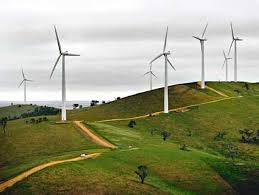


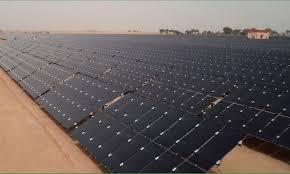 Which brings me back to my grandfather. World population doubled in his lifetime, but there were still large chunks of virgin territory around the globe. Today there are 7.2 billion of us around and it behooves us to tread lightly on this planet and conserve what we can of its considerable beauty. We owe it to our children and grandchildren, if not to ourselves.
Lilacs and Chestnuts in Bloom: springtime in Vienna
 Strolling through the streets of Vienna at this time of the year is a good opportunity to admire lilacs and chestnuts in bloom. A note for the (happily) increasing number of readers of this blog from countries outside the temperate zone: the nuts that grow on these trees in the autumn are not edible. These trees are properly called Aesculus Hippocastum, also known as horse chestnuts, and not even remotely related genetically to those that produce the edible variety. Edible chestnuts, though similar in appearance to horse chestnuts, grow on several species of trees that belong to the beech family.
 Incidentally, while checking the background for the above, I came across an image for what is reputedly the largest tree in the world (in terms of girth, not height). It is a sweet (edible) chestnut tree called the Hundred Horse Chestnut, estimated to be 4000 years old, located near Mount Etna in Sicily. Its multiple trunks have a circumference of nearly 200 feet (60 meters). There are conflicting claims as which exactly is, or was, the world’s tallest tree, but as a species, the tallest four are the Redwoods and Douglas Firs of California and Oregon, closely followed by Eucalyptus, Sitka Spruce and Giant Sequoia. Apart from the tallest Australian Eucaplytus, all the other top four are found on the west coast of the United States.
Unchanging Statecraft
It appears that statecraft, the art of governing nations, has changed little through the millennia. Charles de Gaulle reputedly said: France has no friends, only interests. Here he was clearly referring, in the context of his conversation, not to France alone, but to all nation-states.
The frequently quoted saying: Geography is History, expresses the same concept in different words. Why? How are geography and history related? An anonymous internet contributor offers the following well-reasoned answer. Key concepts of geography, such as location, place, and region are tied inseparably to major ideas of history such as time, period, and events. Geography and history in tandem enable learners to understand how events and places have affected each other across time. It is worthwhile remembering the enduring truth of the foregoing in connection with Russia’s recent actions in the Ukraine.
Seen in this context, Putin’s reaction to a potentially less friendly regime in the underbelly of Russia is consistent with China’s reaction to Taiwanese or Tibetan independence, or with the United States to Cuba. In 1854, John Quincy Adams talked of annexing Cuba, which was then governed by Spain, saying “But there are laws of political as well as of physical gravitation; and if an apple severed by the tempest from its native tree cannot choose but fall to the ground, Cuba, forcibly disjoined from its own unnatural connection with Spain, and incapable of self support, can gravitate only towards the North American Union, which by the same law of nature cannot cast her off from its bosom.”
Larry Willmore, in a recent post on his blog thought_du_jour@yahoogroups.co.uk cites an article by journalist Patrick Smith that nicely tempers the current geopolity with the reminder that history does not need to repeat itself. “The first thing to know is that in one form or another spheres of influence have been around as long as there have been human communities. Second, among the primary tasks of our time is to outgrow them. The third thing to know is that we have not yet done so.”
It appears that the world of today is still firmly embedded in phase 1 of Patrick Smith’s 3-stage progress of geopolitical development. The world needs statesmen of courage and vision to move the world to phases 2 and 3.
Personal Energy Meter
Here’s a neat calculator from the National Geographic site, a personal energy meter to calculate individual carbon footprints.
Calculate your own energy use.
This website will help you convert energy units if needed. http://www.onlineconversion.com/energy.htm
And don’t forget to divide total household usage by the number of people in your household to calculate per capita energy usage.
Here is a link to National Geographic’s main article that asks: How can we power our planet responsibly? big questions
Unarm, Eros
Unarm, Eros; the long day’s task is done
And we must sleep.
Anthony and Cleopatra, Act 4, Scene 14
 Wrestling with facts in fiction… long and hard. Sunset on Lamma. A long day’s work. Little progress.
Taking the Wind out of Superstorms
Traditional electricity generating power plants burn fossil or nuclear fuels and are massive chunks of infrastructure that take years or decades (in the case of nuclear plants) to build, cost billions of dollars, and then are in place to produce power for 50 years or more. They are gigantic investments in building and capital that cannot be lightly dismissed or shut down (i.e. we are locked-in to this technology for several decades). The people who control these massive infrastructures are rich and powerful and have often worked very hard to bring these projects to fruition. They (and their company’s shareholders) are, very understandably, not easily persuaded that their life’s work belongs to a changing (and soon to be outdated) paradigm; that of large, centrally controlled power plants, burning fossil fuels to provide reliable electricity for all in the neighbourhood. Instead, the growth of renewable technologies, especially wind and PV solar, means that you and I can conceivably have backyard or rooftop systems that can provide all the electricity we consume. Right now, these systems are unaffordable to most of us because the homes we live in were designed in an era of low-cost energy and take little advantage of passive design to minimise energy use. So at the moment, established wisdom and societal inertia still favour the old paradigm. The economics of renewables vary wildly depending on government regulations in different countries around the world.
Mark Jacobson is professor of civil and environmental engineering at Stanford University and has spent the last 20+ years developing computer models of different energy technologies and their effects on emissions, air pollution and climate. Based on his extensive modelling work and studies, he says that wind, water and solar power (WWS) can be scaled up in cost-effective ways to meet our energy demand; in his words, a “smart mix” of of renewable sources can do the job. Because the wind blows during stormy conditions when the sun does not shine and the sun often shines on calm days with little wind, combining wind and solar can go a long way toward meeting demand, especially when geothermal provides a steady base and hydroelectric can be called on to fill in the gaps (Scientific American, 2010). In 2010, Jacobson and co-author Mark deLucchi postulated in 2 articles, published in the journal Energy Policy, that the world of 2030 could be powered by renewables alone. A daunting task, but here’s why it could be done.
In May 1961, the president of a nation announces that his country will put a man on the moon by the end of the decade. Despite doubts that this can be done, both civil society and all branches of government align together to achieve the goal, just 8 years and 2 months after the announcement. The key to this achievement was alignment, unthinkable in today’s US, polarised as it is between two mutually antagonistic parties. Similarly, the WWS global energy strategy proposed by Jacobson is doable, provided there is sufficient alignment between nations that these goals are desirable and doable. Another stumbling block in the path of international alignment are the corporations (and the powerful people who run them) that are locked-in to fossil fuel technologies mentioned in the first paragraph above.
Jerome Dangerman is a thoughtful Dutchman who has worked in energy companies and academia, and has studied the problem of technological lock-in. He suggests a way out of the impasse lies in making shareholders pay for environmental damage. With such measures, investments will flow towards companies that produce energy sustainably.
A recent study by Jacobson et al. also point to another, remarkable benefit of renewables. Large arrays of offshore wind turbines could significantly reduce storm surges and weaken hurricane damage to the extent that the billions of dollars of damage avoided are themselves a powerful economic argument for putting up these electricity generators, not counting the value of the electricity they produce.
References: Jacobson, Mark Z.; Delucchi, M.A. (November 2009).“A Path to Sustainable Energy by 2030” (PDF).Scientific American 301 (5): 58–65.
Mark Z. Jacobson and Mark A. Delucchi (30 December 2010). “Providing all global energy with wind, water, and solar power, Part I: Technologies, energy resources, quantities and areas of infrastructure, and materials”. Energy Policy.
Jerome Dangerman: http://www.ru.nl/businessadministration/@923898/pagina/
Taming Hurricanes with Arrays of Offshore Wind: http://mashable.com/2014/02/26/offshore-wind-weaken-hurricanes/
http://www.nature.com/nclimate/journal/v4/n3/full/nclimate2120.html
Note: Unfortunately, for copyright reasons, some of these articles are available only to subscribers
Latest Posts
-

December 2021 Newsletter
Originally posted on The Forest Way: A photo essay Most wonderful wishes and best regards to all, for the start of a fresh, healthy, environmental…
-

A Tree Planting Update
I begin this post with an apology. I have posted only sporadically this past year, and the reason is not Covid as one might think.…
-
The Standoff explained: Modi government vs. Indian Small Farmers
The is basically a battle for the future of Indian agriculture. It is also a battle of two opposing philosophies: Small is Beautiful vs. Big…
-

The True Source of Wealth
Many years ago an economist friend told me to invest in stock index funds rather than property. He pointed out charts comparing property prices and…
 aviott