Home » Posts tagged 'climate change' (Page 3)
Tag Archives: climate change
Leadership Hope for a Warming World
Several years ago, an Italian acquaintance said to me, “The growth of the Roman Empire was driven by testosterone, you know.” He was a polyglot polymath; a materials scientist by profession, and a keen historian who sometimes spouted Greek and Latin quotations to illustrate the points he made. Julius Caesar, as a promising young general in his thirties, felt like an under-achiever and a failure. He is known to have lamented that Alexander had conquered most of the known world by the age of thirty, while he himself was only a Quaestor (a local magistrate) in Rome. Caesar was forty years old when he formed the first Triumvirate with Crassus and Pompey. He then went on to defeat the Gallic tribes of modern day France over the next eight years, killing more than a million Gauls and Germans in the process (according to Plutarch) and enslaving a million more. Presumably, by the mores of his time, these deaths were considered necessary to establish rule of law, discipline unruly Roman citizens with firm leadership and ensure stable government.

UN General Assembly: Image courtesy United Nations secretariat
After the Second World War, with American leadership and the newly instituted United Nations organizations in 1945, it was widely believed that conquest and rule by force of arms was a thing of the past. Post-1945 the world entered an era of global peace and the longest absence of major wars mankind has ever known. If today’s world outlook seems bleak, blame it on the internet and social media, which are able to convey local impacts of minor skirmishes into our homes with larger-than-life images. Brutal killings appear immediately on the screens we carry in our pockets, or on laptops and smart tablets in homes and offices. When the Cold War ended, American philosopher Francis Fukuyama famously declared the end of history. In a nutshell his thesis was: with the spread of globalization and its accompanying prosperity, liberalism would spread around the world. Fukuyama’s book “The End of History and the Last Man” was published in the heady post-Cold War days of 1992. Today Fukuyama confesses: Twenty five years ago I didn’t have a sense or a theory about how democracies can go backward. And I think they clearly can.” (Washington Post article here)
On the other hand, Harvard psychologist and popular science author Steven Pinker argues that humanity is currently experiencing decreasing levels of violence (TED talk, 20 minutes) However he argues that liberal values are under threat from authoritarian populism, religious fundamentalism and radicalism of the left and right. There is no doubt in my mind that liberal democracies will do better than dictatorships and autocracies in tackling the gravest problem facing humanity today, global climate change. And it is mainly in democracies that the #MeToo movement is taking shape. People involved in the movement are asking questions and demanding action from their governments. Have we reached a tipping point? Can this watershed moment go beyond words to drive meaningful action? My answer to these questions is an emphatic yes. The fact that the movement has unexpectedly taken root in Asia is an enormous portent of things to come.
African press reports indicate that in many countries on the continent, women are afraid to talk about sexual harassment, especially in many of its conflict zones. According to this Zimbabwe newsletter, four of the five riskiest cities for sexual assault and rape are in Africa. There also appears to be a direct correlation between sexual harassment and geopolitics. The greater the gender equality that exists in a country, the less likelihood of autocratic leaders. Strongmen (and wannabe strongmen) look on the exercise of power as a kind of pissing contest, with the Trumps and Erdogans of this world trying to outdo the Putins, Kim Jong-Uns and Dutertes. More women leaders coming to power in countries around the world as a result of the #MeToo movement would be the best news for global climate. Women are less likely to indulge in geopolitical pissing contests. On the one hand women are generally more inclined to collaborate and cooperate and and on the other, their plumbing discourages such childish displays, leaving them with more time to get on with the urgent tasks of governing.
Three Score Years and Ten: Planetary health and your lifetime.
A quotation from the Psalms recently came to mind. The days of our years are threescore years and ten; and if by reason of strength they be fourscore years, yet is their strength labour and sorrow; for it is soon cut off and we fly away. (Psalm 90, v. 10).
Having reached that Biblical milestone earlier this year, I recall a favourite uncle of mine quoting the above lines at me some decades ago when he reached the age of 70. At that time, his attitude was: I’ve done my bit for the world, and given you a good start. Now it’s up to your generation to carry on the good work. Study hard, find jobs, work hard, and you’ll end up like me, looking back on a life well-lived and enjoying the fruits of prosperity.
Based on the foundations laid by an earlier generation, many in this generation (myself included) worked hard and enjoyed a prosperous life, largely managing to evade the conflicts and other terrible things that happened around the world at different places and different times. We lived in a time of a rising tide lifts all boats otherwise known as trickle-down economics, but somehow gravity didn’t do what it was supposed to do, for the simple reason that human greed defies gravity. So instead of trickling down, money trickled up, slowly at first, until the present day when it’s become a roaring flood. Economic pundits (and most famously the pop group Abba) call it “The Winner Takes it All” syndrome. Economist Brian Arthur who has published a body of work on technology and society calls it “the network effect locking markets in to the domination of a single player.”

Trickle down Economics at work. Image courtesy, Ed Hall, on Pinterest.
So here I am, at three score years and ten years thinking, the work’s not done yet; we’ve not laid the foundations of prosperity for coming generations, we’re not leaving behind a healthy planet for them. There’s still time, but there’s a lot of work to do, easily doable despite the shortening window of opportunity remaining, if enough people join in. Here are some links to steps for a healthier planet.
These are only small actions, but following the suggested prescriptions on only one of these links can greatly improve your own health as well as that of the planet. As a side benefit you might find, like Moses, that your eyes are not dimmed, nor your natural force abated. So here’s wishing you all the best for the future of the planet.
Remember how the Grinch stole Christmas?
Remember the children’s tale of how the Grinch stole Christmas? Well, here’s a true life tale that tells a similar story. See the following link for the newspaper article that talks about the banned video.
See the video below.
Are You Choking on Carbon? #MeToo
I recently read of efforts by a young Swiss duo, both engineers, whose company, Climeworks, sucks CO2 out of the air and carbonates water, injecting the water underground into basaltic rock. To its own surprise, Climeworks finds that the gas converts to solid carbonate forms underground in a couple of years. So is this a stable way to remove greenhouse gases from the air? There are other uses for captured CO2 of course but the quantities are minuscule compared to global emissions. So the pundits talk of capturing the carbon dioxide and storing it in underground caverns or pumping it under pressure into the depths of the ocean. Why isn’t there more talk among technologists of reducing emissions, instead of accepting emissions as a given and figuring out ways of converting them at great cost to benign forms?
A friend recently commented on efforts to remove atmospheric CO2 and store it underground. It’s like swallowing gas, he says. You know what happens when you have too much gas. You either fart or burp, or both. Accumulated internal gas is painful and you wouldn’t do it to yourself, so why do they want to do it to the earth? Do they know what will happen when the earth farts? So why don’t we plant trees instead?
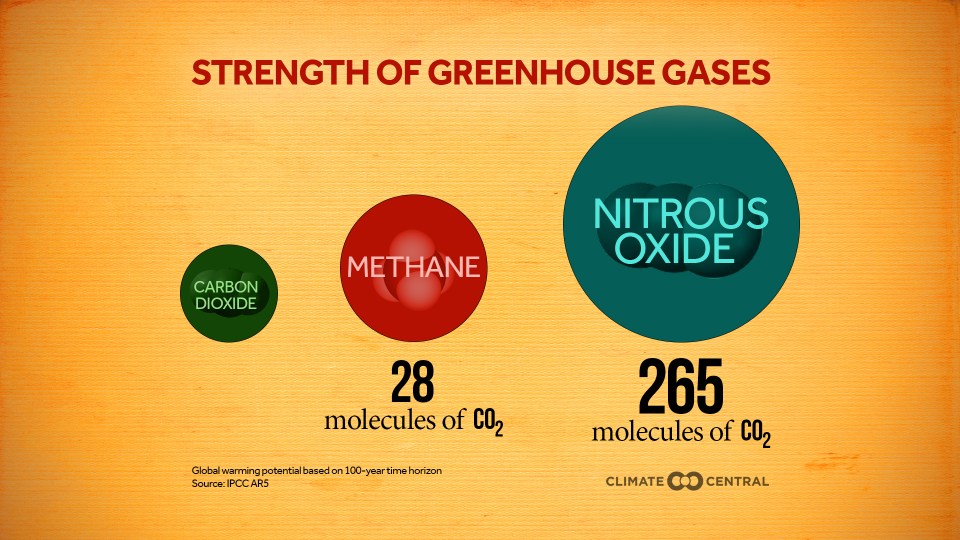
Relative strengths of major greenhouse gases. Image courtesy IPCC
Planting trees is a solution. An average tree sucks up 25 kilos of carbon per year. Humans emit 30 to 40 gigatons of CO2 every year. Let’s say emissions are kept at 30 gigatons a year. Thirty billion tons. That’s… let’s see, forty trees take up one ton per year, so multiply 30 billion by 40… so you get 1,200 billion. That’s 1.2 trillion trees per year just to break even!
How many trees are there on earth already? I found a BBC report of a 2015 Yale University study that estimates the number of trees currently on earth at 3 trillion. That’s 3,000,000,000,000. Since atmospheric CO2 concentrations are going up steadily, the situation would be much worse without these 3 trillion trees. So we still have to suck up the additional 30 gigatons a year, or else reduce emissions. If we take 7 billion to be the global population, leaving aside the old, the infirm and the very young, that leaves around 3 billion people of tree planting age worldwide. In order for 3 billion people to plant 1.2 trillion trees per year, each one will have to plant 400 hundred trees per year.

Persistence of greenhouse gases in the atmosphere. Image courtesy IPCC
Can (and would?) 3 billion people plant 1.2 trillion trees in a year? Of course not. But if even 10% of that number were to plant 10% of the target, we would be well on our way to doing what we need to do. Is this realistic? Quick answer: No. So is there a quick fix? Yes. Eat less meat. Depending on the type of feed, a cow produces 70 to 120 kg. of methane per year. Remember, methane as a greenhouse gas is 23 times more potent than CO2, so cutting down on meat is a quick way to reduce emissions. And it has the added benefit of freeing up pastureland for tree planting. So now we’re beginning to get a handle on things.
If we pump huge quantities of CO2 underground and undersea, the earth might fart (so to speak), with unintended consequences. But cows already fart on an ongoing daily basis, emitting considerable quantities of methane, so eating less meat is a relatively painless quick fix. And then there are lots of concomitant steps that are in the process of hesitantly being implemented, like switching to public transportation and electric cars. And, oh yes, the most environmental step the world is taking is the #MeToo movement! Let’s write that on our foreheads as a reminder to the world. Education and empowerment of women is the fastest way to reduce global greenhouse gas emissions and save our planet.
2 Glorious Weeks in sLOVEnia
Today’s post is a travelogue, people. Hard to reconcile love of travel with a low carbon lifestyle, so we assuaged our conscience with a journey by train and a few tons of sequestered carbon bought on the website of Tree-Nation, a platform that promises to plant trees worldwide in an ecologically sustainable manner. I hope the promise of the website is true. Please let me know, anyone, if you know otherwise. The tickets of the Austrian Bundesbahn (Railways) said: 83 kilos of CO2 avoided for each of two tickets from Vienna to Ljubljana, the capital of Slovenia. Once there, we rented a small car to travel roughly 1000 km in Slovenia (pop. 2 million, area 20,000 sq. km). We were blessed with sunny skies and post-summer balmy weather, not too hot and not too overrun. Here are a few photos instead of the usual words.

Spiral stircase, Ljubljana Castle (click on photos to enlarge)
Lubljana is a small, beautiful, walkable city. There is a castle, with dungeons and a respectable dragon, There’s a puppet museum, and a dragon’s egg, at the top of the castle. You can queue for the cable car if you don’t want to climb. Lots of restaurants and cafés in town, along the river, fresh produce galore. Everything reeks of nature here, clean air and lots of people racing through the town on bicycles.

Mountain lakes among peat marshes near Rogla

Stalacties and Stalagmites in the caves of Postojna.
The Postojna caves stretch to 24 km and were carved by the Pivka River over millenia, creating dazzling chambers of stalactites and stalagmites. The Pivka River ultimately flows into the Black Sea. A train takes you 3 km into the interior of the cave and then picks you up again after a guided walking tour of around 2 km on foot. Well worth a visit.

Looking out on the Adriatic from the Piran Peninsula, simply step off the rocks to swim in the warm water
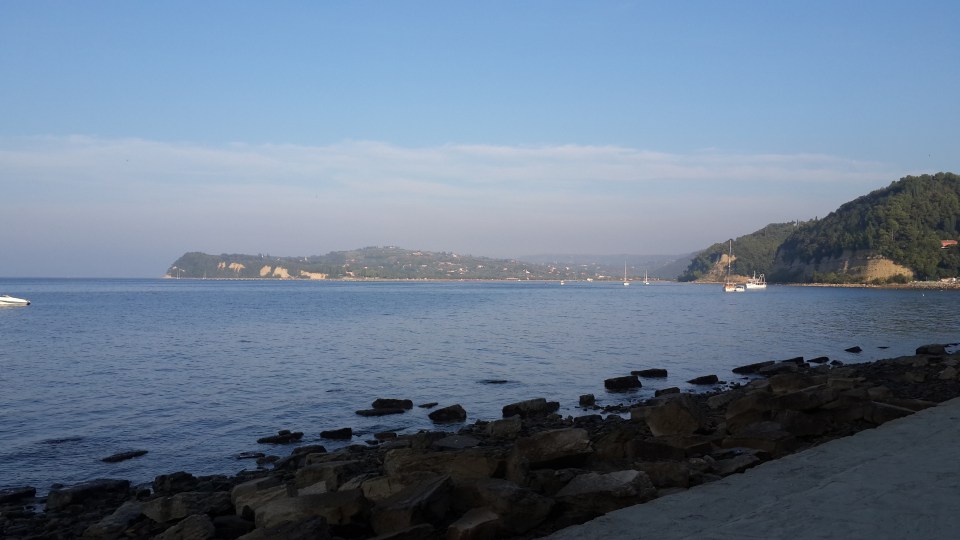
Trieste and Italy a short ferry ride or swim from Piran

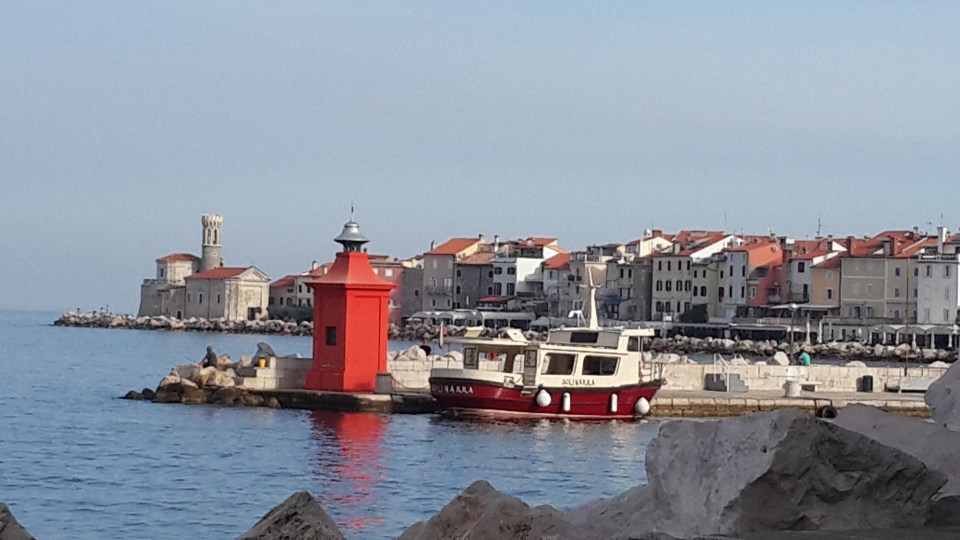
The Adriatic on three sides around Piran
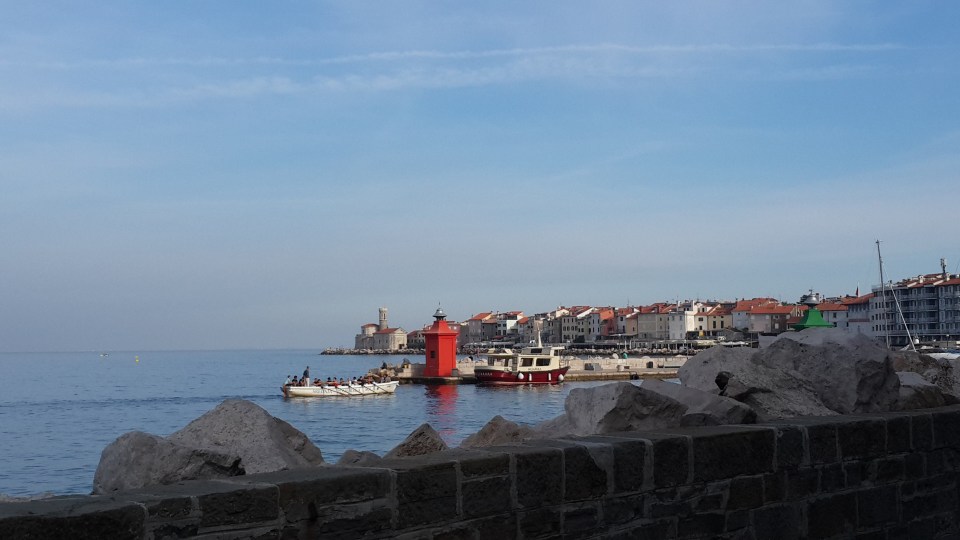
Leaving Piran with regret. Water temperature around 24C in mid-September
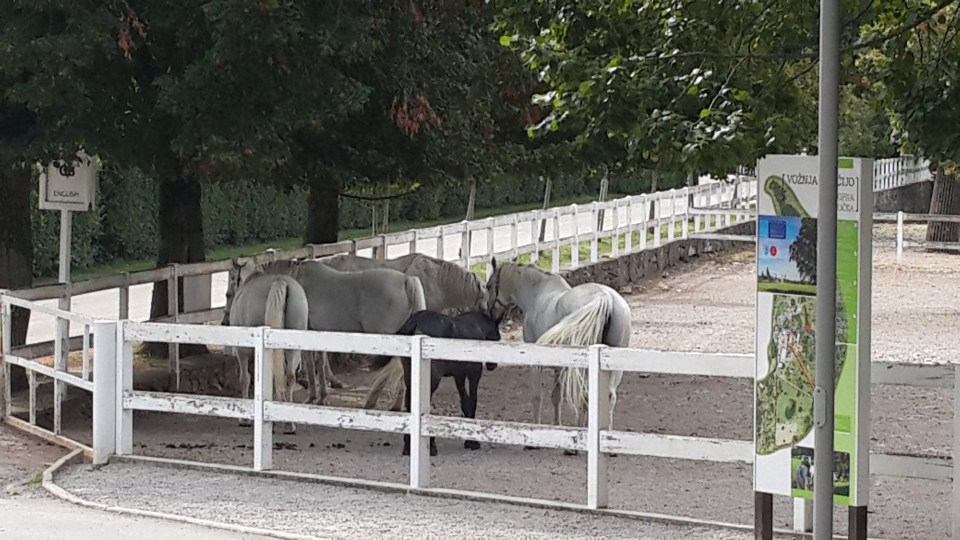
Lipica, birthplace and breeding grounds of the Lippizaner horses used by the Spanish Riding School of Vienna

A foretaste of the Julian Alps. View from Srednja Vas

Pure mountain streams
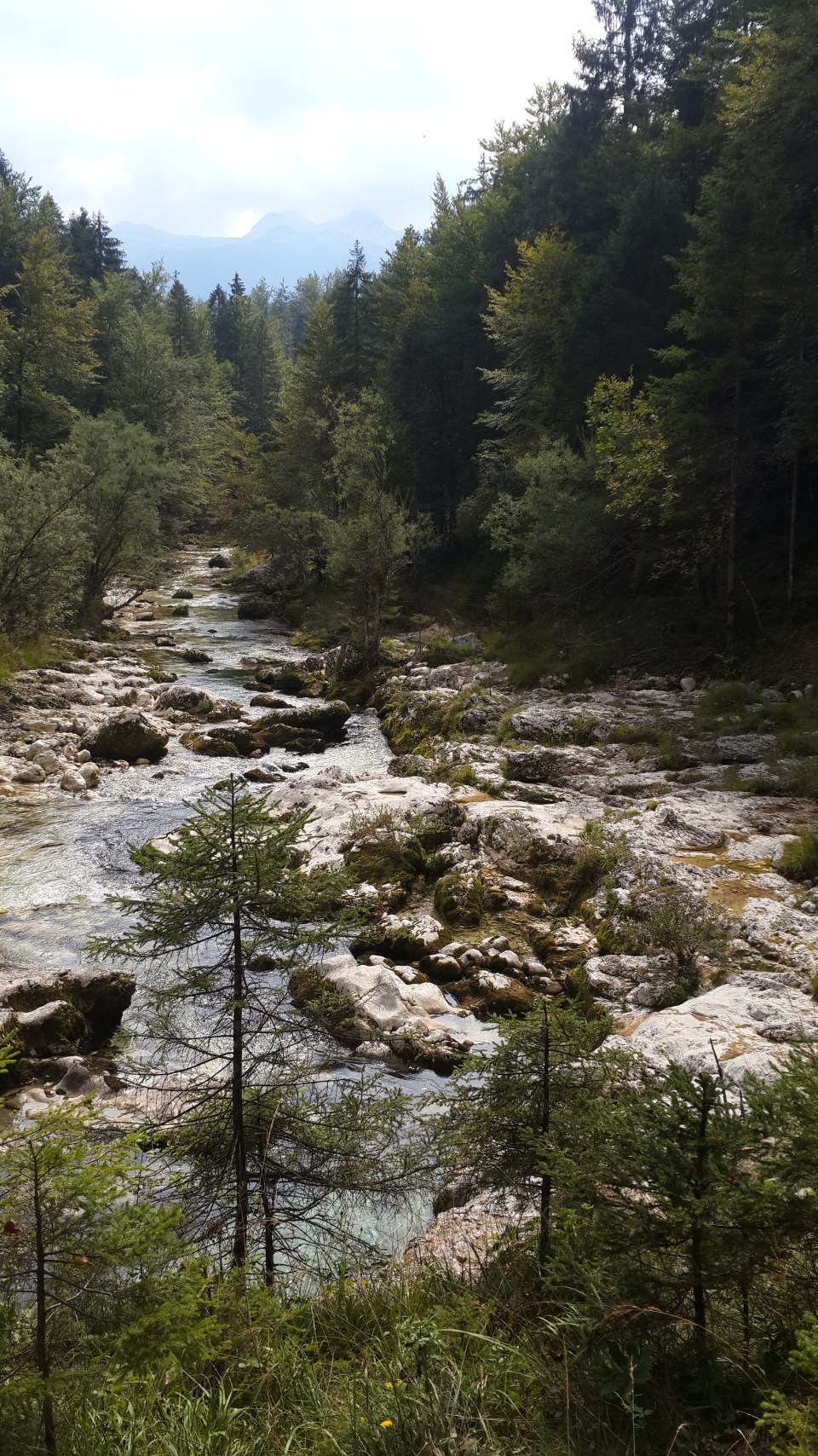
Pristine waters and carefully regulated hiking trails speak of great respect for nature

Lake Bohinj, a jewel amidst the Julian Alps

500 m above sea level, the water was warm enough for swimming at 20C.
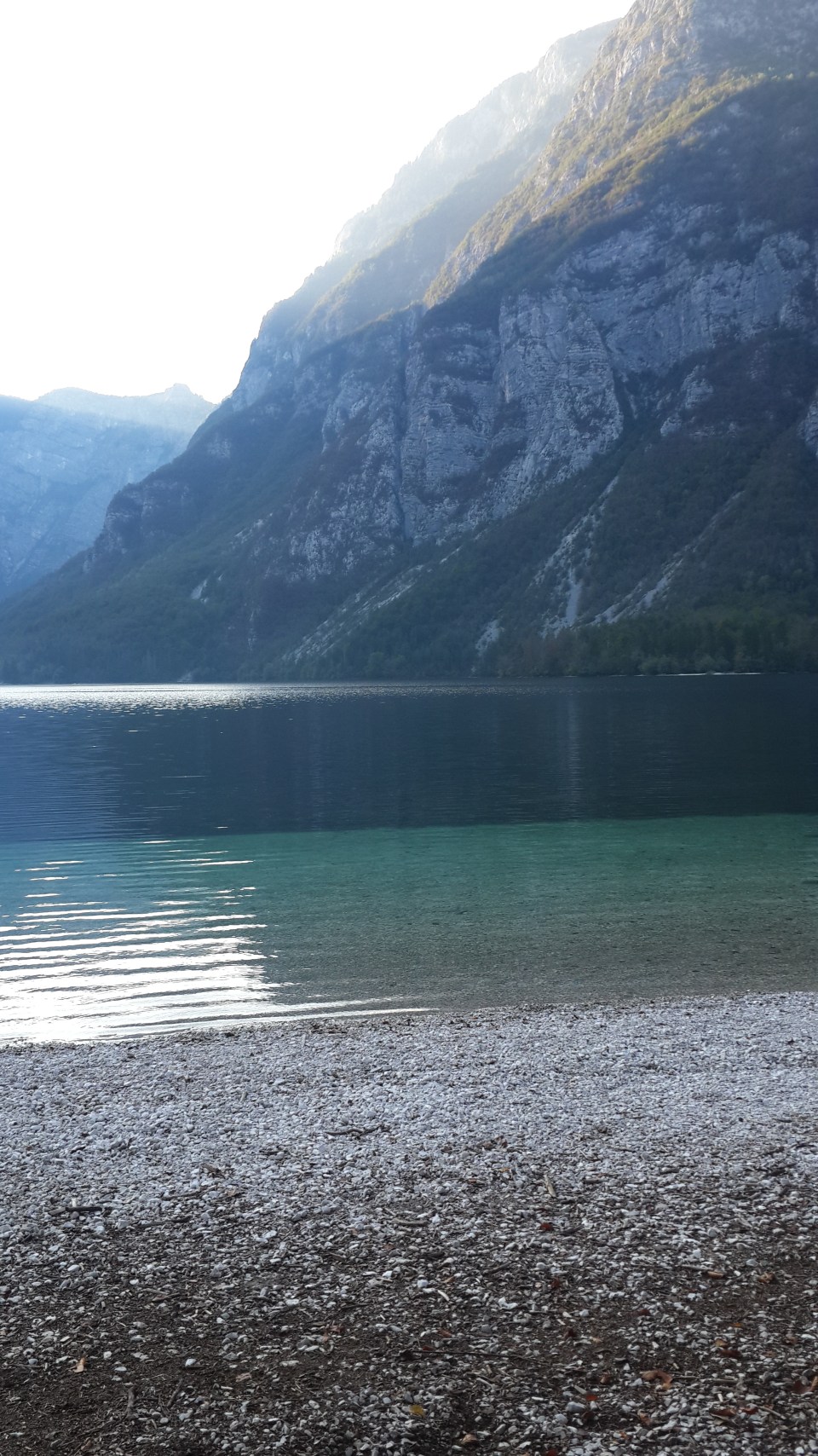
Lake Bohinj
This is a country where most places, especially in the mountains, nights are still dark enough to see the stars. Nature is close to you here. Go there, treat it with as much respect as the local people do. Be prepared to walk a lot if you want to enjoy it. Take your trash with you when you leave, though you might find that the heart lingers, reluctant to leave…
How much Prosperity?
Around 2009 economist Tim Jackson wrote a book called “Prosperity without Growth” that attracted the attention of policy makers worldwide. Maybe the excitement was mainly in the academic community, but I do know that Tim Jackson was sought after by policy makers and politicians for several years after the publication of his work. I assume the latter were looking for advice about ways to institute policies that would ensure deep systemic change. Of course they did not get any useful information. Jackson’s answers only showed what had to be done, not how to do it. That ‘how to’ is the preserve of politicians and, ultimately us, the electorate.
This brings me to the real reason for failures of governance. Us. We. The. People. Many years ago I had a brief interview with the foreign minister of a country and asked him why he did not implement what we both agreed would be a common sense measure to enhance regional food security at practically no cost. The helplessness implicit in his reply was illuminating. One of the ‘aha’ moments of my life. “Bring me a mandate,” the minister said, “and I will gladly take this decision.” In that moment, like cascading coins from a slot machine, the realization dawned. In democracies, it is us. We have to use our starling intelligence, as members of the swarm to mould societies as we wish. In travels through many countries I’ve noticed that where people sit back and complain about the government, the corruption, the lousy politicians; they are not doing anything much to change the status quo.
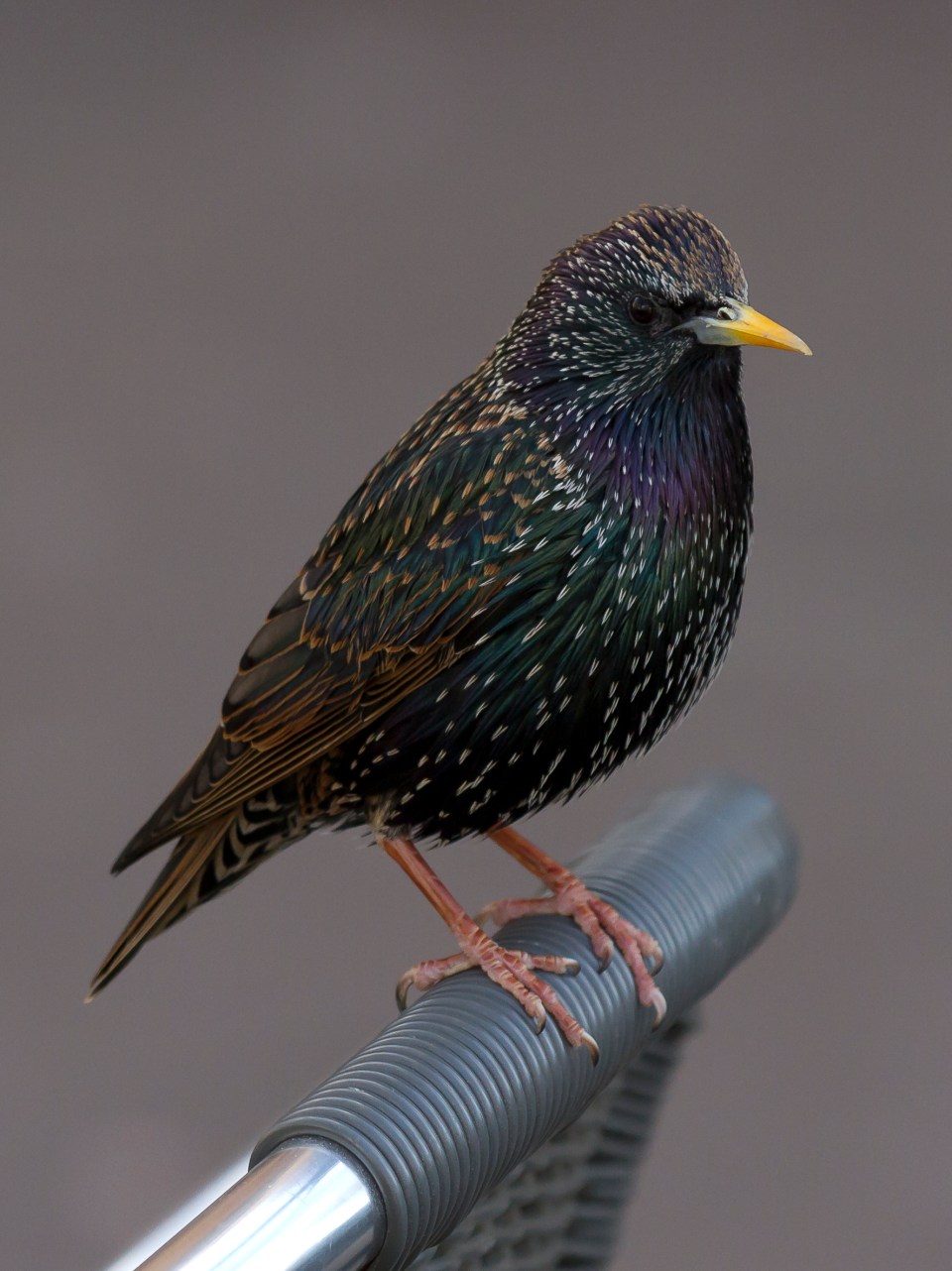
Starling image courtesy Wikipedia
In the words of George Monbiot, writing in the Guardian, we have only the one planet, but we’re living a four-planet lifestyle. In 2018 Earth Overshoot Day fell already on the 1st of August. This is the earliest date since the practice began in the 1970s, calculated by the WWF and the Global Footprint Network. This is the date when humanity’s annual demand on Nature exceeds what the Earth can regenerate over the entire year. In other words, this is the date when we begin to rob the bank. And most of us, good people, in our struggle to provide a comfortable life for our families, in ensuring livelihoods for our children, are totally oblivious to this. So before the politicians act, we have to change ourselves, reduce our demands on the planet. Sometimes this can mean enriching our lives by doing more with less. And very often this change begins with an inward journey that only we can make. No politician can ever do this for us. The transformation that the world needs is inside of us. All of us.
Stewardship of the Earth – R.I.P. Simba
Many years ago, I was shocked when an economist friend of mine (not you, Larry) said “so what?” in response to my moaning about arctic sea ice loss and the threat of extinction to polar bears. The economist in question is a thoughtful, gentle human being who would never think of himself as cruel or unkind. But he was thinking in terms of economic resources for human needs and, like a lot of people, myself included, who are stuck in their heads (i.e. nurture their intellect and take pride in it), they see themselves as thinking people, and therefore naturally superior – unthinkingly superior – to all other living things.
I came to humility rather late in life. This late-found humility was triggered by a number of factors; the increasing number of vegetarians and vegans in my circle of acquaintance, the anti cow-slaughter movement in India, increasing evidence of methane emissions from cattle farming for meat, and a video about South African Anna Breytenbach who has made interspecies communication her life’s work. I had always appreciated animal pets as sentient beings, but Breytenbach’s work, in particular, brought me to see them at eye level so to speak, dispelling any vestigial notion of superiority. Yes, we can think faster, outwit them in IQ tests, juggle, ride bicycles, add numbers, make wars – and exploit our planet – much better than they ever can. Despite all this, if we don’t recognise them as sentient beings with as much right to live as we do, then we put our own humanity, and humankind, at risk.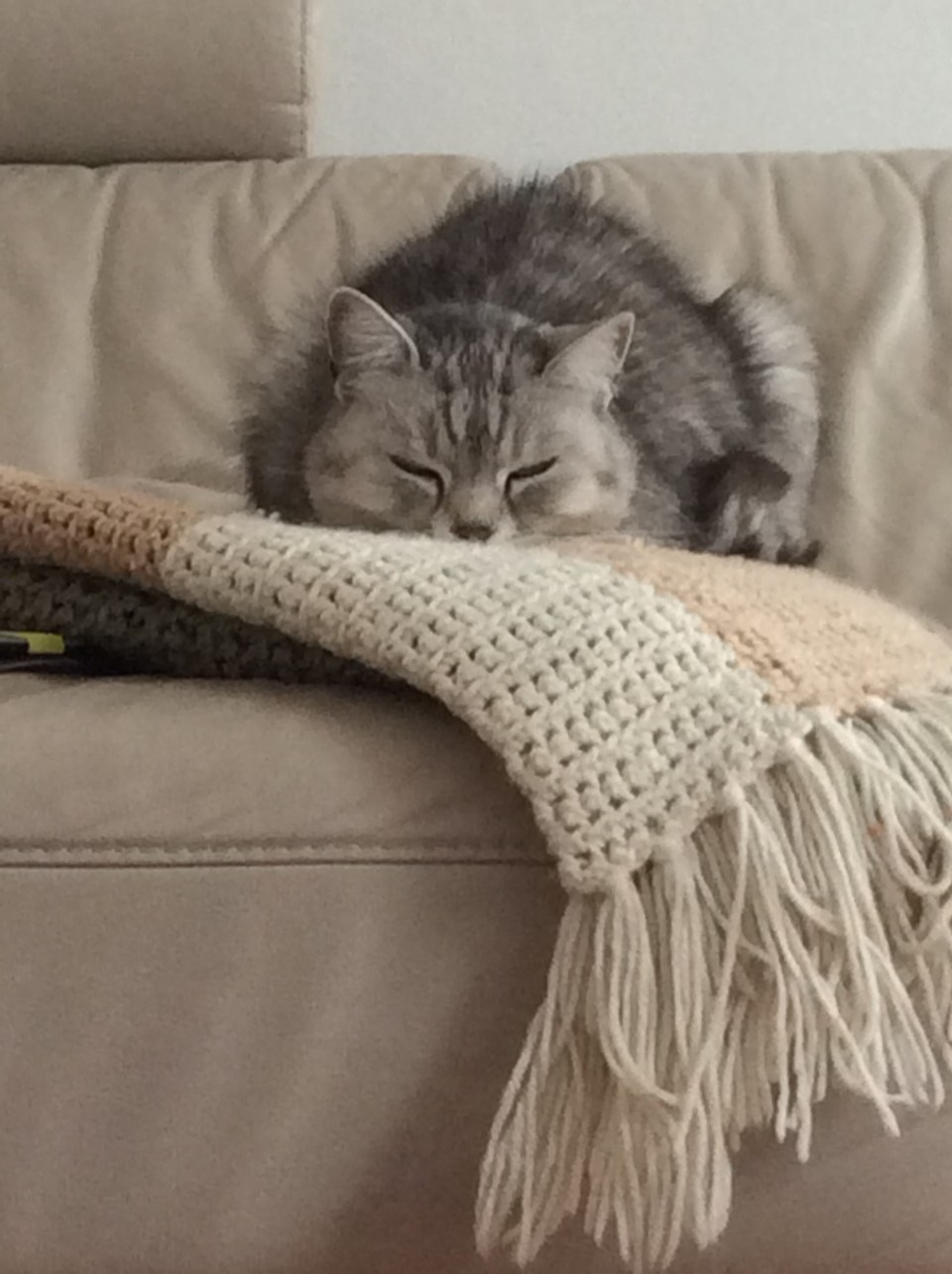
A friend recently remarked on the number of stray dogs in her neighbourhood. She complained that animal rights activists were busy protecting the rights of the dogs, while ignoring the plight of poor people in the same area who were struggling to eke out a living. I neglected to point out at the time that a government that does not respect the rights of animals as sentient beings is much less likely to respect the rights of economically powerless people. Take the case of infrastructure. When have rich people ever lost their homes and land to make way for a dam? If you can show me an example, I would wager they were richly compensated and ended up materially better off than before. Never so in the case of the poor. The same applies to roads. An eight-lane highway is deemed necessary and land is appropriated, very often from people who can never afford to use that highway.
And so I come in this roundabout way to the fact that Simba died two nights ago. This blog posting is a mark of respect to the passing of a much loved animal. She was only a cat, but she was a sentient being. R.I.P. Simba.
A Gift to Gaia
The world is full of stuff and many parts of the world are drowning in it. Except for those parts of the world where people don’t have any stuff at all. Nothing to speak of.
Within our family, we stopped giving stuff as gifts quite some time ago. Nowadays, we mark occasions such as birthdays, anniversaries and significant celebrations with the gift of time.
The planet has plenty of time to spare, even though humanity does not. In a few hundred years, or a thousand years, even if mankind has pursued its current illusion of prosperity to oblivion, the planet will sedately roll on, and prosper without us. Just as it prospered long after the last dinosaur ceased to exist.
When Isaac Watts wrote his hymn, based on the 90th Psalm, he was not thinking of humanity’s self-induced annihilation as he composed the following lines.
Time like an ever rolling stream, bears all its sons away
They fly forgotten as a dream, dies at the opening day.
For those ‘successful’ busy people who have no time at all to spare, here’s a suggestion for a gift of stuff that’s actually a gift to the planet and buys us time. This gift has the added benefit of helping people who don’t have much stuff at all. Here’s a link to an Impact Calculator from Solar Aid. With enough gifts like these, perhaps one day we can sit down with Gaia and have the last laugh together.

Image: courtesy greenlightplanet.com
Suffer the little Children: A New Testament Reminder
St. Mark, Chapter 10.
13. And they brought young children to him, that he should touch them: and his disciples rebuked those that brought them.
14. But when Jesus saw it, he was much displeased, and said unto them, Suffer the little children to come unto me, and forbid them not: for of such is the kingdom of heaven.
15. Verily I say unto you, Whosoever shall not receive the kingdom of God as a little child, he shall not enter therein.
16. And he took them up in his arms, put his hands upon them, and blessed them.

Image courtesy dailymail.co.uk
Terrible things are done, mostly by dictatorial governments, to children everywhere, especially to the children of the poor, the powerless and the dispossessed. However, when an official spokesperson for a country that likes to think of itself as a beacon of freedom and the rule of law says, “I can say it is very biblical to enforce the law,” then that person has surely never heard that the law is an ass; that laws were made for people rather than the other way round; that war crimes are committed by people who say, “I was only obeying the law. I merely followed orders.”

It is biblical to obey the law… Image courtesy Youtube.
Transportation: The Weight of Fear
Consider me. Or consider yourself. Presumably an average human being of average weight. These averages vary considerably in different parts of the world, from 60 kilos or less, to 90 kilos or more. Looking back at the various means of transport that I have commonly used in the past five decades, I made a list of their approximate weights for comparison. My own weight has changed (increased!) by 5 kilos during this period, from 75 to 80 kg.
Bicycle: Throughout my schooldays, I used a single speed bicycle to take myself (40 to 65 kg.) to school and back. I assume bicycles weighed around 25 kg. in those days. In any case, the means of transportation was around a third of my own body weight. I loved the song of the open road. Most days I arrived at school in a lather of sweat, but no one really bothered about that.
My first job was as a travelling salesman and the most efficient way to do this at the time was with a motorbike or scooter. Traffic congestion was not yet a problem in the 1970s to 90s. I loved the song of the open road. Most days I arrived at work or at a customer feeling dapper and cool, even though a bit windblown. The weight of the motor-scooter or motorbike I owned or rode at various times in this period varied from 130 to 150 kg. My own weight at this time was a svelte 75 kg.

250 cc Jawa 2-stroke motorcycle ca. 1972. Image, coutresy jawa.eu
From the late 70s to the 1990s my preferred mode of transport was a private car. I loved the song of the open road, although traffic was constantly increasing. Loved to drive long distances on holiday. Car weights varied from 840 kg (1976 first generation VW Golf) to 1400 kg (same model 25 years later) to 1700 kg (minivan). In spite of long distance holiday travel with family, 90% of the annual miles were clocked commuting to work and back. i.e. 1000s of kilometers with just one occupant. i.e. using 1400-1700 kg to transport 80 kg of human being. Forget the song of the open road! Most daily commutes were exercises in creeping through congested streets and highways, impatiently waiting to get to work or home.
From the early 2000s onwards, my thinking about the daily commute evolved (?) as follows. Car (1700 kg, 40 minutes), bus (kg irrelevant, 80 minutes), bicycle (16 kg., 70 minutes). The bicycle was definitely a step forward in efficiency and economy. It cost practically nothing, and also gave added health benefits, although I arrived in a lather at work, as I did in my school days, and had to repair to a toilet for a cat-wash and a change of clothes.
Around 2005, I began to yearn for pedal assist on my bicycle and began to look around for electric models. There were none available as far as I could see. Sometime in 2006, I found a German website on the internet that advertised an electric bicycle with a 1 year guarantee, a 7 kilo NiCad battery pack, and no range specifications. I was tired of a steep hill on my daily commute (36 km per day), so I ordered the bike sight unseen and two weeks later, took delivery of a giant cardboard carton with MADE IN CHINA printed on the sides. It weighed 32 kg with battery, had seven gears and was a real pain to carry up and down to the cellar where I stored it overnight.

Image courtesy Pedalandpower.com
But it did the job nicely. The hill was a problem no more. And the range was around 30 km. Unfortunately, NiCad batteries suffer from a memory effect, and I could not charge it in the office for the ride home, so I got minimal assistance on the dreaded hill with a fading battery.
Ah, the perfect solution! Sometime around 2008, I saw a beautiful 24-speed KTM with the cutest little Li-ion battery that was good for 60 kms of pedal-assist riding. By this time, I had moved homes and my daily commute had increased to 50 km. Here was the answer to my commuting problems. The KTM bicycle weighed 22 kg, I weighed 80 kg., and the electricity cost me around €0.30 for 100 km (30 cents). My friends considered the electric bike expensive. It was expensive, in bike terms, but in reality cost about as much as the annual service of the average 1700 kg. monster. Maybe that’s comparing apples and oranges, you say. But such comparisons are ok when you’re riding an apple, and have gotten rid of the orange. Needless to say, I sold the 1700 kg. monster and have lived happily ever after.
Nowadays people tell me, you can’t ride around on a bicycle at your age! It’s too dangerous to ride a bicycle in this murderous city traffic. True. But I wear a helmet and try to ride cautiously. I’m happy carrying my current 79 kg. on two wheels weighing 22 kg., and wouldn’t dream of carrying it in 1700 kg. as I used to do. The difference in weight (ca.1,678 kg) I like to think of as the weight of fear. That’s quite a lot of fear to carry around in one’s life. Best to get rid of it!
See this author’s page at Amazon.com to read more of his work
 aviott