Home » energy (Page 3)
Category Archives: energy
Carbon Countdown Clock

Image:courtesy usgs
Ah, Trump. Has pulled the world’s second largest greenhouse gas emitter out of the Paris Accord. Was promised. Was to be expected. The one campaign promise that this prevaricating president did keep. The Guardian newspaper has usefully provided an online carbon countdown clock to show the world how time is running out. I believe Trump’s action might provoke the rest of the world to come together to save our common future.
https://interactive.guim.co.uk/embed/aus/2017/carbon-embed
Click on the link above to see how much time we have left.
Poramboke – Singing the Tragedy of the Commons
The “Tragedy of the Commons” is a term applied to the problem of shared resources in societies. All over the world, resources that are shared by all its members (the commons, e.g. public grazing lands, ponds, lakes) are in danger of over-exploitation and long-term degradation. This is what is happening to the world’s air, the oceans, the world’s fresh water, and all the other public resources that we used to take for granted as a basic human right. The world’s common resources are under siege from mighty forces; industrial, economic, demographic. It does not seem right, it is not right, for us to say that all citizens of the world (and those as yet unborn) should not enjoy the same freedoms that we do. And yet we continue to consume more, in the name of increased prosperity and well-being. The Tamil word for commonly owned public land or wastelands is “poramboke.”
How much is enough? Short question. No easy answers. I have met many interesting people recently, who are searching and finding answers, each in their unique way. The video attached above is of south Indian Carnatic singer TM Krishna, along with other eminent musicians, singing the tragedy of the commons in a song with powerful, compelling lyrics.
Poromboke ennaku illai, poromboke unnaku illai, Poromboke ooruike, poromboke bhoomikku he sings
Poromboke is not for me, it is not for you. Poromboke is for the city, it is for the Earth.
These past 3 months, as I travelled in different parts of the Tamil country, I see a powerful re-awakening of traditional values, and I will try to document some of my observations in the coming weeks.
Fossil Fuels are for Dinosaurs II
Wake up, Donald et al.! According to the Guardian of 6 January 2017,
China now owned:
- Five of the world’s six largest solar-module manufacturing firms
- The largest wind-turbine manufacturer
- The world’s largest lithium ion manufacturer
- The world’s largest electricity utility
“At the moment China is leaving everyone behind and has a real first-mover and scale advantage, which will be exacerbated if countries such as the US, UK and Australia continue to apply the brakes to clean energy,” he said.
“The US is already slipping well behind China in the race to secure a larger share of the booming clean energy market. With the incoming administration talking up coal and gas, prospective domestic policy changes don’t bode well,” Buckley said.
For more by this author, see his Amazon page here, or links to his 4 books on the Google Play store.
Why is it Dark at Night?
The nights of 13th and 14th November 2016 were supermoon nights. I’ll resist the temptation to post my supermoon photos, since Facebook and the Internet were flooded with superb photos of the event, and mine were taken with a cell phone camera. But looking up at the beautiful, impressive moon on that light-flooded night, I remembered a question I was asked three decades ago by an uncle of mine, a keen amateur cosmologist.
“Do you know why it gets dark at night?” he asked.
“Because the sun goes down, naturally,” I replied. Absurd question.
“Think again. What about the light from all the stars you see at night? Many of them are brighter and more powerful that a thousand suns. We should be continuously dazzled by their light, and life on earth as we know it should be impossible.”

Image courtesy National Geographic
I didn’t know the answer to the question and, infuriatingly, my uncle refused to give me the answer, leaving me to search for it myself. I first read the answer in a scientific journal, Physics Today, in an article published in 1974 by someone named Edward Harrison. The article was heavy reading, but I ploughed through it, memorising several paragraphs, so that I could finally answer my uncle’s question. But my understanding was not deep enough to retain the answer, and in a few weeks, the answer evaporated from my mind, leaving only faint traces like water stains on a dry rock.
In October this year, an article appeared in the The Telegraph newspaper which showed me that many academically brighter minds than mine were still wrestling with the answer. This article by science journalist Sarah Knapton should be enough to satisfy the curiosity of the average lay reader. And finally my mind is at rest now.
The Ineffable Sadness of Neutered Cats
The sugar cubes floated in my thickly creamed coffee before slowly dropping out of sight. This was a sequel to views of Klimt at the Upper Belvedere in Vienna, itself a sequel to a memorable week exploring inner landscapes of the soul.
There were two of them. They led happy lives, replete with feline fulfilment. They loved to purr and cuddle in bed with their humans in the night. They ate well. Always had food and drink served to them. They never went hungry. They seemed at peace with themselves and their world. There were vestiges of wildness in them still to remind you that, despite centuries of domestication, they were their own creatures, creatures of the wild; individuals. And yet, there was an edge missing. You could see it in their eyes. It was a mixture of sadness and resignation. I came to recognize this glance in the cats and my heart went out for what I had done to them. Years later, I saw a video of a woman who could communicate with animals including big cats, the world’s apex predators, and interpret them in anthropomorphic terms. This video changed my thinking about domestic pets. Having been sensitized by this new thinking, I began to see all the subtle forms of exclusion that are practised in societies around the world.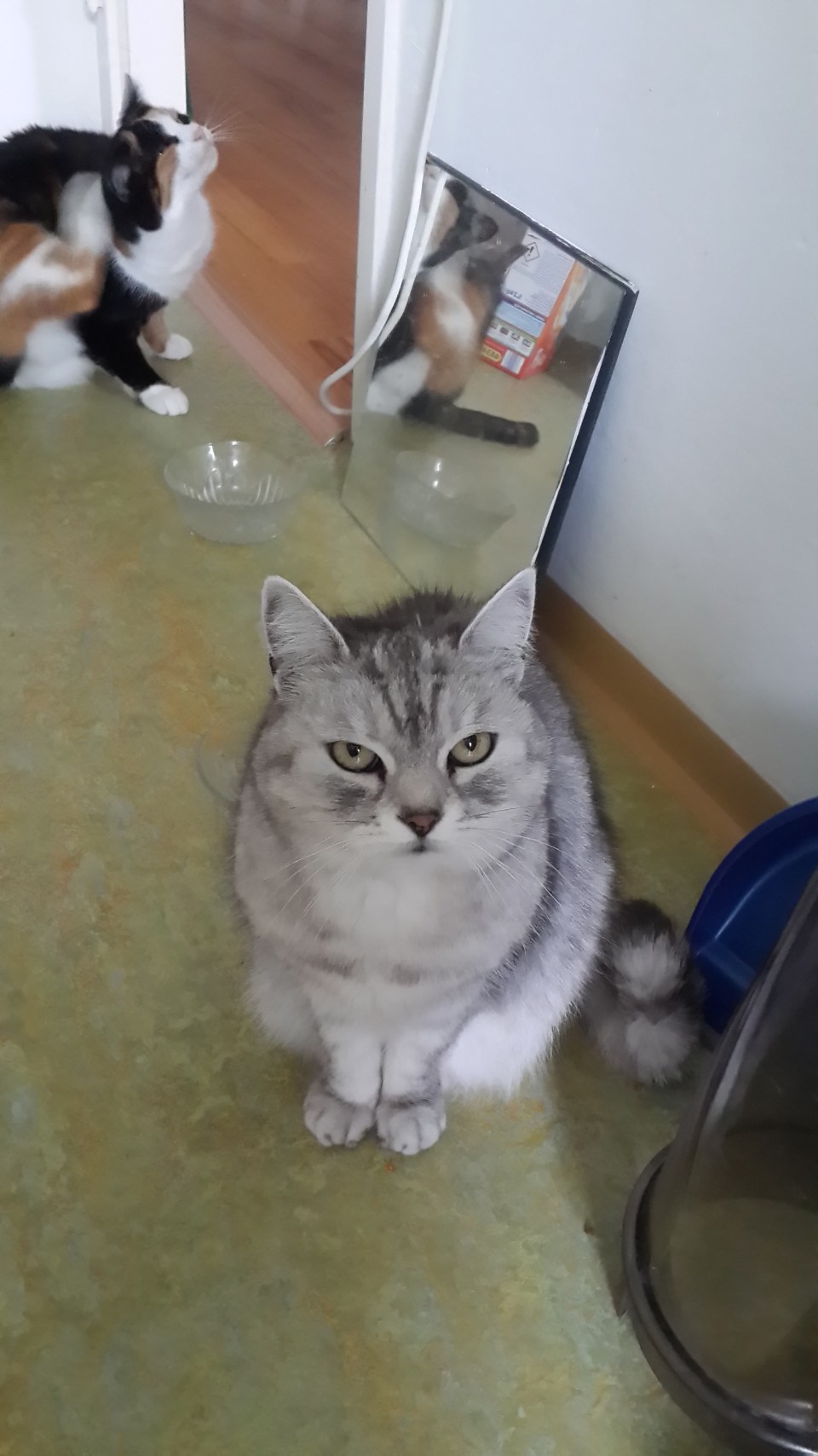
Most ancient cultures respected the natural world, seeing humans as an intrinsic part of it. At sometime in our collective past, we began to call ourselves civilized and parted ways intellectually with nature. This paid off for a few centuries, roughly until the end of the twentieth century. René Descartes famously declared humans to be the thinking species in the sixteenth century. We think, therefore we are (…superior to all other forms of life?). Science and technology have tamed the earth, have subdued nature to such an extent that, like in the Tweety and Sylvester cartoons, we are in danger of cutting off the branch on which we perch. Of course we don’t think of ourselves as prejudiced, but every time we turn away from a conversation with an unfamiliar “other” we practise a form of discrimination just the same. I noticed with a shock of recognition, the ‘sadness of cats’ on the faces of people in the news; in the gaze of a young woman going through the shipwreck of her marriage; in the face of a man devastated by war and conflict; in the catatonic resignation of a child dragged from the rubble of a bombed home. Where does all this violence begin?
It begins with the way we treat all sentient beings, not just our own kind. Gandhi allegedly said, more than a half century ago, the greatness of a nation and its moral progress can be judged by the way its animals are treated. Anthropologist Michael Thompson, in his 1979 book Rubbish Theory, explores the rise and fall in value of objects, depending on scarcity or abundance. He uses bakelite ashtrays as an example in the book. This early synthetic product of the 1930s was sold cheap, and now have become collectors items. Following from Rubbish Theory we should infer that, since animals in the wild have become a scarce commodity, we should value them highly. Conversely, with world population close to seven and a half billion, human life is cheap. Perhaps this is what we are seeing in international politics these days. But here is the paradox of human existence. If we subscribe solely to economic logic, we deny our humanity and diminish ourselves, sowing the seeds for our own ultimate destruction.
Rulers, kings and presidents come and go, but the earth will survive. However, humankind will not survive, if we continue to pursue only economic growth and ignore the unmistakeable signals that the planet continually sends us. Many of our leaders ignore it. It’s time to change those leaders. And here is another paradox of politics. We can change these leaders only if we change ourselves first.
For more by this author, see the links to other work on his Amazon page, or the Google Play Store
Oceans of Lithium
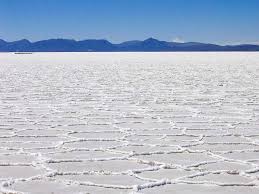
Salar de Uyuni. Source: Wikipedia.en
Salar de Uyuni in Southwest Bolivia contains an estimated 43 % of the world’s easily recoverable lithium. Together with neighbors Chile and Argentina, the three countries contain 70% of the planet’s reserves. As most people are aware by now, the renewables revolution is gathering momentum, and the world needs lithium, lots of it. The people who follow these trends estimate that Tesla’s Gigafactory alone, when it comes into production, will double world demand for lithium, whose prices have shot up just in the last two months of 2015 (from US$ 6500 to 13,000 a ton in November/December). American, Japanese, Chinese and South Korean companies are already mining around 170,000 tons of lithium worldwide. The Argentinian salares, or salt flats, comprise thousands of square miles in the provinces of Catamarca, Jujuy and Salta. The Salinas Grandes in the latter province is estimated to be the third largest in the world. But the grand-daddy of them all is the Salar de Uyuni in Bolivia that stretches over 10,000 sq.km. To paraphrase Exupéry, Salar de Uyuni is made up of salt, salt salt, and more salt, to a depth of one meter or more. In addition to common salt (sodium chloride), the salars contain other useful chlorides; potassium, magnesium and lithium chloride. The estimated 9 millions tons of lithium contained in this salar, conveniently concentrated by natural evaporation, should be enough to power a global energy revolution or two, but at what cost? Bolivia has suspended mining operations after the local residents opposed it, and Chile is granting no new concessions. These are understandable steps, in the light of what economists call ‘the resource curse.‘ In a nutshell, the resource curse or the resource paradox is that often countries with non-renewable natural resources (like minerals and oil) tend to have lower economic growth and less democracy than countries with fewer natural assets.
Understanding the resource curse does not help the international battery industry or alleviate the world’s need for non-polluting sources of energy, however. The increasing price of lithium is driving research into methods of obtaining it from the most abundant source on the planet, the oceans. Industrial ecologist Robert Ayres confidently predicted to me more than a decade ago that we would get all the lithium we need from the ocean. “There’s billions of tons there,” he said. True, there is an estimated 230 billion tons of lithium in seawater, but at a concentration of 0.14 to 0.25 parts per million, I did not believe it possible to extract it in meaningful quantities at reasonable cost. Changed my tune this week.
Many companies worldwide have been experimenting with various reverse osmosis technologies (the same technology that’s most often used to desalinate seawater) to produce brine concentrates dense enough to make lithium extraction economical. Now there are reports of several companies in a dozen countries that envisage producing lithium from brine concentrates at prices ranging from $1,500 to 5,000 per ton. Here’s an article about one of them.
For more by this author, see his Amazon page here.
Hinkley. Oh no!
The political decision to power ahead with Hinkley Point C nuclear power station is the energy equivalent of appointing a tone deaf musical director to the London Symphony Orchestra. How much more evidence do Cameron and Co. need? A short litany of anti-Hinckley arguments should suffice.

Hinkley 1
In a case of economics speaking truth to power, the OECD’s 2010 World Energy Outlook quietly increased the average lifetime of a nuclear power plant to 45-55 years, up 5 years from its 2008 edition.
Seeds of Inequity
What could be more principled than companies that work to genetically modify seeds, breeding out negative traits and selecting a mix of desirable qualities that make them resistant to pests, hardy enough to withstand droughts or floods as desired? After all, farmers have been doing this for hundreds of years, patiently crossing varieties and developing superior strains of the world’s crops. Enter the profit motive. Still no harm done, we thought! Selfish interest is the lever used by civilizations to lift their peoples to prosperity, with the profit motive as the fulcrum on which this lever rests.
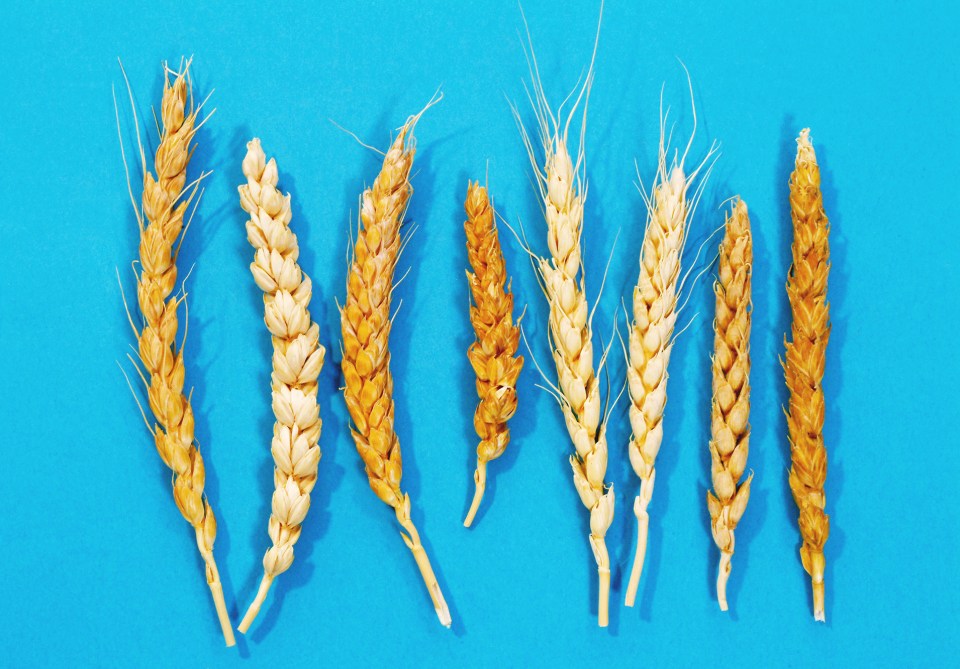
Strains of wheat
The world has generally accepted the truth of this principle ever since Adam Smith pointed it out in his seminal work, first published in 1776. Except for a relatively brief interlude when some nations experimented with communism and socialism in a failed search for social justice and equity, the world has broadly accepted Smith’s premise that wealth creation is a good thing and ought to be encouraged by enlightened governments that simply move out of the way and allow entrepreneurs to do their stuff. By and large, this is what seems to have happened in the case of GMOs (genetically modified organisms). Basically, some large corporations have copyrighted and distributed their seeds (sounds fair enough; respect for intellectual property rights sets the basis for innovation and prosperity). The problem is, these corporations have also made the rules about what happens to the seed generations that follow. They have decreed, and governments have accepted, that farmers may not retain a proportion of seeds from their crop for planting the subsequent season, but have to buy the seeds from the corporations again.
As Lizzie Wade points out in her Science article “How Syrians saved an Ancient Seedbank from Civil War”
…Maize, for example, was created by ancient Mesoamericans by painstakingly breeding more and more appetizing teosinte, a stubby grass with tiny, tough kernels that has so little in common with modern maize that archaeologists dismissed it as a possible wild ancestor until genetic tests revealed the surprising truth. The problem in the short run is that conventional breeding can be s…l…o…w. Teosinte was domesticated in central Mexico between 6,000 and 10,000 years ago, but farmers only managed to create a variety that tasted good a mere millennium ago
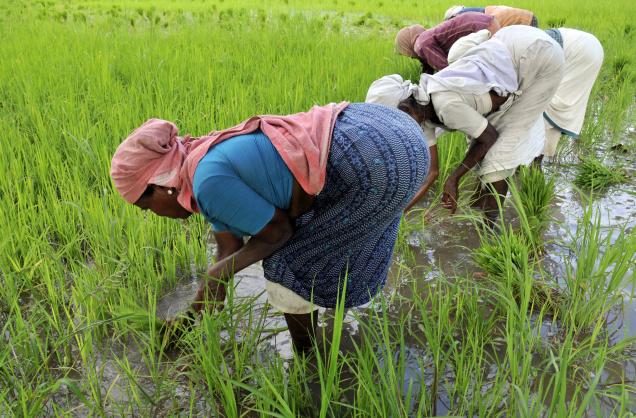
They can plant and reap, but they can’t sow again without buying seed…
As S. Grant points out in his article “10 Problems Genetically Modified Foods are Already Causing,” once they plant GM crops, farmers can no longer legally harvest their own seeds and are in danger of entering an era of perpetual bondage. Thus serfdom re-enters the world in the 21st century, this time clothed in the language of high-tech and carrying the false promise of freedom from hunger. Lawmakers are all too often ignorant and dazzled by technology, so they fail to realise the problems with GM crops are more to do with social and juridical issues rather than with the technology itself.
“In India, seeds are taken as a symbol of God’s blessing. They keep it, they store it, they know what is good seed and bad seed.” “Control oil and you control nations. Control food, and you control people.”
The above two memorable quotes are from a must-see 9-minute video about Natabar Sarangi, a village farmer who distributes free seeds to poor farmers out of the deep conviction that the thousands of varieties of seeds bred and developed over centuries should not be lost. In the process, he helps many of them to modest prosperity.
For more by this author, see his Amazon page here.
Spreading the Sunshine 1: A New Year Message
Even today, in the first half of the twenty-first century, thousands of villages in Africa and Asia (mainly in India) remain off-grid and have no access to electricity. Ever since a three-month stay in Kenya and Tanzania in 1985, I have dreamt of bringing solar lighting to the smallest villages on these two continents. In Kenya I was astounded to see that, as early as 1985, a few rural families had bought individual solar panels connected to used car batteries to power a single light bulb and the occasional television set. They did this because they had no hope of access to grid electricity in their lifetimes. It’s even more astounding to think that in affluent countries today, the majority of people who drive $ 20,000 cars consider solar power unaffordable without government subsidies. No wonder the world is hotting up! Such economic calculations show how skewed our thinking is.
Of course it was obvious that this journey of a thousand miles begins with a single step. Less obvious was what this first step should be. Mhairi made the first step on a recent (November 2015) visit to a village on the outskirts of a tiger sanctuary in Rajasthan. She made contact with the owner of a handicrafts shop on the edge of the Ranthambore national forest and tiger reserve who helps village craftswomen earn a living by marketing the beautiful tiger paintings, patchwork quilts with mirror designs and appliqué fabrics they make. Dharamveer was thrilled to hear about the idea of installing solar lighting for the nearby villages. He immediately took us to visit three of the 10 surrounding villages. These villagers have limited or no access to electricity. Even the few homes connected to the grid have power only 2 or 3 days a week, so they end up spending 2 to 3 hundred rupees a month on electricity bills or on kerosene for inadequate lighting with lamps. The proposal to pre-finance solar lamps for each household in the village was met with much enthusiasm. They were quite willing to pay 200 to 300 rupees a month for reliable solar lighting. And they were delighted to hear that, at a price of just 499 rupees (US $ 7 at current exchange rates), the lamps would belong to them within three months. Apart from the environmental costs of burning kerosene, the biggest drawbacks are cost and inadequate light for children studying or doing homework.

The Pico lamp, US $ 7 with a 2-year guarantee.
The idea we propose is quite simple. We plan to finance around one hundred of these solar lamps initially, to be distributed to a number of households in the ten target villages. Presumably they will be paid for in 3 months from the money the villagers save from their kerosene and electricity bills. We will request voluntary contributions for another 2 months and use the extra money to expand the circle of recipients till all households in the villages are covered. After which one can think of more elaborate systems, for example, like the model shown here that costs 7000 rupees or US $ 100 at today’s exchange rates. Greenlight is a for-profit company started in the US by three engineers, two American and one Indian. Their products have received good reviews in the international press.

The Sun King Home 120 is priced at approx US $ 100, can power USB devices and mobile phones.
We have decided on Greenlight’s Sun King model range, based only on our own internet research and news reports. Readers of this blog are invited to give feedback or share their own experiences with different models. I can envisage offering a range of different systems based on cost and reliability. I look forward to hearing from you.
For more by this author, see his Amazon page here.
The Life of the River

The source of the Wien River in Lower Austria. Image courtesy Werauchimmer
Perhaps it is the sweeping power of the iconic waltz composed by Johann Strauss the Younger, that most people associate the Danube with Vienna. In actual fact, the Donau flows along the north-eastern periphery of the city and the river that runs through its heart, from West to East is the Wienfluss, a 34 kilometer-long stream that gives Vienna its name in German, Wien. Although the stream is often overlooked, its catchment area lies in hilly country to the west of the city, so in case of heavy rains, its level can rise very quickly. Despite this risk, the stream is normally so placid that the city has built a concrete bicycle path along its dry bed beside the water. In 2009, the stream’s depth rose by 1 meter in just 10 minutes during a rainy spell. The stream becomes a raging river and its water flow has been known to increase more than 2000 fold (from the normal 200 liters per second to 450,000 per second).
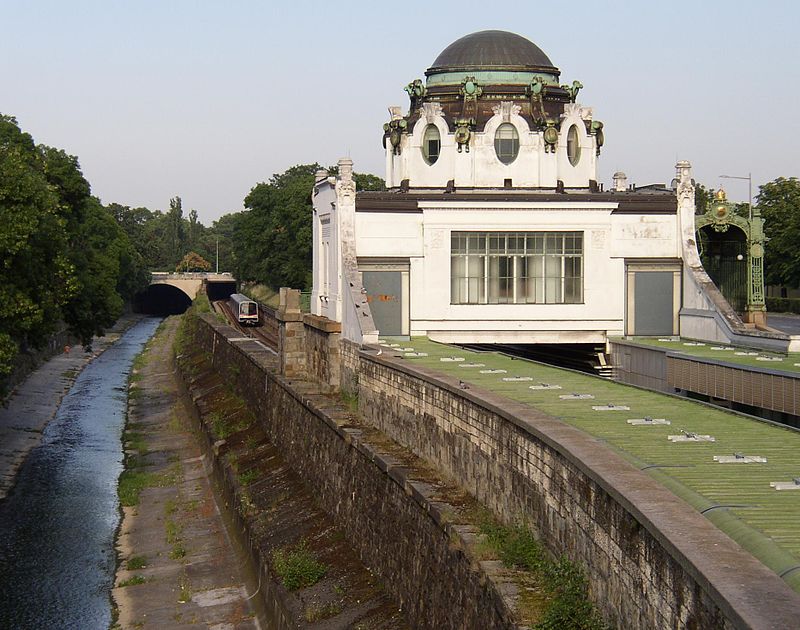
The river is covered up and flows underground from Hietzing in Vienna’s 13th district… (Image by Doris Anthony)

…and emerges into the open again where it joins the Donaukanal near Schwedenplatz.
Cycling west along the bicycle path, the stream flows along a paved channel with very little vegetation. At the outskirts of the city, the paved channel is wider and attempts have been made to naturalise the banks and dismantle some stretches of paving. Immediately, the stream takes on character. A profusion of plants, reeds and trees have taken root along its banks in the space of a few years. It’s amazing how quickly life has returned to this stretch of river, how the river meanders once man-made constraints are removed. There are more birds and, presumably, insects and other forms of small animal life in the new undergrowth beside the stream.
Seeing this changed stream evoked the thought that perhaps the life of this small river was a metaphor for all of us, for the rivers of our lives. How many of us are locked into barren channels, afraid of change; perhaps stuck in a 9 to 5 rut, afraid to break free or change jobs, trapped by the need for money to feed a family, or fearful of unemployment, of abandonment; the reasons are endless. There is something wrong with a world awash in industrial and consumer goods, where food is wasted while millions starve, where millions are unemployed and those that have jobs are more overworked than ever. So here again, without going into the interminable discussions of classical economists, of trade flows or balance-of-payments, is a river metaphor for our lives. A meandering life will indubitably be richer. If we dare to break free, life will become richer, more full of meandering turns, with lots of unexpected surprises certainly, but we will be better equipped to cope with surprises.
Thoughts along these lines reminded me of a book by Mark Boyle entitled “The Moneyless Man,” a courageous year-long experiment in living without money. I highly recommend buying this book, but if you don’t want to commit to buying the book just yet, take a look at the book-length sequel, “The Moneyless Manifesto,” which is available free online at the link below.
Moneyless living by choice is a form of grace. I will return to the other Grace, the one in the South China Sea, in my next blog.
 aviott