Stepwells and Johads: Digging into the past
More on Rajasthan. One of the places on this summer’s itinerary was a village called Chand Baori. “Do we really want to go there?” I asked the driver and tour guide. “I’ve never heard of it.” “Very old well, from the 8th century,” he assured me. “If you like we can go.” Which was a roundabout way of saying yes, so we went.
On a trip to the ruins of Hampi (1343 to 1565, capital of the Vijayanagar empire) a year ago, we had seen a 500 year-old stepwell that was a work of art. It had not run dry in living memory and had presumably been in active use by the local populace for more than 5 centuries. Hampi lies in a zone that tends to the semi-arid and receives around 400 mm of rain a year compared to ca. 900 mm for a typical Mediterranean city (in this example Ostia Antica, the harbour city of ancient Rome).

Stepwell – Hampi, North Karnataka State
However, Hampi’s modest rainfall is a veritable flood compared to the sparse annual haul (ca. 200 mm) of the desert area around the flourishing city of Jaisalmer in Rajasthan. Founded in the 12th century, Jaisalmer was an important node in the overland silk route and well connected with Europe. A great deal of knowledge and deep understanding of sustainable living in harsh climates accumulated in this part of the world long before scientific knowledge became codified and PhD’s in hydrology were awarded by the world’s universities.
Anupam Mishra is one of the pioneers of the 20th century revival of ancient water harvesting techniques in Rajasthan and other arid parts of the country. (See a biography here. http://en.wikipedia.org/wiki/Anupam_Mishra ). A quiet Gandhian and a modest man, he is one of the foremost Water Warriors of the world. Anyone who can spare 17 minutes to listen to a witty and humorous TED talk he gave in 2009 is guaranteed enlightenment on the continued relevance of rainwater harvesting in the world today. http://www.ted.com/talks/anupam_mishra_the_ancient_ingenuity_of_water_harvesting
Despite the fierce July heat, our detour to Chand Baori was well worth the effort. The stepwell in the village was more ornate than anything we had seen so far. Much more than being a mere source of water, it was obviously designed as a public meeting place and center for social interaction where one could find cool relief by the water’s edge, two or three stories underground.

Ornate carvings adorn every pillar and statue around the well
Rajendra Singh is another Water Warrior from Rajasthan who has won awards around the world for his work. Nominated by the Guardian newspaper in 2008 as one of the 50 people most likely to save the planet, he trained as a doctor, and was inspired by Gandhian ideals to set up a practice in the remotest desert village he could find. When he got there, literally at the end of the road, he found that what the villagers needed more than medicine was water. http://en.wikipedia.org/wiki/Rajendra_Singh
With no money and only hand tools at his disposal, he began with a few friends to dig out an abandoned “johad,” a traditional water catchment reservoir. The rains came. The johad retained a little water. This was the beginning of a virtuous cycle that was copied by neighbouring villages. In the course of a few years, over 5000 earthen check dams or johads have been built in Rajasthan and neighbouring states of Gujarat, Madhya Pradesh and Andhra with rising water tables as a result everywhere.
Rajendra Singh is now known as the rain man of Rajasthan, having brought water back to more than 1000 villages and for restoring the flow of all five major rivers in the state. In the words of one of my personal heroes, Amory Lovins, quoting Pogo Possum: “We stand here confronted by insurmountable opportunities.”
It is time for the world to grasp them. Click the Follow button below for alerts to forthcoming postings on this blog and find out how people around the world are grasping these opportunities.

Seemingly built for eternity. The well’s depth bears testimony to the long-range vision of its builders
The Changing Landscape of Religion
Here is a link to the summary of an article on the changing landscape of religions. This is a synopsis of work done by Vegard Skirbekk et al. and was mostly carried out at the International Institute for Applied Systems Analysis (IIASA), based in Laxenburg near Vienna, Austria.
Religion is a key factor in demography, important for projections of future population growth as well as for other social indicators. A new journal, Yearbook of International Religious Demography, is the first to bring a quantitative demographic focus to the study of religion. The journal is co-edited by IIASA researcher Vegard Skirbekk, an expert in the field of religious demography. The first edition of the journal includes three studies by IIASA researchers:
Read more at: http://phys.org/news/2014-08-landscape-religion.html#jCp
Travels in the Land of Kings
For some people the best journeys are those that take place in the mind. If you have good company and travel in the right frame of mind, an inward transformation occurs with each step and each changing view of the landscape. This was a summer of encounters in Rajasthan that changed the inner landscape of my mind but words are a poor way to show the changes, so I will post a few pictures here instead. This is offered by way of apology that this blog has been inactive for the past six weeks.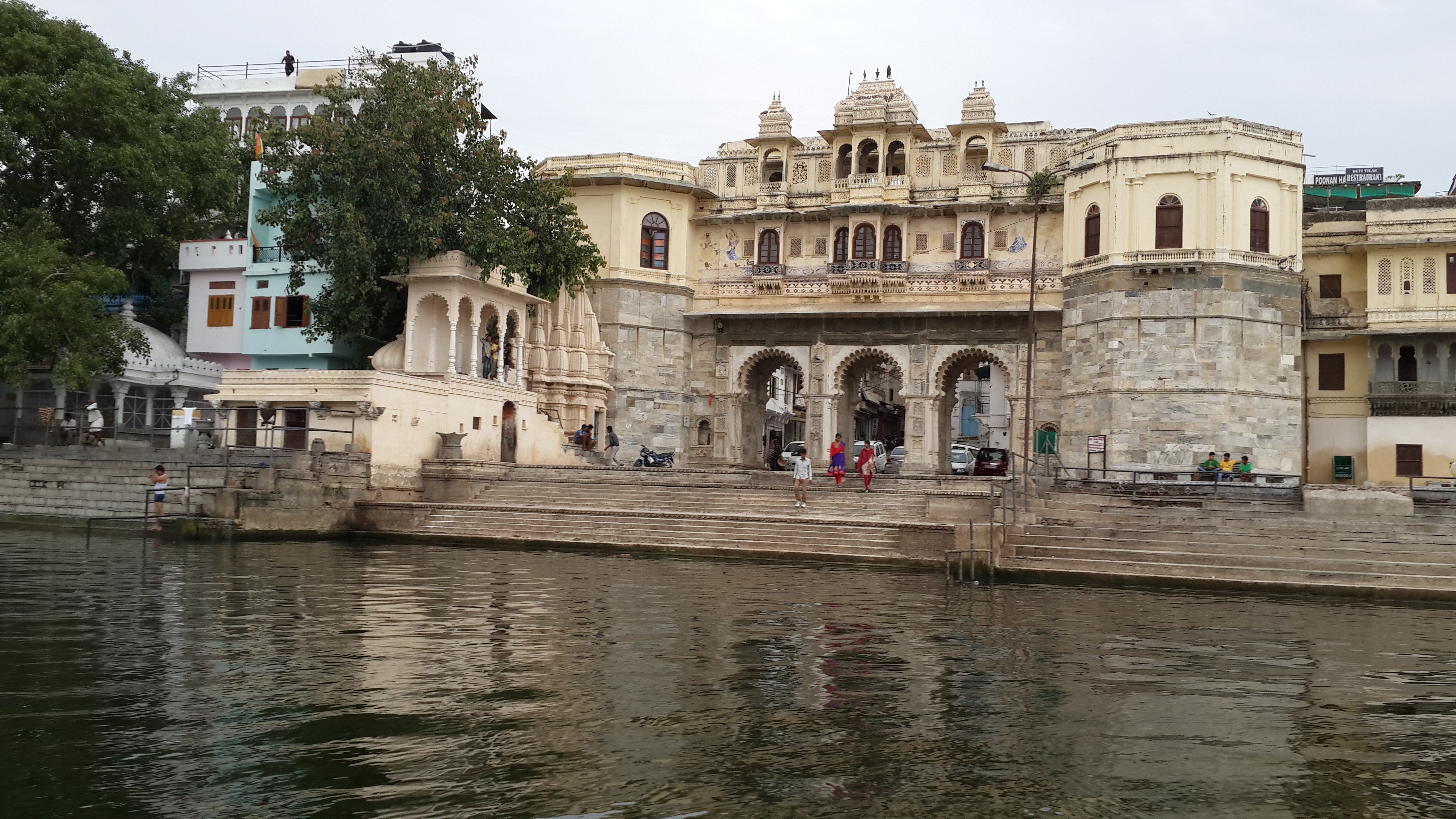
Rajasthan is India’s largest state. At 340,000 sq. km, around the size of Germany, it comprises 10% of India’s territory. The name, literally “the land of kings.” is very apt. There are ruins aplenty and reminders of past glory at every turn. But take a moment to look behind the ruins and there are stories behind every crenellated wall and jharoka.

A jharoka is an overhanging or enclosed balcony as seen in this house facade
This is also a land of stories, a place where myths are born. The stories are a glorious mix of fact and fantasy, like the great Indian epics themselves, the Ramayana and the Mahabharata. More about this land and the stories in the blogs to follow.
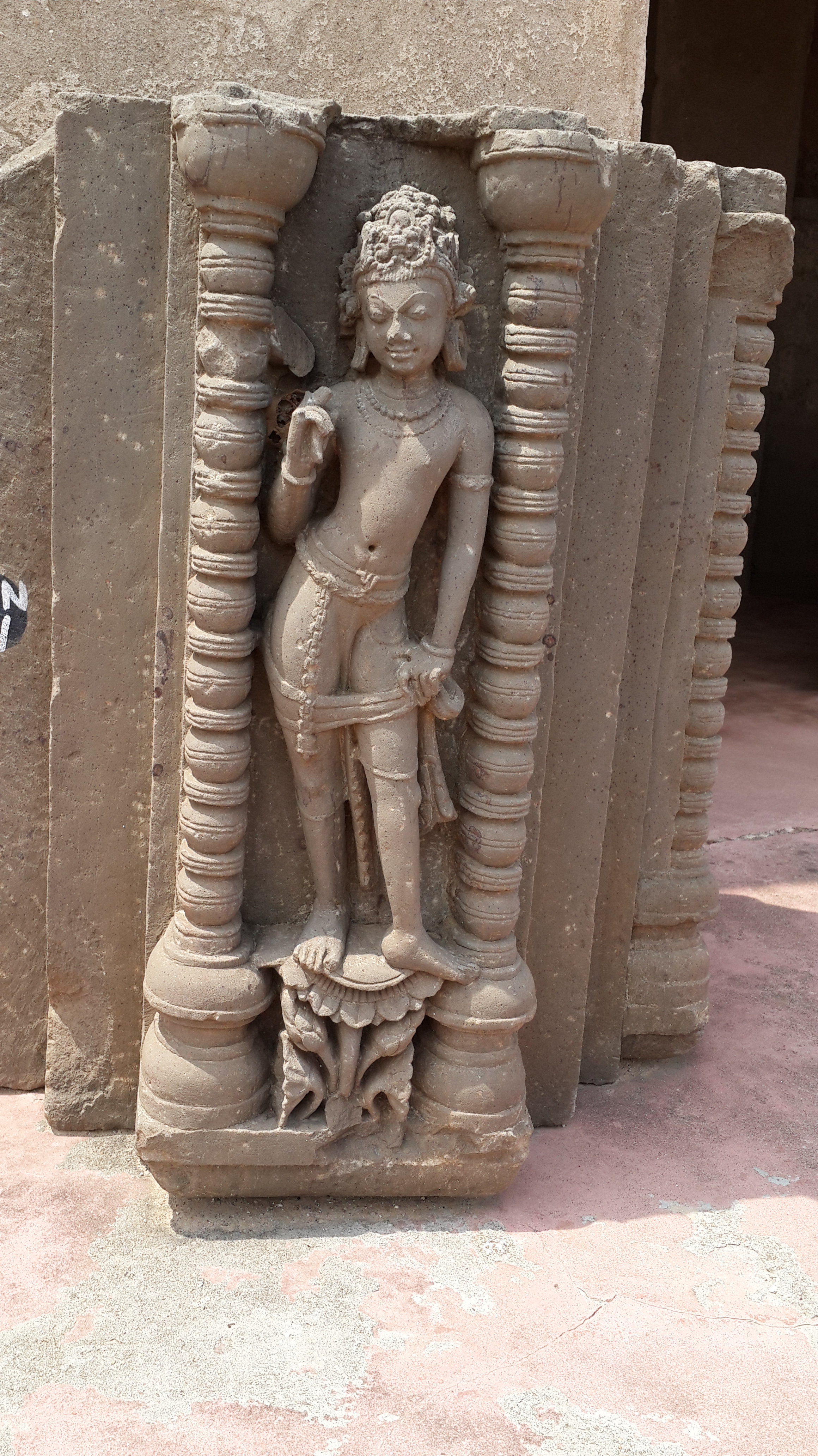
9th Century cool adorns a step-well in Rajasthan
Humayun’s Tomb and the Star of David
Visiting Mughal Emperor Humayun’s tomb in Delhi, I was surprised to see the six-pointed star of David adorn the entrance to the West gateway. The tomb was built by Humayun’s son, Akbar the Great, in memory of his father six years after the latter’s death. Akbar was known to be a wise ruler who was religiously tolerant and looked on all faiths as equally valid interpretations of the same divinity. I assumed that the stars above the tomb were an early expression of mutual Jewish-Muslim tolerance and understanding. The stone tablet outside the gate dispels this notion (see the second photograph below).


Wikipedia says that the star became a symbol of Jewish communities only during the 19th century and the symbol was inherited from medieval Arabic literature by Kabbalists for use in talismanic protective amulets.
The conflict between Arabs and Israelis has lasted more than 2000 years (see my earlier post entitled History in 1000 words: The Israeli -Palestinian conflict at https://aviott.org/2012/12/06/history-in-1000-words-the-israeli-palestinian-conflict-2/
Far too long! The world needs more Akbars and Yitzhak Rabins with the courage to make peace and perhaps even die for it.
Fossil Fuels to Renewables: Cost of Transition
How much would it cost to transition our #energy system from #fossilfuels to #renewables? A new study from IIASA Energy researchers shows that while large increases in investment are needed, the overall cost is not much more than what we currently invest in fossil fuels. (IIASA: International Institute for Applied Systems Analysis, a think-tank based in Laxenburg, Austria)

Kürtőskalács on Lamma
Lamma Island’s many restaurants, food stalls and stores offer a variety of cuisines, from Chinese to Fish & Chips to Continental. The stores that cater to this small population of 6,000 (twice that on weekends) stock mostly everything from Austrian jams (Darbo naturrein!), to Marmite. One of the few things that have been missing till now were Hungarian Chimney Cakes (Kürtőskalács in Hungarian).

Fortunately, this sad state of affairs has been remedied by Roland who bakes them fresh every morning at the Prime Bar, next to where Tony dispenses his excellent offerings of soul-saving South American coffee as people rush to catch the morning ferries to work. The crisp rolls are mildly sweet and come with a choice of toppings including cinammon and chopped walnut. Both coffee and rolls are highly recommended.
Yung Shue Wan Main street, from 7 to 11 am.
The World is a Book: St. Augustine
Saint Augustine of Hippo (present-day Algeria) lived from 354 to 430 CE and is the source of one of the most well-known quotes about travel. “The world is a book, and those who do not travel read only one page.” The grand-daddy of all famous travel quotes is Lao Tzu’s eminently quotable “The journey of a thousand miles begins with a single step.” Of course, at the times these quotes were made, travel was expensive and perilous. Today hordes of innocents travel far afield armed with little more than a credit card and, perhaps most hazardous, an overdraft on their bank accounts at home. Paradoxically, the hazards of travel are global and impersonal. A single intercontinental jet flight can cause as much CO2 emissions (1 ton) as a year of driving (around 12,000 km) an average car.
However, in today’s interconnected world, it simply won’t do to live life on a single page. Recently, when contemplating an intercontinental journey from Europe to Asia, I explored the possibility of taking ‘a slow boat to China,’ and discovered that travel on an assortment of cargo ships was possible, only the journey would take three months and cost around US $10,000 instead of 15 hours and $1000 by plane. So what is a globally responsible citizen to do? The incipient wanderlust of early childhood was stimulated decades ago by my grandfather’s collection of bound volumes of National Geographic Magazine filled with travel descriptions and black and white photos from the 1920s and 1930s; from that glorious age when there were still many unknown parts of the world and when the bulk of humanity still lived a single-page existence. Today, billions of people live confused and deracinated lives because the bulk of their multi-page wisdom and experience comes from, or is filtered by, television.
Around the turn of the millenium (that was only 15 years ago), National Geographic offered a 110-year archive of issues on CD that was bought by aspiring world (armchair) travellers. The software was clunky and time-consuming to use, and the operating systems quickly became outdated (anyone with a Windows NT operating system is welcome to my 1999 NatGeo CD collection). The email offer from National Geographic received today for online access to 125 years of the magazine holds the promise of longer accessibility than the CD-ROM version. As the quote on the desk of a professional archivist I know says: Electronic archives are good for eternity or five years, whichever comes first.
Here is the link. The archive is free for a limited time.
Daniel Ellsberg Defending Edward Snowden
US Secretary of State John Kerry called Edward Snowden a coward and a traitor and praised Daniel Ellsberg, who leaked the Pentagon Papers to the New York Times in 1971, for having stayed in the country after the leaks about the Vietnam War.
Daniel Ellsberg, writing in the Guardian, says that Edward Snowden is not a coward, but has no chance of a fair hearing and trial because of the Espionage Act.
On the Today show and CBS, Kerry complimented me (Daniel Ellsberg) again – and said Snowden “should man up and come back to the United States” to face charges. But John Kerry is wrong, because that’s not the measure of patriotism when it comes to whistleblowing, for me or Snowden, who is facing the same criminal charges I did for exposing the Pentagon Papers.
…Snowden’s chance of being allowed out on bail (is) zero. (Ellsberg: I was out on bond, speaking against the Vietnam war, the whole 23 months I was under indictment). More importantly, the current state of whistleblowing prosecutions under the Espionage Act makes a truly fair trial wholly unavailable to an American who has exposed classified wrongdoing. Legal scholars have strongly argued that the US supreme court – which has never yet addressed the constitutionality of applying the Espionage Act to leaks to the American public – should find the use of it overbroad and unconstitutional in the absence of a public interest defense. The Espionage Act, as applied to whistleblowers, violates the First Amendment, is what they’re saying.
Without reform to the Espionage Act that lets a court hear a public interest defense – or a challenge to the appropriateness of government secrecy in each particular case – Snowden and future Snowdens can and will only be able to “make their case” from outside the United States.
See the link below for the full article from the Guardian of 30 May 2014.
The Wisdom of 7 year-olds
Why is six afraid of seven?
Because seven ate nine.
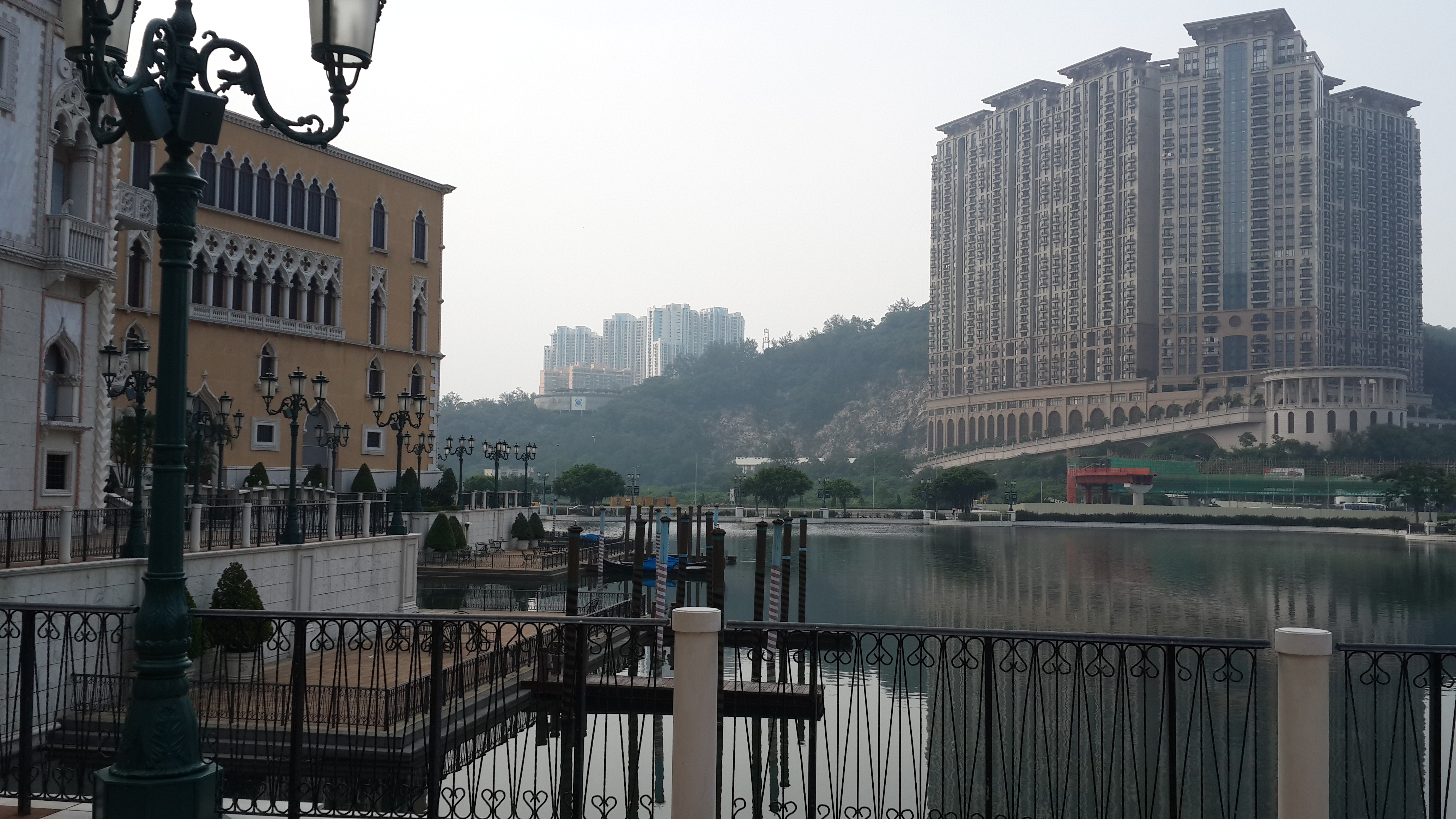
Macau Highrise overlooks Venetian cityscape.

Heirs to Camillo Agrippa, fencing master, Italy, 1590-1650. Author of “Trattato di Scienza d’Arme.”
2 Recent Books: Burning Question, and Burning Answer
The burning question was asked in May 2013 by Mike Berners-Lee, Duncan Clark and Mill McKibben. The Burning Answer was published a year later, in May 2014 by Keith Barnham, a physicist with practical experience in industry. The topics raised in these two books, the questions posed, and the answers to them will change the world in the coming decades.
The Burning Question: We can’t burn half the world’s oil, coal and gas. So how do we quit?
by Mike Berners-Lee, Duncan Clark and Bill McKibben
May 2013
The Burning Question reveals climate change to be the most fascinating scientific, political and social puzzle in history. It shows that carbon emissions are still accelerating upwards, following an exponential curve that goes back centuries. One reason is that saving energy is like squeezing a balloon: reductions in one place lead to increases elsewhere. Another reason is that clean energy sources don’t in themselves slow the rate of fossil fuel extraction.Tackling global warming will mean persuading the world to abandon oil, coal and gas reserves worth many trillions of dollars — at least until we have the means to put carbon back in the ground. The burning question is whether that can be done. What mix of politics, psychology, economics and technology might be required? Are the energy companies massively overvalued, and how will carbon-cuts affect the global economy? Will we wake up to the threat in time? And who can do what to make it all happen?
The Burning Answer: A user’s guide to the solar revolution
by Keith Barnham
May 2014
Our civilisation faces a choice. We could be enjoying a sustainable lifestyle but we have chosen not to. In three generations we have consumed half the oil produced by photosynthesis over eight million generations. In two generations we have used half our uranium resources. With threats from global warming, oil depletion and nuclear disaster, we are running out of options. Solar power, as Keith Barnham explains, is the solution. In THE BURNING ANSWER he uncovers the connections between physics and politics that have resulted in our dependence on a high-carbon lifestyle, which only a solar revolution can now overcome. Einstein’s famous equation E=mc2 led to the atomic bomb and the widespread use of nuclear energy; it has delayed a solar revolution in many countries. In a fascinating tour of recent scientific history, Keith Barnham reveals Einstein’s other, less famous equation, the equation the world could have relied on.
Einstein’s other equation has given us the laptop and mobile phone, and it also provides the basis for solar technology. Some countries have harnessed this for their energy needs, and it is not too late for us to do the same.
In this provocative, inspiring, passionately argued book, Keith Barnham outlines actions that any one and all of us can take to make an impact now and on future generations. THE BURNING ANSWER is a solar manifesto for the new climate-aware generation, and a must-read for climate-change sceptics.
Peter Forbes, writing in the Guardian, has published thoughtful reviews of both these important books.
http://www.theguardian.com/books/2013/may/31/burning-question-berners-lee-review
http://www.theguardian.com/books/2014/may/22/burning-answer-solar-revolution-keith-barnham-review
Latest Posts
-

December 2021 Newsletter
Originally posted on The Forest Way: A photo essay Most wonderful wishes and best regards to all, for the start of a fresh, healthy, environmental…
-

A Tree Planting Update
I begin this post with an apology. I have posted only sporadically this past year, and the reason is not Covid as one might think.…
-
The Standoff explained: Modi government vs. Indian Small Farmers
The is basically a battle for the future of Indian agriculture. It is also a battle of two opposing philosophies: Small is Beautiful vs. Big…
-

The True Source of Wealth
Many years ago an economist friend told me to invest in stock index funds rather than property. He pointed out charts comparing property prices and…
 aviott