Home » Posts tagged 'politics' (Page 4)
Tag Archives: politics
Chaining the Twitterati: OBAMA CARED

Obama Cared
Now that the current US President and his administration is intent on dismantling everything that the previous president has accomplished, regardless of cost to the nation and the world, it is time to speak of his signature health care program in the past tense and say: OBAMA CARED.
If you, like millions of others around the world, are concerned about petty minded twits who spread their message of hate in a stream of tweets, here’s a positive way to counter their malice. Check out the website of young New Yorker Esti MacInnes at “EstiMadeAnEtsy” for silent ways to stand up and be counted.
Blades of Grass

Image courtesy 123rf.com
The recent accession of climate change deniers to positions of power (no names here!) is very depressing news for those millions of people around the world who don’t totally distrust all media, mistrust all scientific research, or contradict factual evidence. Nevertheless there are many examples of happenings around the world that might not make international headlines because they are not (yet) economically significant. Economically significant or not, these actions are ecologically significant in a global context. These are actions that need to be emulated a hundred-fold, a thousand-fold, a million-fold, in the decade to come. A climate scientist friend told me years ago that the world would not act on the climate issue until it became a globally self-evident crisis. And then, he said, people would come together out of the woodwork at the last minute, to do what is needed to save our planet from irreversible changes; for example, in the interplay between circulation of deep ocean waters and the quantity of atmospheric carbon dioxide absorbed by them.
What follows is a short, incomplete list of the various ways people are coming out of the woodwork.
The 2017 Women’s marches around the world could be a powerful harbinger of things to come. According to Wikipedia: The 2017 Women’s Marches were a series of political rallies that took place in cities around the world since January 21, 2017, with the goal of promoting women’s rights, immigration reform, and health care reform; to counter Islamophobia, rape culture, and LGBTQ abuse; and to address racial inequities (e.g., Black Lives Matter), workers’ issues, and environmental issues. There is a sea change here. The Women’s March took place in cities on every continent. It was a spontaneous coming together on a multitude of human rights issues, much bigger causes than merely protesting against He Who Will Not be Named, he who was merely the catalyst that brought the marchers together. Like blades of grass that probe and emerge through the hardest concrete, these marches are the peaceful means to crack the brittle edifice of patriarchal structures the world over.
Three examples from India, where I happen to be at the moment, underline the environmental component of this sea change:
The small town of Meenangadi in Kerala has pledged to become the first carbon-neutral panchayat (rurally governed community) in India. And they expect to do it by 2020. Here’s an explanation of why they are doing this and what steps are being taken to achieve this goal.
In nearby Cochin (or Kochi, as it has been named by the local administration), the International Airport, call sign COK, is the world’s first completely solar powered airport. BBC News, October 2015.
At Kamuthi, near the town of Madurai in Tamil Nadu, the world’s largest solar power plant built on a single site was completed in 8 months, covering an area of 10 sq. km., with a capacity of 648 MW. Al Jazeera, November 2016. Meanwhile in China, this is topped by the Longyangxia Dam Solar Park with a peak output of 840 MW from solar panels clustered at two adjacent sites near the reservoir.
Other blades of grass sprout everywhere. In Vienna, after the election victory of You-Know-Who on 9 November, hundreds of volunteers went out on to the streets to campaign for the green party candidate in Austria’s presidential election. These volunteers were campaigning against scare-mongering and fear-of-the-other tactics that are habitually practiced by right wing demagogues, unfortunately with some success in the recent past. In many countries around the world, people fed up (pun intended) of industrial agriculture are turning to food production in their back yards, on window sills, on terraces. This awareness of the source of our nutrition makes people appreciate its literally life-giving qualities, bringing back the sanctity of producing our own food. The process brings people together in simple ways and promotes communal harmony. Mayors of cities around the world are networking together to circumvent the inaction of their politicians and lawmakers. I see green fields around the world where millions of tender blades of grass crack the concrete of established practice. I see this in the near future, if the millions who have marched will it so. It’s time now to march, plant, demonstrate, protest, cooperate, sow, reap, make your voice heard, switch off your TV, get off your couch, harvest potatoes, get active.
For more by this author, see his Amazon page here, or the link to Google Play where you can download free sample excerpts from his books.
On Wrestlers and Faceless Women
I saw a Hindi movie called Daangal a few days ago. A true story of amateur wrestler Mahavir Singh Phogat in Haryana who raised six girls (four daughters and two nieces whom he adopted on the death of his brother) to be world-class wrestlers who have won many international championships. From a social standpoint, the most remarkable thing is that Haryana is the state with among the worst male/female sex ratios in the country (in 2011, 877 females for every 1000 males). This negative sex ratio is a reliable indicator of low status of women in a society. One can only imagine the real-life battles the Phogat girls faced, in overcoming traditional rural prejudices, cutting their hair, uncovering their faces, competing in early tournaments with boys, finally winning respect by beating many of their male peers and winning championships.
Even though some of the details in the film are untrue, or exaggerated for dramatic effect, there is no disputing that the greatest victory of these young women may not be counted in medals won in the wrestling arena, but in society as a whole. Changes in a society happen in a thousand unexpected ways. Their victories on the floor of the wrestling arena may be reflected in unrelated events in a community. One such example appeared as a feature recently in a Sunday newspaper. In this story, Mahima Jain tells of three women fighting the ghunghat (face veil) in Haryana’s patriarchal stronghold of Faridabad. They wish to show no disrespect to their elders, but also wish to be free of the restriction imposed by the veil. One of them is an educated woman who works in the city with head uncovered all day and sees no reason to cover her face as soon as she returns to her village home.
This news story shows that gender discrimination does not stop with rural, uneducated women, but also affects intelligent, articulate women with advanced educational degrees. As Hans Rosling powerfully shows through statistics in the video posted on this blog earlier in January (Reading the Tea Leaves: a primer for 2017), true development happens in a nation when gender discrimination has been largely overcome. By this definition, there are very few truly developed nations in the world; merely rich ones, poor ones and increasingly, widening gaps within societies between rich and poor.
One amusing and unexpected similarity between the real-life female wrestlers and their film counterparts: the professional wrestlers look just as elegant and sophisticated as the actors who play them in the movie. Check out the photos below without reading the captions first and see if you can tell who’s who.

publicity photo from the film
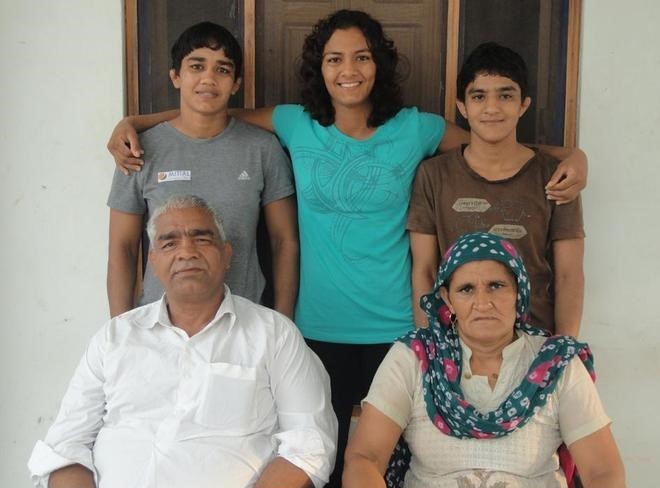
3 of the 6 girls with their parents. Image courtesy thebetterindia
For more by this author, see his Amazon page here, or links to his 4 books on the Google Play store.
Out of Africa and from the Middle East
Food for thought for those in many countries around the world who wish to permanently stop immigration of ‘foreigners.’
When the first migrants left Africa 75,000 years ago for the Cradle of Civilization — modern Iraq and Kuwait — Stoneking and his team estimate there were fewer than 100 people. They suggest there were just 15 men and 26 women. They also point to a Bering Strait crossing, from Asia to North America, around 15,000 years ago, as is commonly accepted.
Source: M. Stoneking, et al. Human paternal and maternal demographic histories: insights from high-resolution Y chromosome and mtDNA sequences. Investigative Genetics. 2014.
For more by this author, see his Amazon page here, or links to his 4 books on the Google Play store.
Learning in a Village
Studies about global warming talk about the need for developing countries to adapt to climate change. The good news is that in India a wide range of mitigation and adaptation measures are taking place. To use the phrase of Augustin, Vienna’s well-loved figure of historical myth, “the situation is serious but not hopeless.” At the end of this article are links to some examples that illustrate various initiatives that are already working. However, with 68% of the country’s population in villages, India needs many more such miracles. My wife and I recently joined a project, started by some local partners, to develop a sustainable school in a village in Tamil Nadu.
The village lies in a green, agricultural area about forty kilometers from the city of Chennai (pop. 8.23 million) in the Chingleput district of Tamil Nadu. Although surrounded by productive farmland, approach roads to this village are so poor as to be almost non-existent. The roads were badly damaged in the extensive flooding that followed the unusually heavy monsoon rains of September-October 2015. Parts of the city of Chennai and the surrounding countryside were inundated to depths of one to two meters.
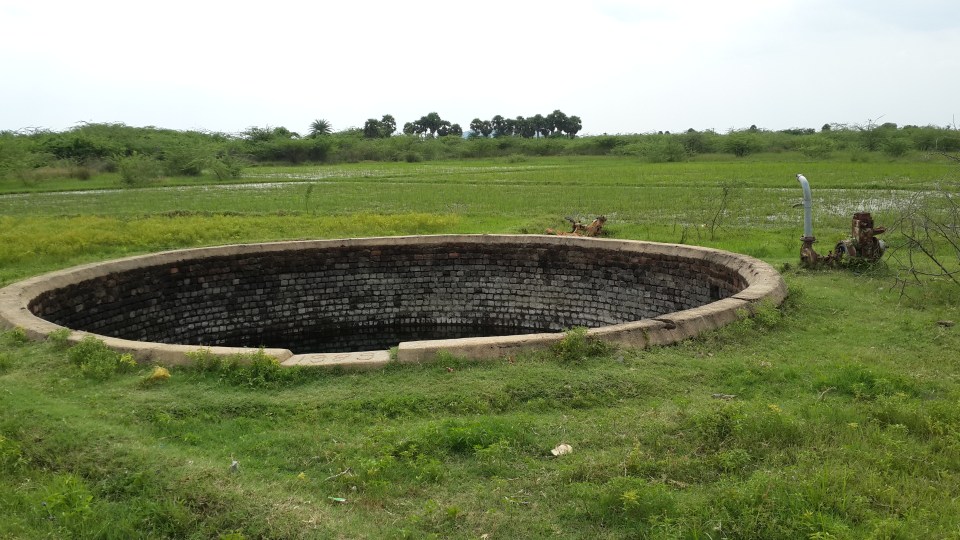
Water wells and green fields: the surrounding countryside
The village itself, when one arrives, is relatively prosperous. There are many large wells that supply water for irrigation. The land seems fertile and a variety of crops is grown. Despite this, young people are moving in droves to the cities, lured by scenes of urban wealth and glamor on television. These people are merely following a trend happening in many countries around the world as small farm holdings sell out to larger entities and corporations that can practice industrial-scale farming with all its recognized negative consequences.

The many faces of learning
The idea of a rural sustainable school is really very simple. In addition to conventional education, the childrens’ learning will be focused on practical skills that are relevant in a rural environment; from organic farming, forestry, carpentry, medicinal uses of plants, setting up and servicing small-scale photovoltaics, forestry, wildlife management (the area is very rich in bird-life) etc. In addition, there are plans to use a locally patented system that incorporates waste plastic into long-lasting road surfaces. In all of these efforts, voluntary labor (shramdhan) will play the most important role. For without local participation, there will be no long-term program. With local participation, the community takes ownership of all the above areas, become experts in selected areas and run it themselves. This is the main reason that the partners are starting this school project on a self-financed basis. As soon as outside money enters the equation, a certain precious balance is lost and people will tend to sit back and wait for capital to provide answers that they would otherwise look for themselves.
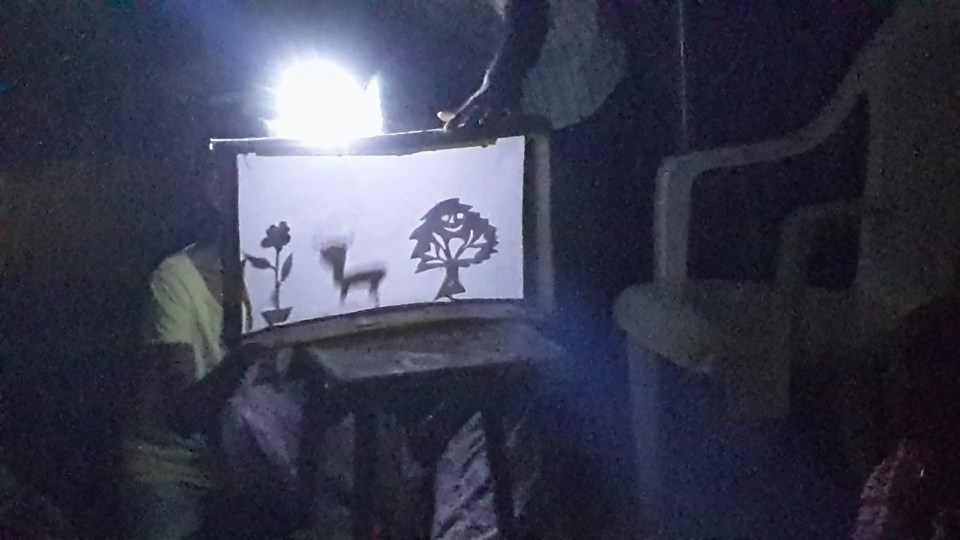
A shadow puppet play made by 8-year-olds using home-made props
https://www.youtube.com/watch?v=3LHe9I6QPu8 jal khet (Water Fields)
https://www.youtube.com/watch?v=aBfjsdICGT0
https://www.youtube.com/watch?v=9hmkgn0nBgk
The school building itself will be constructed on-site with compressed stabilized earth blocks (CSEBs) that do not need firing or baking like conventional bricks. They just need compression following which the bricks are kept wet for a month and then sun-dried for three months. Electricity will initially be provided by 5 Kw of solar panels that are expected to cost around €4000 at current prices. More capacity and storage will be added as the price falls. For more information about the philosophy behind the project, see this article on my blog. “Development as an Attitude: learning to unlearn.”
For more by this author, see his Amazon page or the Google Play Store here.
An Old Word for New Times
Sometimes, we need a new word to describe new trends. But to describe recent events that mirror the rise of demagogues and dictators in the past, an old word will do. Many thanks to my friend, Canadian economist Larry Willmore, for posting the following on his blog “Thought du Jour.”
“kakistocracy”
noun
1829, “government by the worst element of a society,” coined on analogy of its opposite, aristocracy, from Greek kakistos “worst,” superlative of kakos “bad” (which perhaps is related to the general IE word for “defecate;” see caco- ) + -cracy.
Source: Online Etymology Dictionary. Retrieved November 25, 2016 from Dictionary.com website
Closing the Golden Door
Inside the Statue of Liberty, on a bronze plaque, a sonnet was engraved in 1903. A poem by Emma Lazarus, called “The New Colossus.”
Not like the brazen giant of Greek fame,
With conquering limbs astride from land to land;
Here at our sea-washed, sunset gates shall stand
A mighty woman with a torch, whose flame
Is the imprisoned lightning, and her name
Mother of Exiles. From her beacon-hand
Glows world-wide welcome; her mild eyes command
The air-bridged harbor that twin cities frame.
“Keep, ancient lands, your storied pomp!” cries she
With silent lips. “Give me your tired, your poor,
Your huddled masses yearning to breathe free,
The wretched refuse of your teeming shore.
Send these, the homeless, tempest-tost to me,
I lift my lamp beside the golden door!”
Over the century since the plaque was installed, the last five lines of the poem have become an intrinsic part of the US story. No longer. Donald Trump’s message is clear. The masses can huddle elsewhere, taking their yearning with them.
For more by this author, see his Amazon page, or Google Play here.
The Ineffable Sadness of Neutered Cats
The sugar cubes floated in my thickly creamed coffee before slowly dropping out of sight. This was a sequel to views of Klimt at the Upper Belvedere in Vienna, itself a sequel to a memorable week exploring inner landscapes of the soul.
There were two of them. They led happy lives, replete with feline fulfilment. They loved to purr and cuddle in bed with their humans in the night. They ate well. Always had food and drink served to them. They never went hungry. They seemed at peace with themselves and their world. There were vestiges of wildness in them still to remind you that, despite centuries of domestication, they were their own creatures, creatures of the wild; individuals. And yet, there was an edge missing. You could see it in their eyes. It was a mixture of sadness and resignation. I came to recognize this glance in the cats and my heart went out for what I had done to them. Years later, I saw a video of a woman who could communicate with animals including big cats, the world’s apex predators, and interpret them in anthropomorphic terms. This video changed my thinking about domestic pets. Having been sensitized by this new thinking, I began to see all the subtle forms of exclusion that are practised in societies around the world.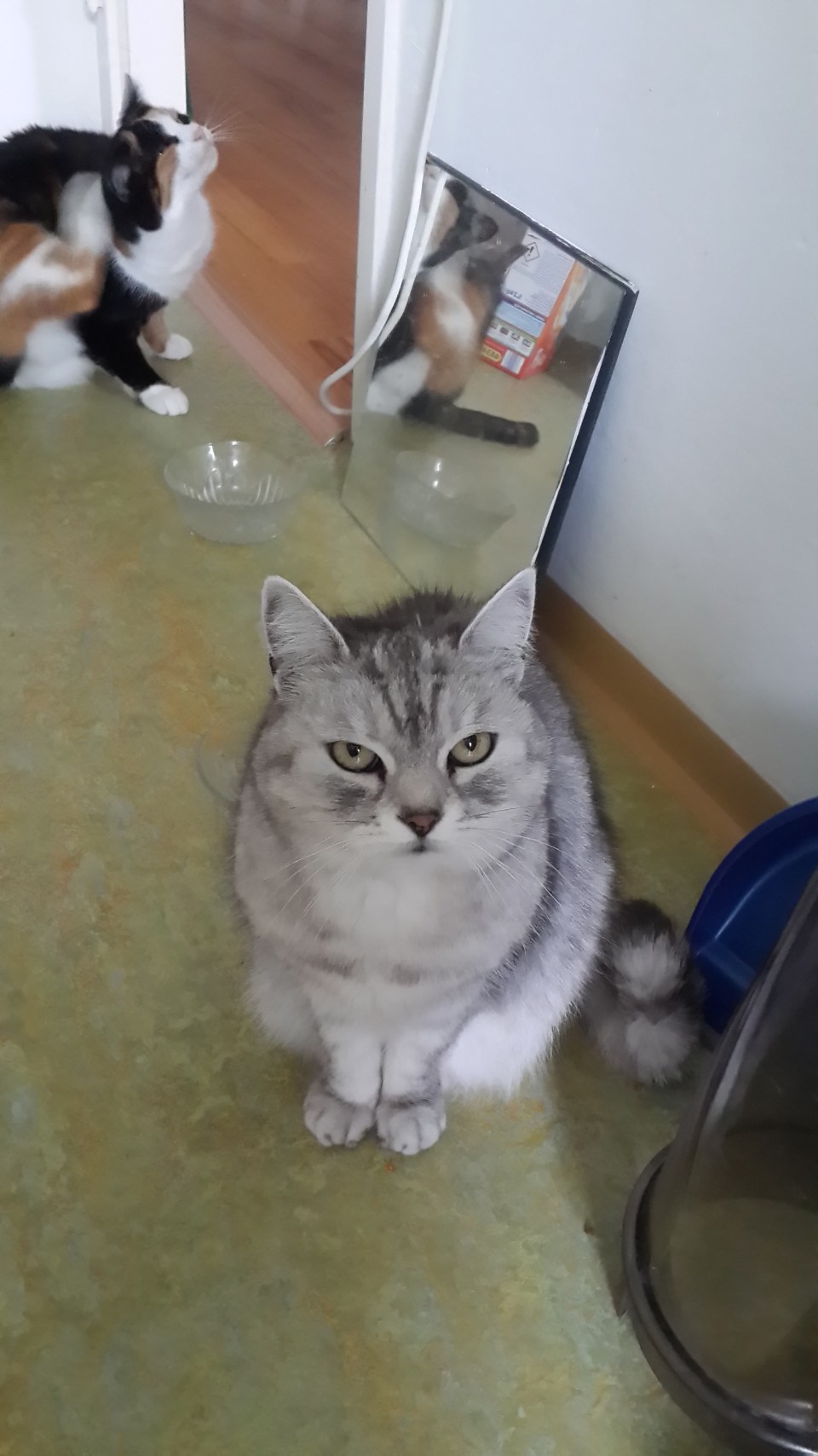
Most ancient cultures respected the natural world, seeing humans as an intrinsic part of it. At sometime in our collective past, we began to call ourselves civilized and parted ways intellectually with nature. This paid off for a few centuries, roughly until the end of the twentieth century. René Descartes famously declared humans to be the thinking species in the sixteenth century. We think, therefore we are (…superior to all other forms of life?). Science and technology have tamed the earth, have subdued nature to such an extent that, like in the Tweety and Sylvester cartoons, we are in danger of cutting off the branch on which we perch. Of course we don’t think of ourselves as prejudiced, but every time we turn away from a conversation with an unfamiliar “other” we practise a form of discrimination just the same. I noticed with a shock of recognition, the ‘sadness of cats’ on the faces of people in the news; in the gaze of a young woman going through the shipwreck of her marriage; in the face of a man devastated by war and conflict; in the catatonic resignation of a child dragged from the rubble of a bombed home. Where does all this violence begin?
It begins with the way we treat all sentient beings, not just our own kind. Gandhi allegedly said, more than a half century ago, the greatness of a nation and its moral progress can be judged by the way its animals are treated. Anthropologist Michael Thompson, in his 1979 book Rubbish Theory, explores the rise and fall in value of objects, depending on scarcity or abundance. He uses bakelite ashtrays as an example in the book. This early synthetic product of the 1930s was sold cheap, and now have become collectors items. Following from Rubbish Theory we should infer that, since animals in the wild have become a scarce commodity, we should value them highly. Conversely, with world population close to seven and a half billion, human life is cheap. Perhaps this is what we are seeing in international politics these days. But here is the paradox of human existence. If we subscribe solely to economic logic, we deny our humanity and diminish ourselves, sowing the seeds for our own ultimate destruction.
Rulers, kings and presidents come and go, but the earth will survive. However, humankind will not survive, if we continue to pursue only economic growth and ignore the unmistakeable signals that the planet continually sends us. Many of our leaders ignore it. It’s time to change those leaders. And here is another paradox of politics. We can change these leaders only if we change ourselves first.
For more by this author, see the links to other work on his Amazon page, or the Google Play Store
The Decline of the Rest.
 Oswald Spengler published the first volume of his two-volume life’s work, The Decline of the West, in 1918. Seventy-four years later, speaking at the Earth Summit, Rio de Janeiro in 1992, 41st US President George HW Bush, a decent man, declared, “The American way of life is not up for negotiation. Period.” This pre-emptive declaration by the leader of the world’s most powerful nation essentially castrated the noble intentions of the summit, to limit humankind’s exploitation of the earth’s resources to sustainable levels. The result of the Rio summit was Agenda 21, a non-binding, voluntarily implemented action plan for the 21st century. This was the paltry outcome of a nine-day meeting representing 172 countries attended by 116 heads of state, 2400 NGOs and 17,000 other representatives of indigenous peoples and ordinary ‘you and me’ types.
Twenty-one years after the US President’s declaration in Rio, the WWF designated the 20th of August 2013 as “Earth Overshoot Day;” the day that humanity has used as much renewable natural resources as the planet can regenerate in one year. In 2016, Earth Overshoot Day is estimated to have fallen on August 8th, after which date we’re drawing down the planet’s renewable resources for the rest of the year. Pity the poor planet! The American way of life is still not up for negotiation, and the rest of the world is rushing to catch up. If ever populous countries like China and India get there, the planet will be sucked dry and we’ll all have to follow Elon Musk to Mars! So are we condemned to a two-track planet where some countries (or some sections of society within countries) corner material resources and the rest go a-begging? This is the scenario being projected by right wing demagogues worldwide and this is the reason for their recent successes at the ballot box.
Economists and philosophers have tried to redefine human well-being to reflect planetary limits, most notably in recent years by Tim Jackson’s book Prosperity without Growth, which acknowledges that the current definition of economic success is fundamentally flawed. Prosperous societies today increasingly recognize that increased material wealth does not increase well-being. However, most people the world over, regardless of their economic condition, still aspire to some version of the American way of life. This aspiration is reflected in the respect automatically accorded to wealthy people in the world today. A look at the Who’s Who of practically any country includes the names of its wealthiest citizens, together with lists of eminent physicians, lawyers, sportspeople and so on.
Gandhi pithily articulated this state of affairs decades ago when he said: The world has enough for every man’s need but not for every man’s greed. For each according to her needs would be the ideal but, as always, messy reality intervenes. One man’s need is another man’s greed. So it is that millions of well-meaning, virtuous, affluent people the world over would never dream of giving up hard-won creature comforts for the sake of other planetary denizens who are less well off. The spiral of technology has historically been to continuously improve human life, and to continuously create problems at the same time. These problems in turn needed infusions of new technology to solve its problems. So right now, the choices seem to be to outer-planetary colonization, or to invest in defences (gated communities, wealthy enclaves, security guards, border walls) to hold on to material gains. Technology offers a third alternative. The idea of a sharing economy has recently gained a lot of traction. Who needs ownership when mobility and services are seamlessly available? Indeed, ownership becomes a bit of a burden in comparison to the convenience of superb services available on demand with little or no delay.

A gated community safely behind bars
Even if all this is achieved, humankind’s basic inner restlessness will ensure that we keep wanting more and better, with one eye on the people next door. Global contentment is a moving target. Enter mystic and philosopher Sadhguru and his lectures on inner engineering. His most memorable anecdote in the video (begins at minute 16) is a reminder that all is not lost in the midst of this doom and gloom if we can take the time to laugh at ourselves and the posturings that have brought us to this point.

Sadhguru, irreverent mystic
For more writing by this blogger, see his Amazon page here, or the Google Play Store
Development as an Attitude: Learning to Unlearn
If we look at development work as the business of changing attitudes, then attitudes to learning must change a great deal in almost every continent in the world today (with the possible exception of Antarctica). One has only to read the newspapers of any country in the world to hear of growing xenophobia, widespread fearmongering, environmental destruction and climate catastrophes. The American psychiatrist Karl Menninger often said: Attitudes are more important than facts. Swiss psychiatrist Carl Gustav Jung said the same thing in different words. It depends on how we look at things and not how they are in themselves. The Indian philosopher and mystic, Sri Aurobindo said: What is of first importance is not the religious or non-religious character of the work done, but the inner attitude in which it is done.
My wife and I chose to begin our (self) development work in a tiny village near Chennai in the south Indian state of Tamil Nadu. We were there to learn and not to teach. My wife, who has worked as a teacher in international schools around the world all her professional life, began her interaction by learning a few Tamil words and phrases from village children who had expected her to spout knowledge and teach them English or mathematics. To their delight, they became teachers themselves from the very first day. They planted saplings, choosing the trees they wanted to have growing in the compound. They planted the ubiquitous banyan tree, in whose shade a few decades hence, generations of school children might seek shelter. They planted the arasu maram, the tree of kings it’s called in Tamil, under whose pointed leaves a latter-day Gautama Buddha might find enlightenment. At the end of the day’s lessons, instead of guiding us to the bus-stop, they showed us around their village and introduced us to their parents. We learned a lot throughout our five-week involvement here, and came to know a number of interesting local people. A politician, who I might have once dismissed as a party hack; this one might be key to helping the seven thousand people who live in his rural community preserve the intact ecosystem that exists in the area. A real estate developer, a truly modest man, who is interested in promoting rural youth education. He puts his money where his mouth is, by sharing a couple of acres of land to the project and getting sponsors for some of the forthcoming school building constructions. The entire venture is the brainchild of a retired college professor, an eminent Tamil scholar, who has already helped hundreds of, and several generations of, disadvantaged urban school kids in Chennai (Madras) by setting up five after-school learning centers at various points in the city. This venture with four acres of land around a container, is his first rural learning center. We are honored to be a part of this enterprise and look forward to spending several months a year here. On this initial visit, we commute every day from the city to the village by motor-bike. On our next visit, we hope to stay in a small thatch-roofed hut right next to the school.

Teachers’ Quarters? our future home.
On day one of the school, activities were inaugurated by planting trees. We learned so much from the villagers. We started by weeding the grounds. A creeper growing wild at the foot of the palmyra tree (Borassus flabellifer: more on that in a subsequent post) is about to be ripped out of the earth as a weed. Renuka stops me. This is a medicinal plant, she says, and tells me the name in Tamil. It’s leaves can be ground into a paste and used for arthritis or bodily aches and pains.

Herb for the arthritic, Renuka tells us…
A number of saplings were taken to the empty site that had been marked out with a wire fence and stone posts. A container stood there, the first class-room. Fees should be modest and affordable, but the school should not be free. The people in the village tend to be cynical, and rightly so, about free gifts. They’ve been receiving freebies from politicians for a couple of generations; politicians who tend to look at them as vote banks. So it was decided to charge the students a fee of 50 rupees per month for the privilege of attending (around 75 Eurocents, yes cents, per month at today’s exchange rates). That’s all it costs to educate a child. That, and an enormous amount of goodwill. And goodwill there is aplenty. We have more than a dozen willing volunteer helpers. There’s Chakkaravarthy, who’s given up his job as an engineer at a multinational to become a technical help to the school and several other ventures started by his uncle. There’s Sukumar, who has been working with disadvantaged children for over a decade. He comes alive when he is with the kids, and never gets tired of interacting with them. Looking at him, one sees a picture of the right man in the right place doing what he loves. And what of us? We are on a steep learning curve, and the children have much to teach us. And the more they teach, the more they will learn.
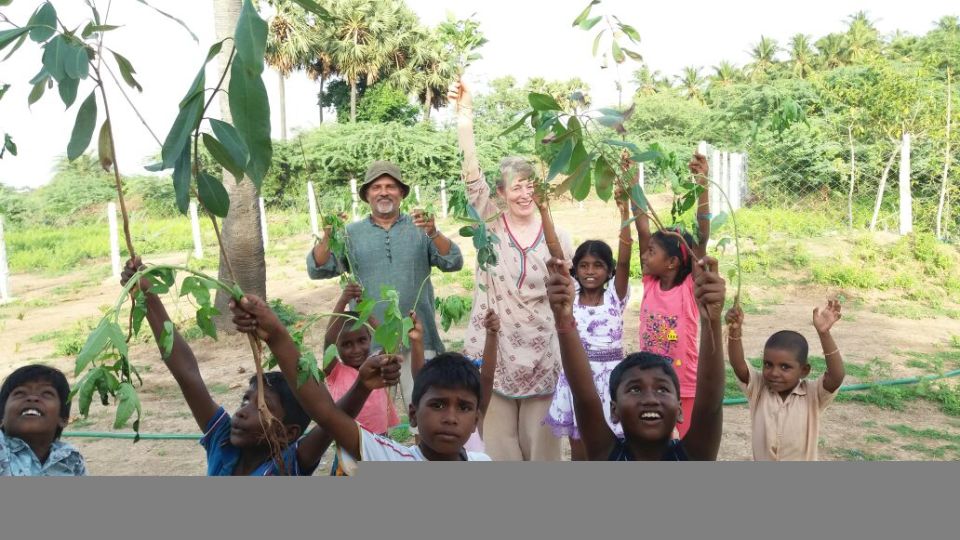
Today, Shobana will plant the peepul tree…
The school is just a container, but learning is happening all the same. The Global Partnership for Education estimates that it costs on average US$ 1.18 per day to educate a child in low and middle income developing countries. This is a small sum, but multiplied by millions of children, several billions are needed annually. Unfortunately, influential people lobby their governments for fighter planes so they can bomb the hell out of their enemies from a safe altitude. Each of these warplanes costs more than the entire school education of several million children. Fortunately now, this village model shows that learning can take place even without a schoolroom and with far less than surmised by the Global Partnership for Education.
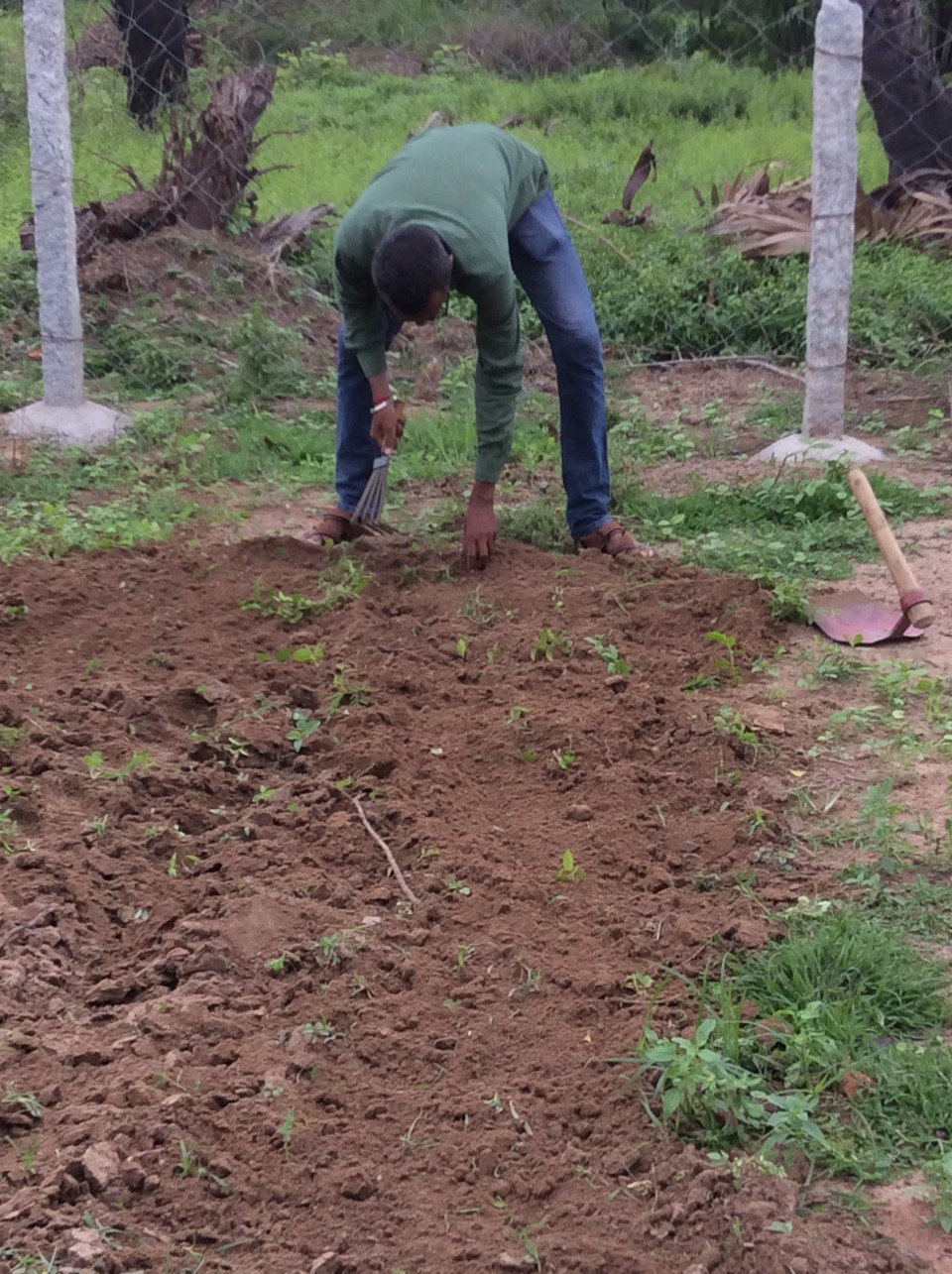
An organic garden, first steps

Putting up the container and a toilet. Composting toilets to follow…

Sukumar with another tree for the school.
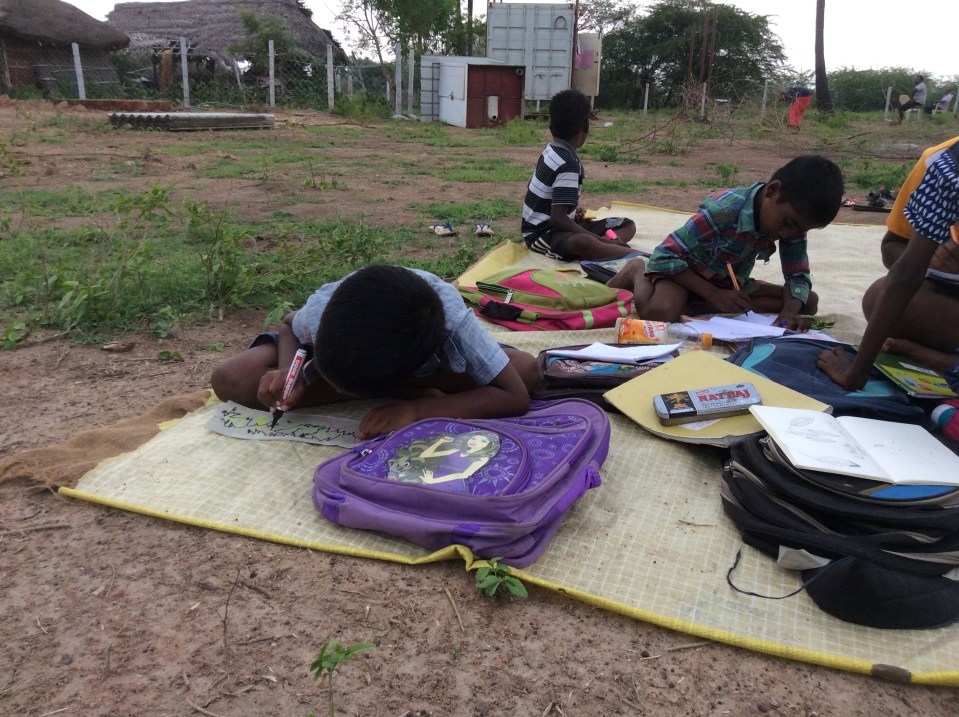
Who needs a container when kids are hungry to learn?

Dhansekar concludes the day’s lessons with a yoga session on a tarpaulin beside the container.
If a modern urbanite, Indian or foreign, were to visit the village today, they might see an ‘underdeveloped’ community. Access roads are poor, electricity is intermittent, and the children learn by rote in public schools staffed by teachers who insist on mindless discipline to the detriment of knowledge acquisition. What we see here is something quite different. We see children hungry to learn, living in a vibrant ecosystem that is intact and flourishing. This is rich farmland. Judging by the abundant birdlife (black drongos, Alexandrine parakeets, green parrots, greater coucal, hoopoes, bulbuls, swifts, spoonbills, several varieties of water birds, mynahs, weaver birds, francolin and several others), nature and man coexist comfortably here. Presumably there are poisonous snakes, scorpions, centipedes and rats in this paradise although we did not see any on our visit. We look forward to spending a lot more time in this village ‘undeveloping ourselves’ before we begin to teach. Or perhaps we have nothing to teach and everything to learn; about how not to confuse development with economic advancement. I fear the world has suffered enough from the latter.
For more by this author, see his Amazon page here or on Google Play
 aviott