Home » Posts tagged 'nature' (Page 3)
Tag Archives: nature
Finding the Right Words
I read a review of a new book called “Translating Happiness” that describes the emotional privileges enjoyed by people who speak more than one language. The idea of multi-lingual people leading richer lives has been expressed in many different ways by thinkers through the ages. A Chinese proverb (there’s a good Chinese proverb for every occasion!) says that Learning is a treasure that will follow its owner everywhere. A Spanish proverb puts it more strongly and says One who knows two languages is worth two. Roger Bacon calls knowing more than one language the gateway to wisdom.

Greenland Image: courtesy npr.org
In Smilla’s Sense of Snow, author Peter Hoeg has the main character explain in the book that the Inuit and most other Greenlanders have a much more nuanced and deeply intuitive feeling for the varied facets of snow and ice than the rest of the world. To prove this, Smilla says there are 28 different words in Greenlandic languages to describe snow in all its moods and varieties. Although the book is a very readable thriller, a scholarly article I found actually lists 128 words for snow in Greenlandic languages. This is surpassed by a BBC news report of a University of Glasgow study that claims the Scots have 421 different words for snow. Picturesque examples include feefle, “to swirl” and snaw-pouther, “fine, driving snow.” Here I see rich pickings for an academic study of differences between Greenlandic and Scottish use of wintry language.
People who live in island nations and speak only one language are often the quickest to admit how culturally impoverished they are. By that measure, the United States is a linguistic island, with the vast majority of its populace militantly indignant when they encounter people who don’t speak English. An otherwise intelligent and sensitive American acquaintance of mine who travelled abroad for the first time recently made so many derogatory remarks about European customs she encountered. What made her so indignant was that certain customs were different from what she was used to at home. Such people, however decent and well-meaning, are like snails carrying their houses on their backs. They need to ditch their shells and learn to travel light.
See this author’s page at Amazon.com to read more of his work
The Woodpecker’s Tongue
I read an interview with Walter Isaacson (author of Steve Jobs’ biography, among other books) the other day. In it, he says: “I’ll just tell you something small. The tongue of a woodpecker is three times longer than the beak. And when the woodpecker hits the bark at ten times the force that would kill a human, the tongue wraps around the brain and cushions it.”
This information was so startling that I had to go and look it up. Sure enough, the description is accurate. Here are two illustrations, courtesy of Pinterest and Twitter, of the woodpecker’s incredibly long tongue and the way it cushions the brain.
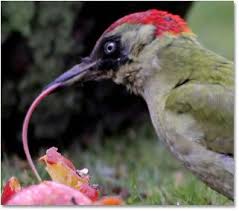
Science has revealed so much of Nature’s secrets. Yet we can be sure that there as many hidden away, waiting to be discovered. Finding this bit of information about the woodpecker’s tongue so close to the beginning of the new year made me wonder what kind of lesson I could learn from it for 2018. Here is an analogy that seems to fit the bill.
We spend increasing amounts of time on social media. Information leaps at us with the rapid fire of a woodpecker’s beak rat-a-tat-ing into a tree. This selective information explosion damages our judgement and impairs our ability to separate fiction from fact. We humans need something to cushion ourselves from the damaging impact of a continuous stream of media inputs. In our case, the woodpecker’s tongue equivalent might be enhanced interactions with the real world; talking to people around us, to family, friends, acquaintances, and people in the society we live in.
I’ve spent a great deal of time on Facebook & Co. in recent years, assuming that these interactions were somehow deepening my ties to the real world. I have undoubtedly benefitted, by being able to keep in touch with friends and relatives living in far-flung corners of the world. Despite these real benefits, the truth has gradually dawned on me that I was becoming more of a consumer and less connected to the world. The perfidious effect of social media was perfectly illustrated a few years ago when a friend came to stay for a while with his wife and new-born baby. The friend was a keen amateur photographer, as eager to record every minute of his son’s life as any first-time parent. The Eureka moment came to me when I saw he was so busy taking and uploading photographs to Facebook that he was totally oblivious to the infant screaming for a long overdue nappy change. The screaming stopped only when the harried mother emerged from the kitchen to soothe and change the baby. This is the point when we need self-awareness to wrap around the endorphin-craving pre-frontal cortexes of our brain as tightly as the woodpecker’s tongue to guide us out of harm’s way.
The Power of Place: Why we travel

Hermitage Museum. Image: courtesy travelrussia.com
On a visit to St. Petersburg many years ago (for an idea when, it was called Leningrad then), emerging from the Hermitage Museum and Winter Palace, eyes dazed and unfocussed after marvelling for two days at the sheer wealth of the collections, our official tour guide told us something that stayed in my mind ever since. You know, she said, St. Petersburg was always much more than the home of royalty. It was a natural home of the arts and literature. For example, after WWII and the total destruction of the city, with more than three million of its population either dead or displaced, the city was like a living tomb. Within a few years, the city was repopulated by uneducated peasants from the surrounding countryside. These new immigrants succumbed to the magic of the city and within a generation, Leningrad/St. Petersburg became a city of the arts and culture once more.
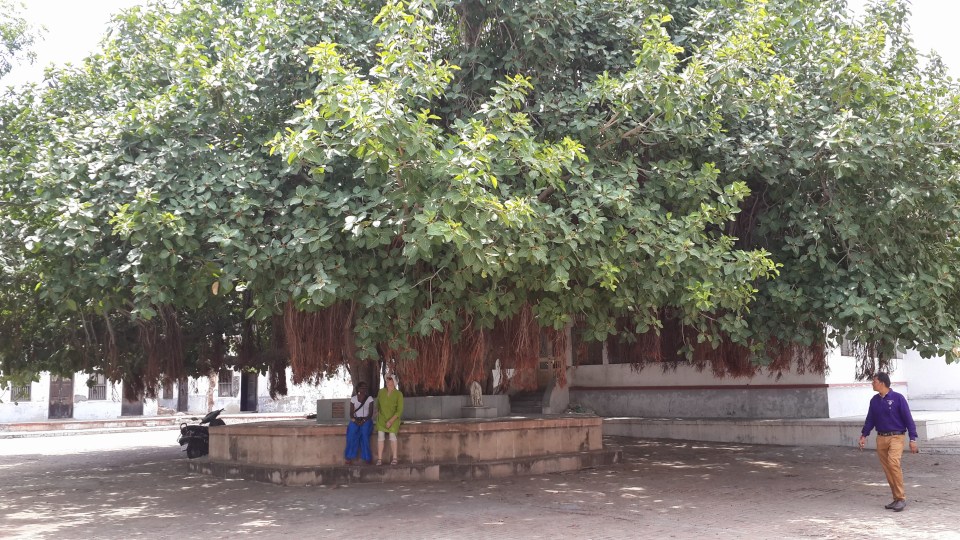
Sacred grove around an Indian temple
I can’t judge the accuracy of the tour guide’s information, but I understood what she meant. There are points on earth that are imbued with a power of place that are impossible to ignore. For example, I have walked through an ancient grove in southern Sweden and felt a certain reverence in that hushed spot. In India, temples are often perched on top of hills or mountains and exude a sense of spiritual calm. In northern Bali, near the small town of Bubunan, there is a spot near the sea where a a group of Tibetan monks suddenly turned up one day. When asked what they were doing, they said they were simply visiting an important location, where several powerful spiritual meridians intersect. The spot where they stood to meditate was a rock on an escarpment that looked out onto a beach with a curving shoreline. It was undoubtedly a picturesque and peaceful spot.
Perhaps this is why we travel. In search of our place in the greater scheme of things. This, and the unseen pull of far off places, is what has made the tourism industry one of the largest on the planet, with an annual turnover of eight trillion dollars. Food for thought, and a reminder to tread lightly as we travel.
Sophia – Elon Musk’s fears come to life?
Elon Musk and Stephen Hawking have often said that AI is the greatest threat facing the world today. Here’s maybe an early example of what they worry about. Meet Sophia, the first draft of an uncannily human-like creation.
Drinking Cocanutta Wataa–a refreshing trend
As temperatures rise around the world (think summer, think global warming!), lip-smacking ads of frosted glasses of beer, cola or other carbonated drinks appear on billboards and media screens. Plying Indian roads on a motorbike in the approaching summer of 2017 has shown one refreshing (pardon the pun) trend in the soft drinks world. Roadside stalls increasingly tend to offer locally sourced products (fresh tender coconut, palm fruit, sugar cane juice, watermelon, lassi, buttermilk and various local juices) rather than the ubiquitous glass or plastic bottled offerings of multinationals. All this without the benefit of national ad campaigns. Environmentalists at work, common sense, or simple economics?
As Harry Belafonte famously sang, it’s good for your daughter too.
Saving the World, One Turtle at a time.
Statement: Olive Ridley turtles are plentiful, so they are in no danger of extinction.
Answer: Wrong. Human beings are even more plentiful, and their habitations are encroaching on the Ridleys’ nesting sites at an alarming rate.
The SSTCN* is a voluntary group that has been patrolling the beaches of Chennai, every night for four months of the year, from January to April, since 1987. That’s a lot of dedicated patrolling by a group that’s entirely voluntary and has been largely self-funded since its inception. Thanks to nature-film series like National Geographic and Universum, the life cycle of sea turtles species and their general pattern of behaviour is widely known. The adult females mate in shallow waters or out in the ocean, then stagger ashore a few weeks later to lay their clutch of eggs in pits scooped out of the sand with their flippers. They cover the eggs with sand after laying (anything from 50 to 200 hundred eggs), using their flippers to wipe out traces of the nesting site. Conservationists use these telltale smooth patches of loose sand as an indicator that there is a nest underneath.

Ridley sea turtle: Image courtesy National Geographic
The eggs hatch under the sand in around 45 days. And then another miracle occurs. The newly hatched turtles emerge from their nest and fight their way to the sea, guided by the phosphorescence of the breaking waves in faint starlight or moonlit nights. They struggle out through undulations in the sand and disappear into the waves, where perhaps one in a hundred will survive to become adults. The sand temperature at the time of hatching determines the sex of the baby turtles, with relatively cool temperatures producing males, and females emerging as temperatures rise.
Several of the students who volunteered for turtle walks in the past have gone on to play significant roles in various national and international environmental organizations. The current group of volunteers has significantly improved contacts with local fisherman. Several fishermen, formerly enthusiastic poachers, are now supporters of the conservation network. These fishermen can play a significant role in the future of conservation efforts. As human dwellings increasingly encroach close to the shoreline, the turtle hatchlings face another hazard. Lured like teenagers by the bright lights of the city, they head for the houses, away from the sea. For this reason, the volunteers patrol the beaches every night, collecting freshly laid eggs and taking them to hatcheries. Six to seven weeks later, the hatchlings are brought to the same stretch of shore and released, guided safely to the sea by the light of volunteers’ torches.
Once in the water, the young turtles face the hazards that nature has designed for them. An estimated one or two in a thousand survive, grow to adulthood, and emerge from the sea a decade later, to lay their clutch of a hundred eggs or more on the very same beach from which they entered the sea. This is a process that has gone on for a million years, and it is in the interest of mankind that they can continue to do this for centuries to come. In myriad complex ways, the future of humanity might depend on it.
*SSTCN – Students Sea Turtle Conservation Network. See their website at https://sstcn.org/ if you’d like to know more about their great work.
The Ineffable Sadness of Neutered Cats
The sugar cubes floated in my thickly creamed coffee before slowly dropping out of sight. This was a sequel to views of Klimt at the Upper Belvedere in Vienna, itself a sequel to a memorable week exploring inner landscapes of the soul.
There were two of them. They led happy lives, replete with feline fulfilment. They loved to purr and cuddle in bed with their humans in the night. They ate well. Always had food and drink served to them. They never went hungry. They seemed at peace with themselves and their world. There were vestiges of wildness in them still to remind you that, despite centuries of domestication, they were their own creatures, creatures of the wild; individuals. And yet, there was an edge missing. You could see it in their eyes. It was a mixture of sadness and resignation. I came to recognize this glance in the cats and my heart went out for what I had done to them. Years later, I saw a video of a woman who could communicate with animals including big cats, the world’s apex predators, and interpret them in anthropomorphic terms. This video changed my thinking about domestic pets. Having been sensitized by this new thinking, I began to see all the subtle forms of exclusion that are practised in societies around the world.
Most ancient cultures respected the natural world, seeing humans as an intrinsic part of it. At sometime in our collective past, we began to call ourselves civilized and parted ways intellectually with nature. This paid off for a few centuries, roughly until the end of the twentieth century. René Descartes famously declared humans to be the thinking species in the sixteenth century. We think, therefore we are (…superior to all other forms of life?). Science and technology have tamed the earth, have subdued nature to such an extent that, like in the Tweety and Sylvester cartoons, we are in danger of cutting off the branch on which we perch. Of course we don’t think of ourselves as prejudiced, but every time we turn away from a conversation with an unfamiliar “other” we practise a form of discrimination just the same. I noticed with a shock of recognition, the ‘sadness of cats’ on the faces of people in the news; in the gaze of a young woman going through the shipwreck of her marriage; in the face of a man devastated by war and conflict; in the catatonic resignation of a child dragged from the rubble of a bombed home. Where does all this violence begin?
It begins with the way we treat all sentient beings, not just our own kind. Gandhi allegedly said, more than a half century ago, the greatness of a nation and its moral progress can be judged by the way its animals are treated. Anthropologist Michael Thompson, in his 1979 book Rubbish Theory, explores the rise and fall in value of objects, depending on scarcity or abundance. He uses bakelite ashtrays as an example in the book. This early synthetic product of the 1930s was sold cheap, and now have become collectors items. Following from Rubbish Theory we should infer that, since animals in the wild have become a scarce commodity, we should value them highly. Conversely, with world population close to seven and a half billion, human life is cheap. Perhaps this is what we are seeing in international politics these days. But here is the paradox of human existence. If we subscribe solely to economic logic, we deny our humanity and diminish ourselves, sowing the seeds for our own ultimate destruction.
Rulers, kings and presidents come and go, but the earth will survive. However, humankind will not survive, if we continue to pursue only economic growth and ignore the unmistakeable signals that the planet continually sends us. Many of our leaders ignore it. It’s time to change those leaders. And here is another paradox of politics. We can change these leaders only if we change ourselves first.
For more by this author, see the links to other work on his Amazon page, or the Google Play Store
Palmyra tree – Borassus flabellifer
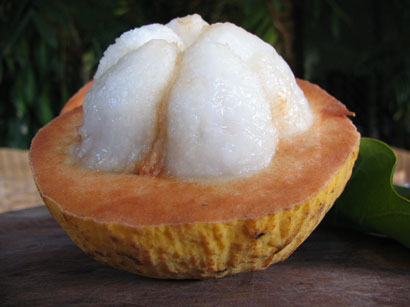
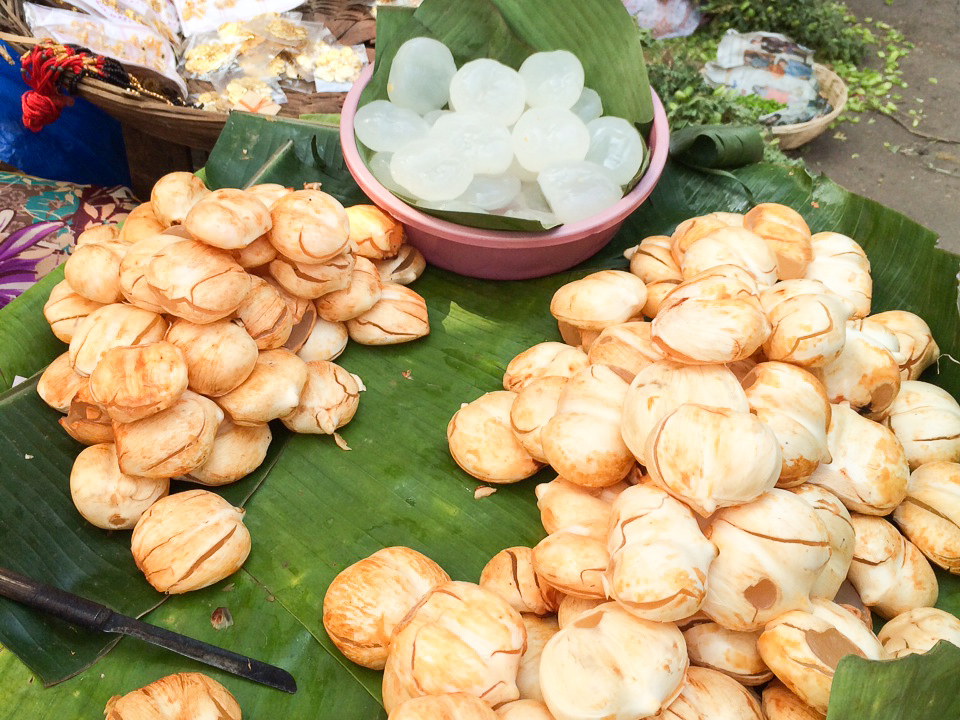
Palm Fruit Image: courtesy Master Chef Floyd Cardoz
There are so many different kinds of palm trees that it’s difficult to distinguish between the good guys and the bad guys in the palm tree story. By bad guys, I mean only one, the oil palm. Oil palm plantations have been blamed for extensive tropical deforestation in Indonesia and Malaysia, as well as for habitat loss of critically endangered species like the Orang Utan and the Sumatran Tiger. Blame the producers by all means, but don’t forget to blame the consumers as well. And that means us, the consumers of so many products that have palm oil as an ingredient. These include soaps, washing powder, cooking oil, butter substitutes, pastry dough, many baked goods, and most recently, biodiesel. Anyway, this posting is in praise of the lesser known palmyra palm, one of more than three hundred varieties of palm tree. Here’s a useful website with illustrations of 30 varieties.
The palmyra palm tree and its delicious fruit remain relatively unknown worldwide despite its wide use in southeast Asia, especially in India and Cambodia. In India, it is the state tree of Tamil Nad. Palmyra jaggery is a recommended sweetener in Ayurvedic medicine. Modern tests show it has a low glycemic index of 40 (as opposed to 100 for refined white sugar) in addition to containing a range of B-complex vitamins. There are over 800 listed uses for the palmyra tree. Every part of the tree can be used for a range of foods, timber and household products. Palm tree kernels, pictured above, are like large, sweet water chestnuts and very refreshing summer snacks, rich in minerals. In addition, its leaves can be used as thatch, to weave baskets or mats. Centuries ago, palm leaves were used to write on. The wood provides excellent construction material.

African palmyra palms. Image courtesy Wikimedia
Most people, myself included, think of coconuts or dates when palm trees are mentioned. The palmyra palm is a neglected cousin that is just as useful and deserves to be more widely known.
For more by this writer, see his Amazon page here or the Google Play store
South Indian Temples as Guardians of Nature
I was talking to the knowledgeable Tamil Professor about the preservation of traditional knowledge of medicinal plants in south India in general and Tamil Nad in particular. One reason, he explains to me, is that temples have traditionally been the protectors and benefactors of trees in a locality. Every temple has a “Sthala Vriksham” or sacred plant for that temple. A recently published book (in Tamil) gives the local name, the botanical name, and the medicinal value, of nearly 60 temple plants in the state. For example, Patala – Stereospermum sauvealens, also known as Rose Flower Fragrant in English, Padari in Tamil and Podal, Parul, Padala… in various Indian languages is used to treat snake and scorpion bites and also neurological and hepatological conditions. Local names of other sacred plants are Poolai (Aerva Lenatea, or mountain knotgrass), Vanni (Prosopis spicigera, a plant of the pea family that is related to honey mesquite), Thillai (Excoecaria Agallocha, a mangrove species). Mangroves of Excoecaria Agallocha surround the ancient Thillai Chidambaram temple in Tamil Nadu.

Prosopis spicigera, Shami tree, ayurvedic treatment for intestinal parasitic worms…

Aerva Lanatea, used to treat kidney stones, Alzheimer, etc.

Thillai Chidambaram temple. Image courtesy Wikipedia
As someone who is allergic to the shrill lessons preached by adherents of some religions, it is very refreshing, in this ecologically endangered world, to see the practical and common-sense benefits of devotion.
For more by this author, see his Amazon page here or on Google Play
Putting Methuselah in the Shade – World’s Oldest Trees
Ever since I first read Roald Dahl’s Charlie and the Great Glass Elevator as a bedtime story to my daughter nearly two decades ago, I’ve always thought of the Bristlecone Pine that grows somewhere in Nevada as the oldest tree in the world. In the story, Willy Wonka tells the boy Charlie that the oldest living thing in the world is this pine tree. Willy Wonka says the tree is more than 4,000 years old, but Wikipedia shows a photograph of a suitably gnarled tree and states it is actually 5,065 years old.

Bristlecone Pine in Ancient Bristlecone Pine Forest
Of course there are other contenders like the magnificent Hundred Horse chestnut (Castagno dei Cento Cavalli) in Sicily, reputedly 2-4,000 years old, and other Bristlecone pines from the same forest. Apparently there is yet another that is claimed to be (an impossible-sounding) one million years old. This is the Pando, in Utah, a collective of aspen tree trunks, all genetically linked by a common root system that has apparently survived a million years.
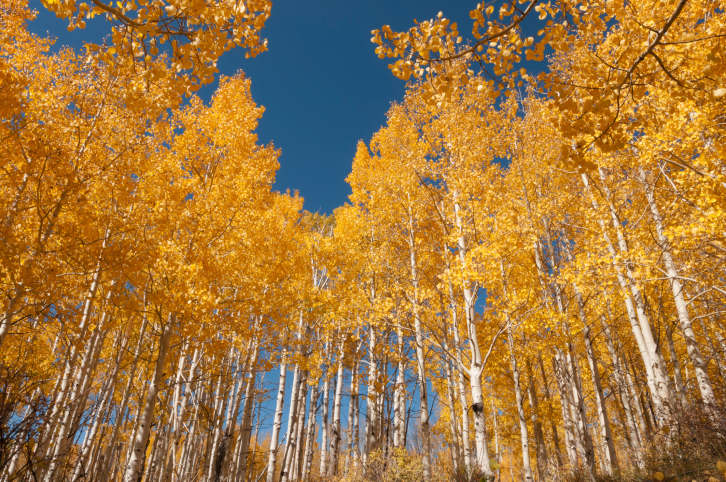
The Stu-pandous Pando trees of Utah, with a shared common root
To me, this sounds like cheating, even if the root system’s age is impressive by any standards. Not to be outdone, the magazine Nature published an article in 2003 that claims the gingko tree is a living fossil. Recent finds show that gingko species have remained unchanged for the past 51 million years and show remarkable similarity to species that lived during the Jurassic period, hobnobbing with dinosaurs, 170 million years ago.
For more by this author, see his Amazon page here.
 aviott