Home » history (Page 5)
Category Archives: history
A lake palace, and a lake of tears
Udaipur is one of the must-see cities of Rajasthan, for its iconic Lake Palace situated in the middle of Lake Pichola with its grand series of stone and marble palaces that have been successively added along the shores over centuries. Udaipur’s royals belong to the longest unbroken line of rulers in the world, having endured for more than a millennium.

One of the world’s longest ruling dynasties, 1400 years
The present-day city was founded in the 1530s at around 1000 feet above sea level, close to the cooling influence of the Aravalli range of hills. The aboriginal hill tribes of the Aravallis, the Bhils, were traditionally self-sufficient hunter-gatherers and good archers. Bhil tribesmen assisted Rajput troops in their periodic wars against Mughal armies, and for this reason, the Mewar coat-of-arms portrays both a tribal armed with bow and arrows and a Rajput warrior flanking the shield with a fortress in the middle.
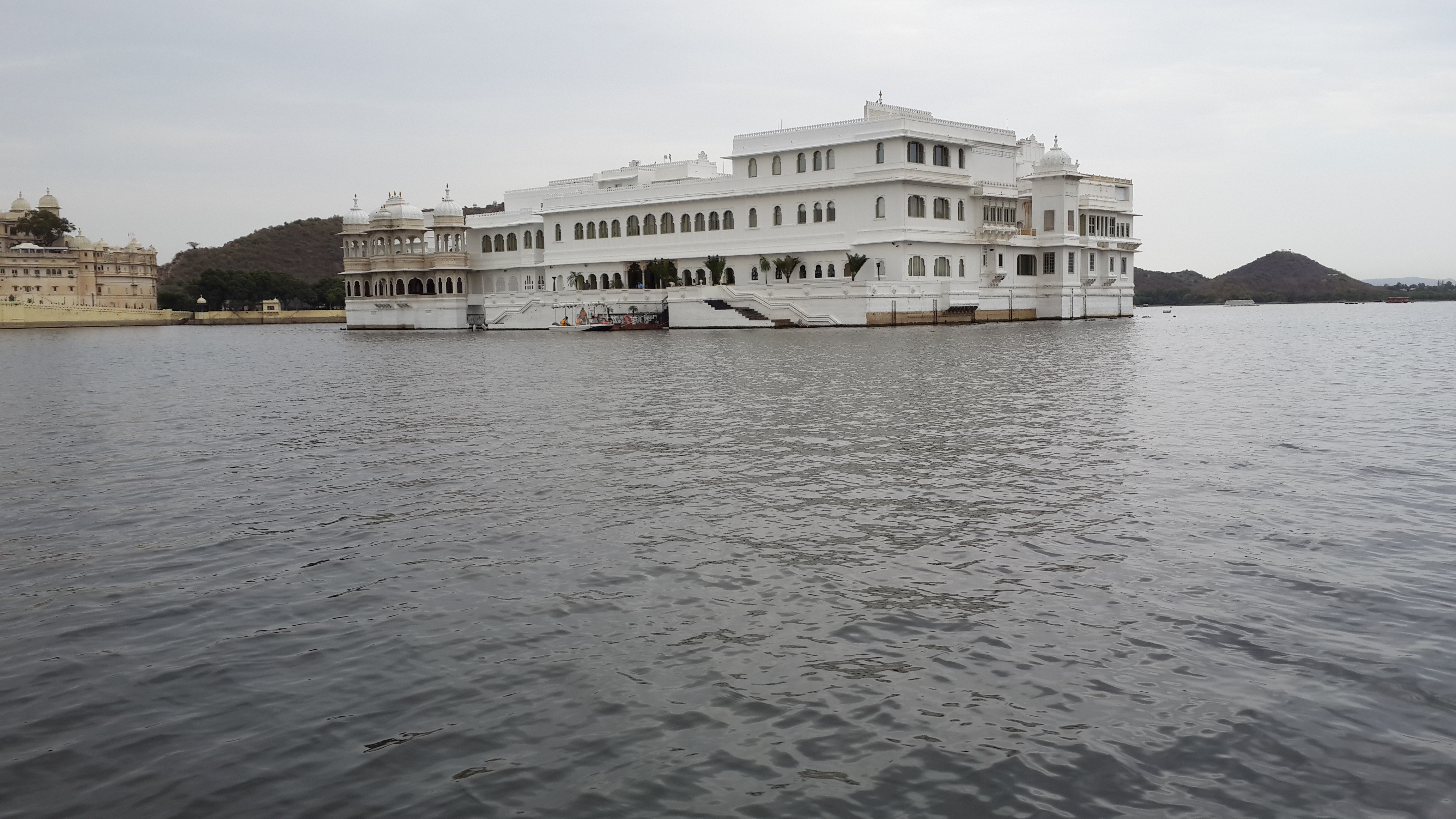
A wedding cake of a hotel on Lake Pichola
The lake dries out occasionally when there is a succession of bad monsoons, but a project is underway to ensure a steady inflow and expand the rainwater harvesting systems that were installed in the palaces from the 17th century onwards.

Nowadays the royal barge is only for decor or the occasional VIP hotel guest.
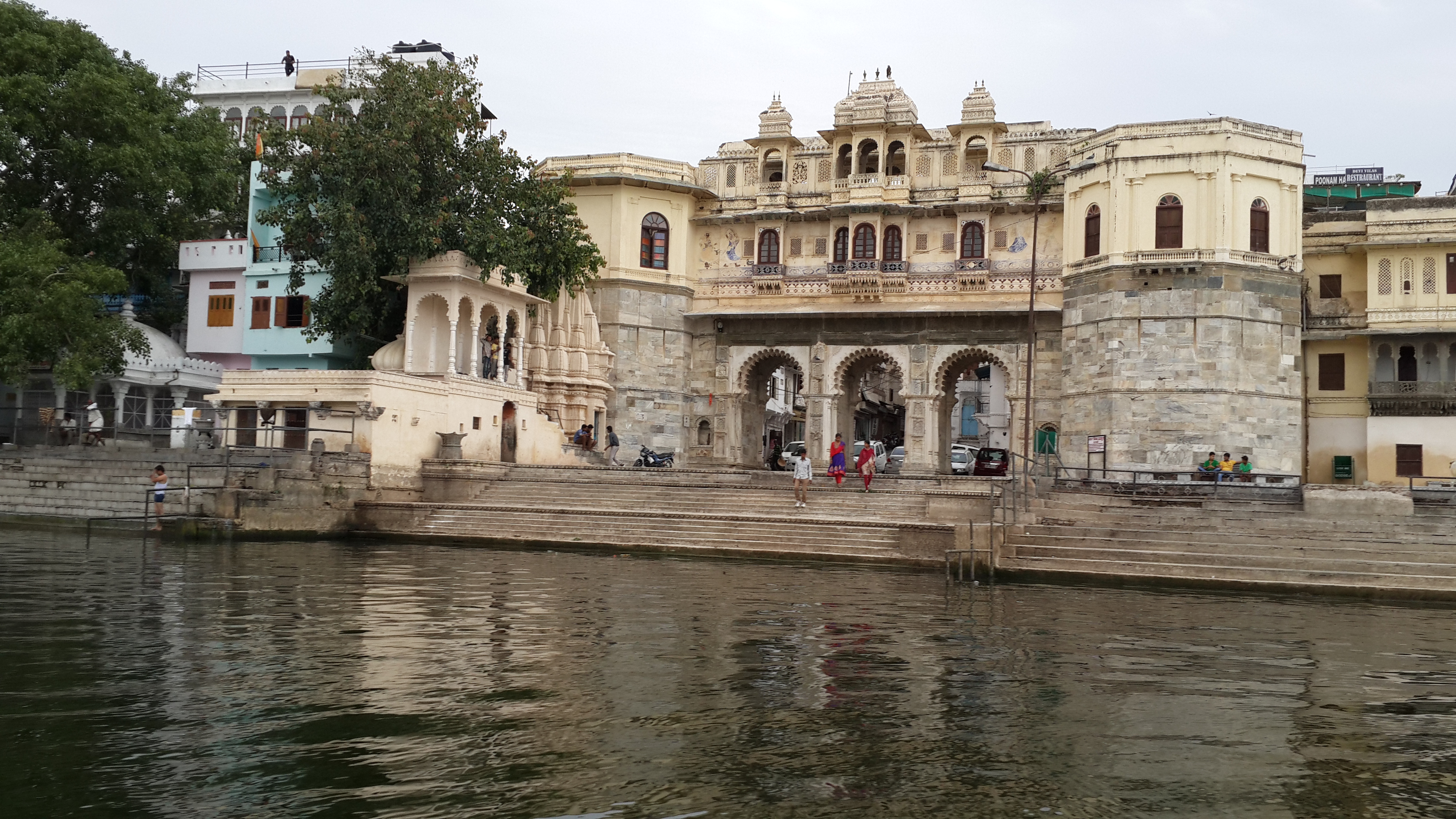

More palaces and bathing ghats line the lakeshore…

…most are hotels.
Pushkar: a holy lake of tears.
Pushkar is one of the holy places for Hindus in India. There is a temple to Brahma in Pushkar, a rarity. There are only six temples dedicated to Brahma worldwide and this is considered the most important. There are several beautiful stories associated with the reasons for Pushkar’s sanctity. One has it that Siva’s wife Sati was insulted by her father (this is a long story in itself, see the URL below for more) and literally burned with shame. Siva was so overcome on hearing of the death of his wife that he wept inconsolably. The pools formed by the tears from his two eyes are the lake at Pushkar and the Katasraj temple lake about 300 kilometers away that lies today in Pakistan’s Punjab province.
There is another story about the reason for Pushkar’s spiritual significance. In this, Brahma saw a demon named Vajranabha killing people, so he killed the demon with a divine lotus flower. In this process, the petals of the lotus flower fell to the earth and formed the lake. Yet another story tells of a mortal, a Rajput king, following a wild boar down to the lake during a hunt. He stopped to quench his thirst and found that dipping his hand in the lake had cured his leukoderma. Whatever the reasons for its perceived sanctity, the town exudes a certain contradictory bustling calm and the lake itself is surrounded by temples and bathing ghats. The biggest attraction for tourists is the annual 5-day camel fair where livestock are bought and sold.
See the stories of Siva and Sati at http://www.swami-krishnananda.org/bhagavata/bhagavata_4.html

Innumerable temples line the lake
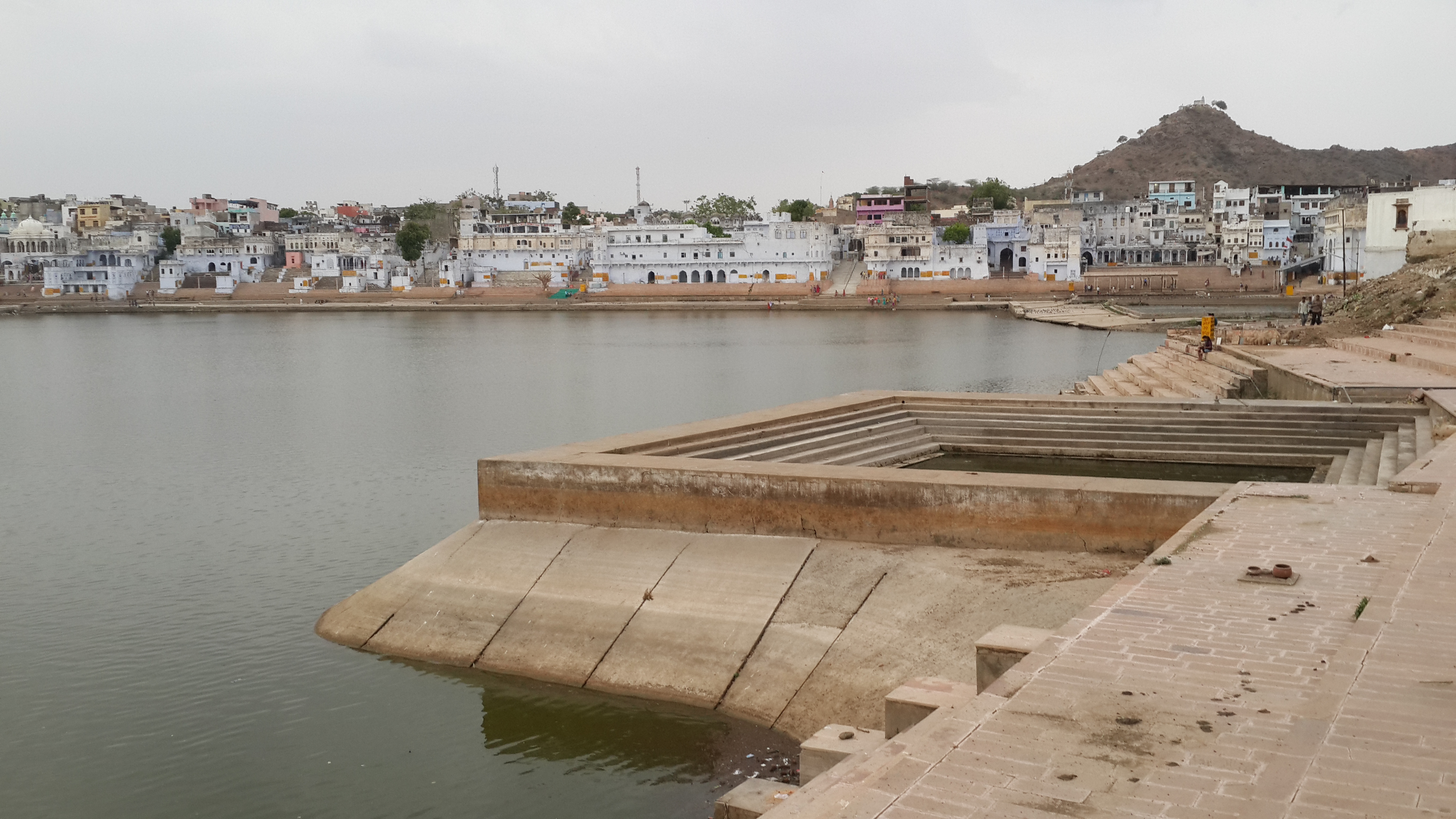
A small sign reminds visitors to remove their shoes while walking around…

…this is holy ground

Blue City: britches, brahmins and battlements
Our tour guide showed us around the impressive Mehrangarh fort and indicated the blue-washed houses in the valley below. All those blue houses, he said, belong to Brahmin families. Further enquiry found many other explanations for the blue coloring, so the jury is out on this one. Other possible reasons: as in the case of imperial yellow in Austrian Habsburg palaces, the color could have been chosen because it was the least expensive. Whatever the real reason, Jodhpur is commonly described as the “blue city” of Rajasthan and, together with Jaisalmer and Jaipur, make up a trio of colored cites in the state. Jaisalmer really is a golden city; golden sands of the Thar desert that spread from its outskirts and the golden sandstone of which the city is built. Seen from the fort, the city of Jodhpur is speckled with blue, the afore-mentioned allegedly brahmin houses. Jaipur is called the pink city mainly because of the iconic Hava Mahal, and because its royal family preferred the colour on all their buildings. But in today’s Jaipur, bustling with handicrafts and industry and bursting at the seams with people, the pink color is lost unless one wanders among the historic buildings and older parts of the city.
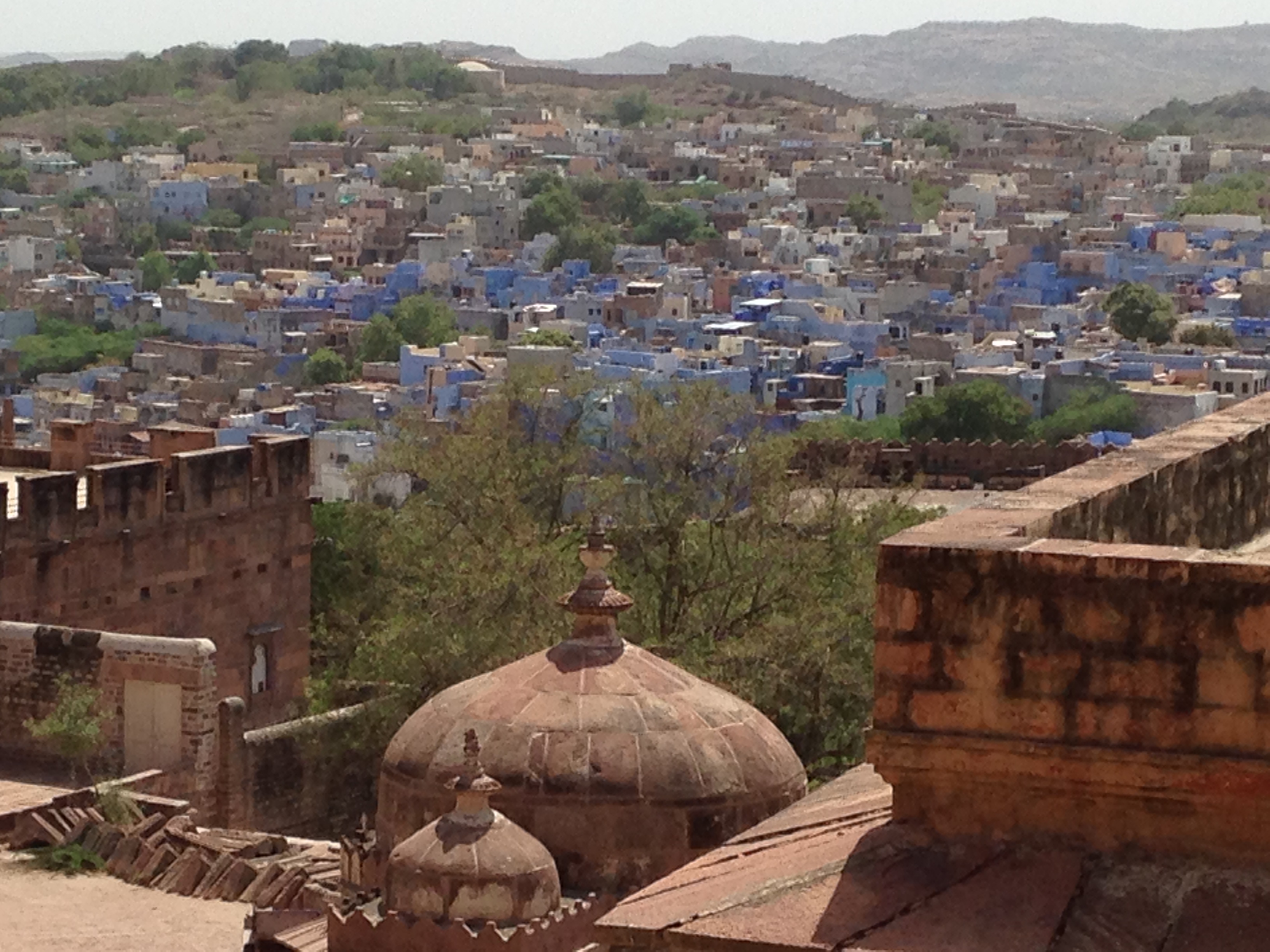
Blue-speckled city of Jodhpur seen from Mehrangarh Fort
Mehrangarh fort in Jodhpur is probably the most impressive in Rajasthan and well worth a visit of 2 or 3 hours (there’s more than three hours worth to see if you can take it in at a stretch), from royal palanquins to a beautiful collection of swords, and finery worn by royalty in centuries past. A tip: the audio guides available in the fort are excellent and provide concise commentary at every important object on display. In addition to its blue-painted houses, the dominating fort, and riding breeches named after the city, Jodhpur was also famed for its Marwari horses. They are a hardy breed with distinctive ears that point towards each other. They have a regal gait and are descended from local ponies interbred with Arabian and Mongolian horses beginning in the 12th century.Close to Jodhpur lies Mihir Garh, a boutique hotel with only 9 rooms that Lonely Planet listed in 2014 as the most unique hotel in the world.
A well-paved road leads from Jodhpur to Udaipur, again a city named after its founder Udai Singh in the 1530s, although this dynasty has ruled in the area for more than a thousand years, and represents the world’s longest unbroken ruling line, from the 9th century to the mid-twentieth. More on Udaipur and Pushkar in the next post.
Stepwells and Johads: Digging into the past
More on Rajasthan. One of the places on this summer’s itinerary was a village called Chand Baori. “Do we really want to go there?” I asked the driver and tour guide. “I’ve never heard of it.” “Very old well, from the 8th century,” he assured me. “If you like we can go.” Which was a roundabout way of saying yes, so we went.
On a trip to the ruins of Hampi (1343 to 1565, capital of the Vijayanagar empire) a year ago, we had seen a 500 year-old stepwell that was a work of art. It had not run dry in living memory and had presumably been in active use by the local populace for more than 5 centuries. Hampi lies in a zone that tends to the semi-arid and receives around 400 mm of rain a year compared to ca. 900 mm for a typical Mediterranean city (in this example Ostia Antica, the harbour city of ancient Rome).

Stepwell – Hampi, North Karnataka State
However, Hampi’s modest rainfall is a veritable flood compared to the sparse annual haul (ca. 200 mm) of the desert area around the flourishing city of Jaisalmer in Rajasthan. Founded in the 12th century, Jaisalmer was an important node in the overland silk route and well connected with Europe. A great deal of knowledge and deep understanding of sustainable living in harsh climates accumulated in this part of the world long before scientific knowledge became codified and PhD’s in hydrology were awarded by the world’s universities.
Anupam Mishra is one of the pioneers of the 20th century revival of ancient water harvesting techniques in Rajasthan and other arid parts of the country. (See a biography here. http://en.wikipedia.org/wiki/Anupam_Mishra ). A quiet Gandhian and a modest man, he is one of the foremost Water Warriors of the world. Anyone who can spare 17 minutes to listen to a witty and humorous TED talk he gave in 2009 is guaranteed enlightenment on the continued relevance of rainwater harvesting in the world today. http://www.ted.com/talks/anupam_mishra_the_ancient_ingenuity_of_water_harvesting
Despite the fierce July heat, our detour to Chand Baori was well worth the effort. The stepwell in the village was more ornate than anything we had seen so far. Much more than being a mere source of water, it was obviously designed as a public meeting place and center for social interaction where one could find cool relief by the water’s edge, two or three stories underground.

Ornate carvings adorn every pillar and statue around the well
Rajendra Singh is another Water Warrior from Rajasthan who has won awards around the world for his work. Nominated by the Guardian newspaper in 2008 as one of the 50 people most likely to save the planet, he trained as a doctor, and was inspired by Gandhian ideals to set up a practice in the remotest desert village he could find. When he got there, literally at the end of the road, he found that what the villagers needed more than medicine was water. http://en.wikipedia.org/wiki/Rajendra_Singh
With no money and only hand tools at his disposal, he began with a few friends to dig out an abandoned “johad,” a traditional water catchment reservoir. The rains came. The johad retained a little water. This was the beginning of a virtuous cycle that was copied by neighbouring villages. In the course of a few years, over 5000 earthen check dams or johads have been built in Rajasthan and neighbouring states of Gujarat, Madhya Pradesh and Andhra with rising water tables as a result everywhere.
Rajendra Singh is now known as the rain man of Rajasthan, having brought water back to more than 1000 villages and for restoring the flow of all five major rivers in the state. In the words of one of my personal heroes, Amory Lovins, quoting Pogo Possum: “We stand here confronted by insurmountable opportunities.”
It is time for the world to grasp them. Click the Follow button below for alerts to forthcoming postings on this blog and find out how people around the world are grasping these opportunities.

Seemingly built for eternity. The well’s depth bears testimony to the long-range vision of its builders
Travels in the Land of Kings
For some people the best journeys are those that take place in the mind. If you have good company and travel in the right frame of mind, an inward transformation occurs with each step and each changing view of the landscape. This was a summer of encounters in Rajasthan that changed the inner landscape of my mind but words are a poor way to show the changes, so I will post a few pictures here instead. This is offered by way of apology that this blog has been inactive for the past six weeks.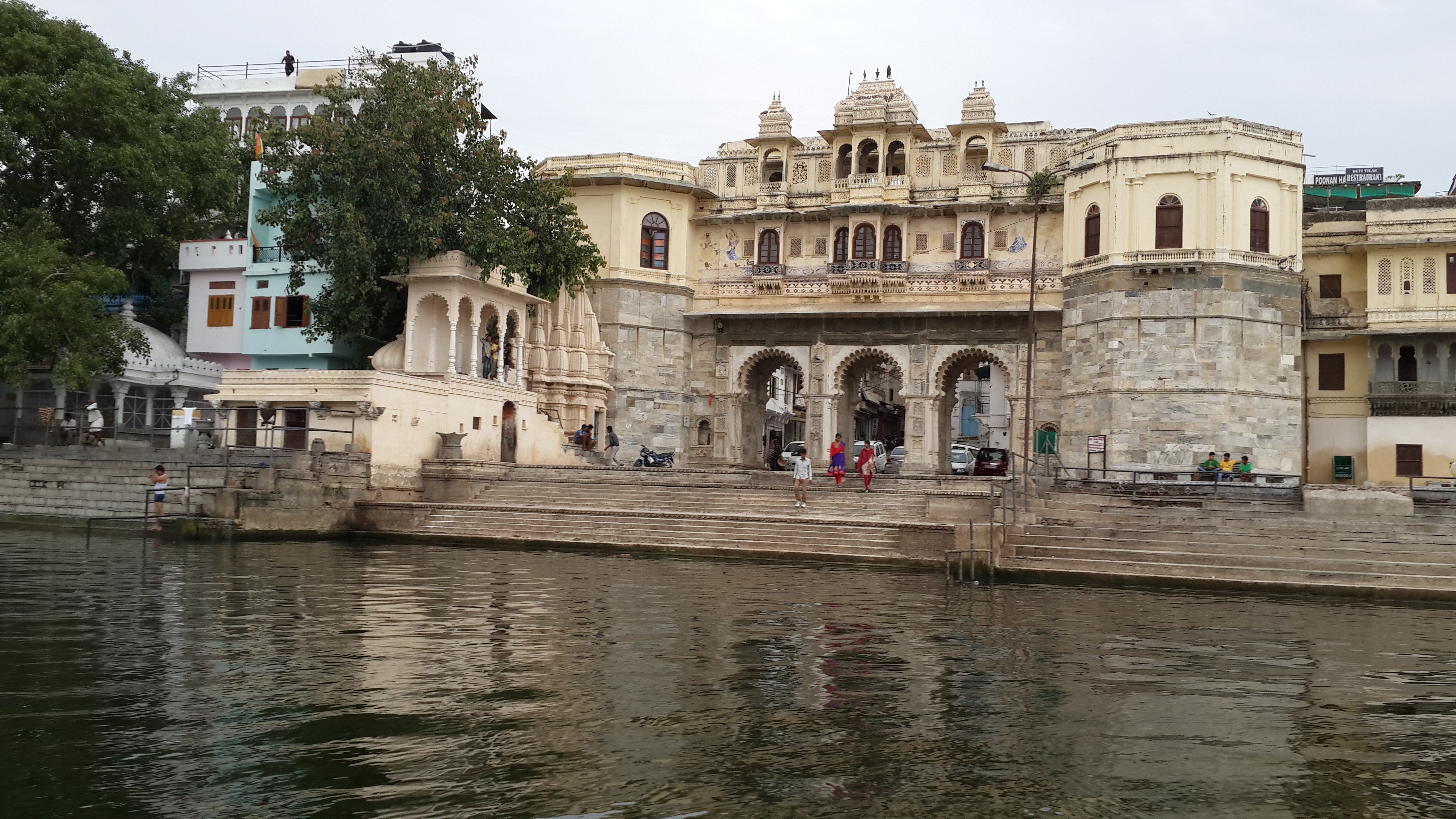
Rajasthan is India’s largest state. At 340,000 sq. km, around the size of Germany, it comprises 10% of India’s territory. The name, literally “the land of kings.” is very apt. There are ruins aplenty and reminders of past glory at every turn. But take a moment to look behind the ruins and there are stories behind every crenellated wall and jharoka.

A jharoka is an overhanging or enclosed balcony as seen in this house facade
This is also a land of stories, a place where myths are born. The stories are a glorious mix of fact and fantasy, like the great Indian epics themselves, the Ramayana and the Mahabharata. More about this land and the stories in the blogs to follow.
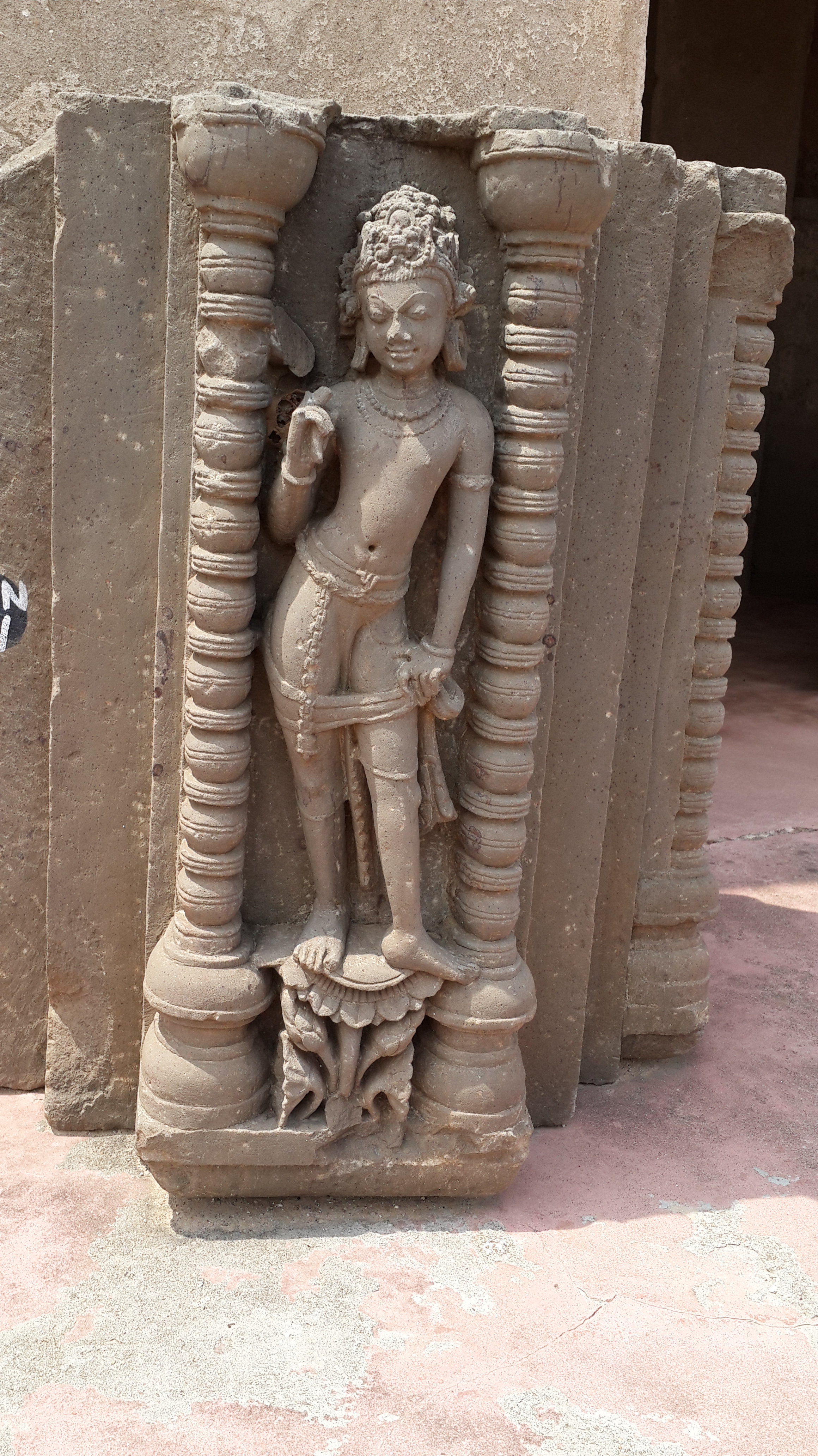
9th Century cool adorns a step-well in Rajasthan
Badami: 7th Century Cave Temples
There are 4 cave temples on a rocky hill above the town, all carved out of the giant rocks that form the hillside. The first two caves are dedicated to Shiva, the third (and grandest) cave is dedicated to Vishnu. Shiva and Vishnu are the second and third members of the Brahmanical Trinity, the first being Brahma, who is traditionally accepted as the creator of the entire universe.

 The fourth cave is a Jain temple, adorned with an image of Mahavira, the last of twenty-four teerthankaras, or spiritual role models in Jainism. Mahavira was born into a royal family around 540 BC somewhere in today’s Bihar state in India and he reputedly lived till around 468 BC. This makes him a contemporary of Gautama, the Buddha, who lived from around 563 to 483 BC according to the latest reckoning of historians and scholars. Further coincidences in their lives abound. They were both born into princely families. They both lived traditional family lives until they left their homes at the ages of 30 (Mahavira) and 29 (Gautama) and wandered in search of spiritual truths. Interestingly, although Gautama was born in today’s Nepal, he reputedly achieved enlightenment while meditating under a pipal tree in Bodh Gaya, in Bihar, where Mahavira was born. The present day state of Bihar is relatively poor, but was a great center of learning and spirituality at the time. One of the earliest universities in the world existed at Nalanda, from the 5th to the 11th century AD.and lies just 90 km from Bodh Gaya. The Badami cave temples are in Karnataka state, not far from the scattered ruins of Vijayanagar in Hampi.
Hampi: On the banks of the Tungabadhra
A city of well-preserved temples, palaces, elephant stables and elevated viewing points; the remains of a wealthy 14th-16th century empire scattered over 350 square kilometers of sparsely populated countryside; the vibrant Virupaksha temple, still being used and worshipped in by thousands every year. All this lies on the banks of the Tungabhadra river that flows, deceptively serene, nearby. Swimming in the still flowing waters is strongly discouraged by large signs that warn of treacherous whirlpools and undertows caused by the rocks in the water. The signs forget to mention a further disincentive, the occasional crocodile that floats sluggishly by.
Domingo Paes was a Portuguese traveller who visited the Vijayanagara Empire around the year 1520.
About the ports under the rule of Vijayanagara, Paes writes: “The said kingdom has many places on the coast of India; they are seaports with which we are at peace, and in some of them we have factories, namely, Amcola, Mirgeo, Honor, Batecalla, Mamgalor, Bracalor, and Bacanor.
Writing about the irrigation, “The land has plenty of rice and Indian-corn, grains, beans, and other kind of crops which are not sown in our parts; also an infinity of cotton. Of the grains there is a great quantity, because, besides being used as food for men, it is also used for horses, since there is no other kind of barley; and this country has also much wheat, and that good. This country wants water because it is very great and has few streams; they make lakes in which water collects when it rains, and thereby they maintain themselves.”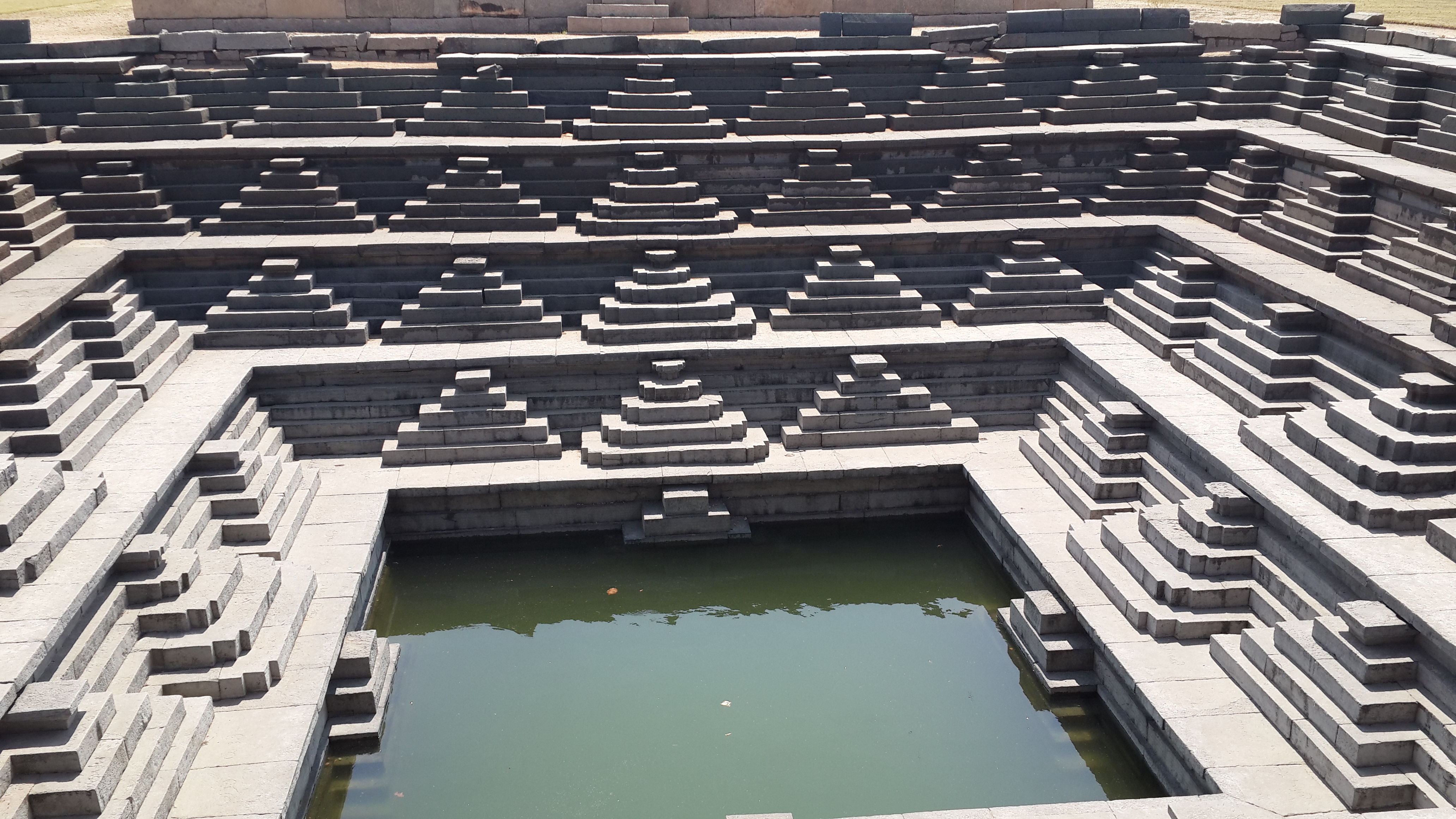
About the marketplace, he writes “Going forward, you have a broad and beautiful street, full of rows of fine houses and streets of the sort I have described, and it is to be understood that the houses belong to men rich enough to afford such. In this street live many merchants, and there you will find all sorts of rubies, and diamonds, and emeralds, and pearls, and seed-pearls, and cloths, and every other sort of thing there is on earth and that you may wish to buy. Then you have there every evening a fair where they sell many common horses and nags, and also many citrons, and limes, and oranges, and grapes, and every other kind of garden stuff, and wood; you have all in this street.”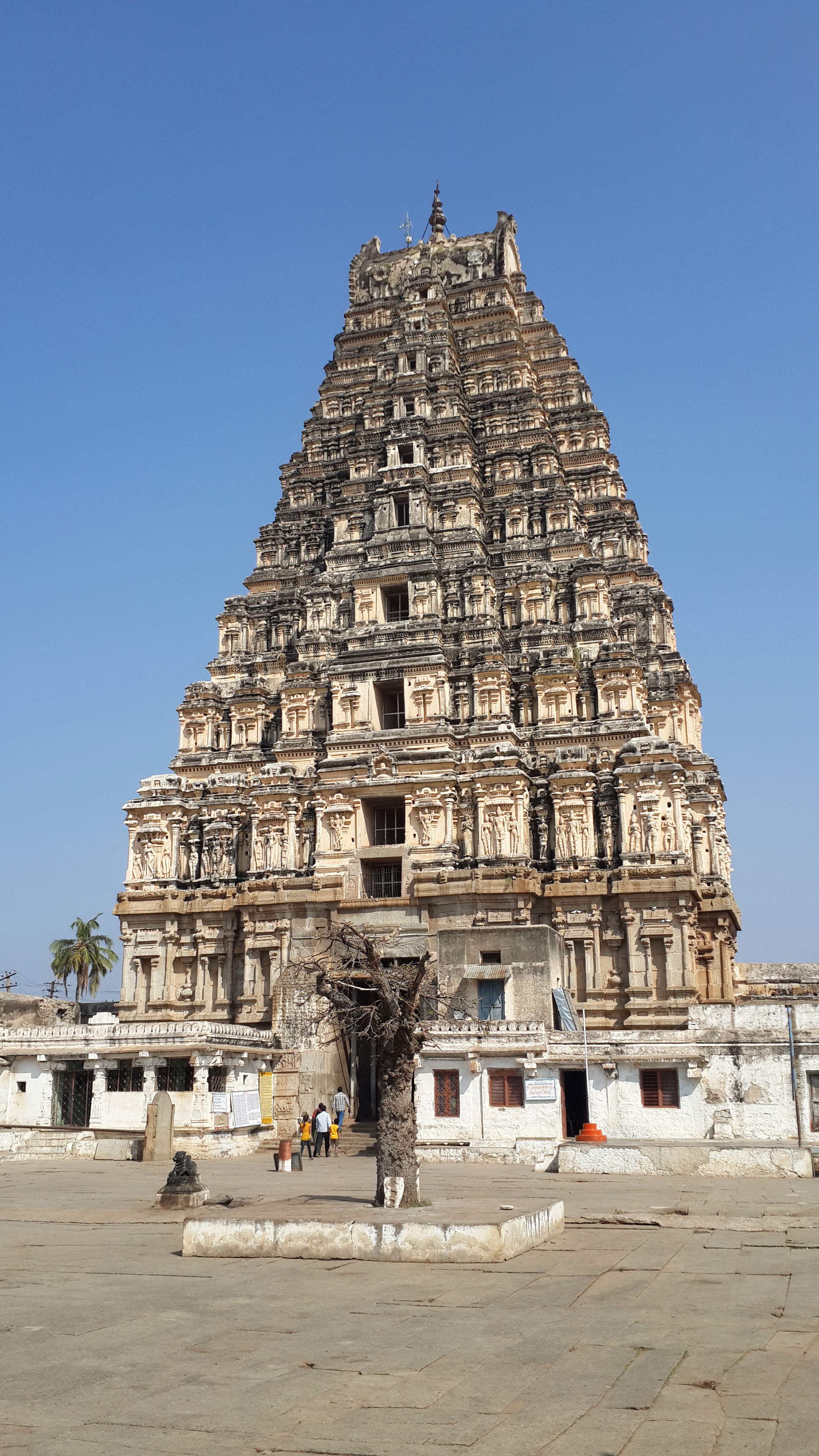
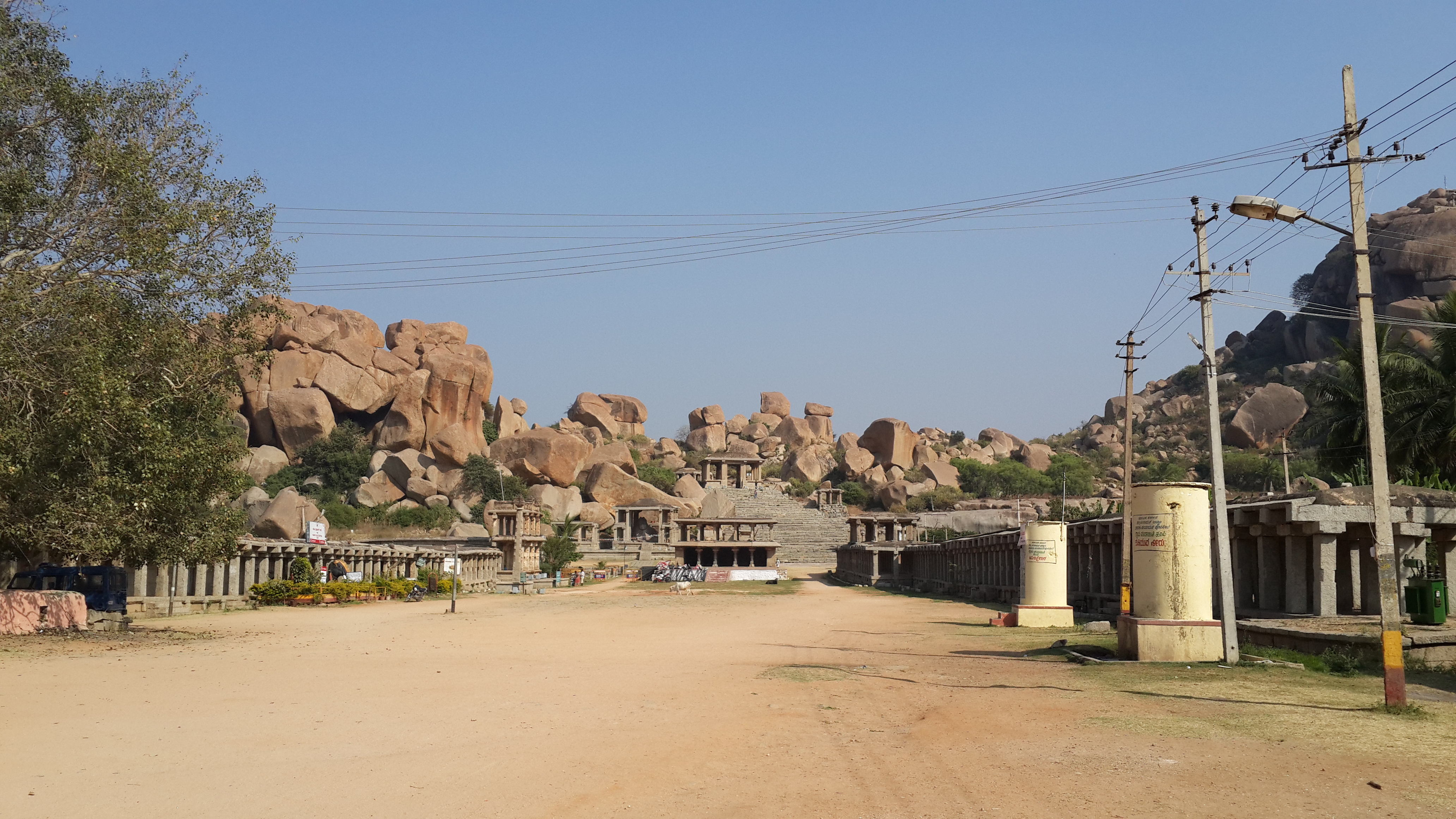 About the city “The size of this city I do not write here, because it cannot all be seen from any one spot, but I climbed a hill whence I could see a great part of it; I could not see it all because it lies between several ranges of hills. What I saw from thence seemed to me as large as Rome, and very beautiful to the sight; there are many groves of trees within it, in the gardens of the houses, and many conduits of water which flow into the midst of it, and in places there are lakes; and the king has close to his palace a palm-grove and other rich-bearing fruit-trees.”
“This is the best provided city in the world, and is stocked with provisions such as rice, wheat, grains, Indian-corn, and a certain amount of barley and beans, MOONG, pulses, horse-gram, and many other seeds which grow in this country which are the food of the people, and there is large store of these and very cheap; but wheat is not so common as the other grains, since no one eats it except the Moors.”
Hampi’s ruins are today a UNESCO World Heritage site and well worth a visit. It might be best to reserve 2 or 3 days for the visit, because of the extent of the site, the magic of the rocky landscape, and the many beautiful views along the river. There is also a sloth bear sanctuary nearby. Coracles and small boats are available for tourists who wish to cross the river to see the ruins on the far side.
Sravanabelagola: Stairway to Heaven
Ask any mountain climber why they climb mountains and there is often a touch of the mystic in their replies. Although their replies might be couched in intellectual terms, or even though they might write whole books to explain why, the reason can often be condensed into a short sentence; to be closer to God; to feel an overwhelming sense of peace; to transcend the self for a brief moment,or; it’s simply out of this world.
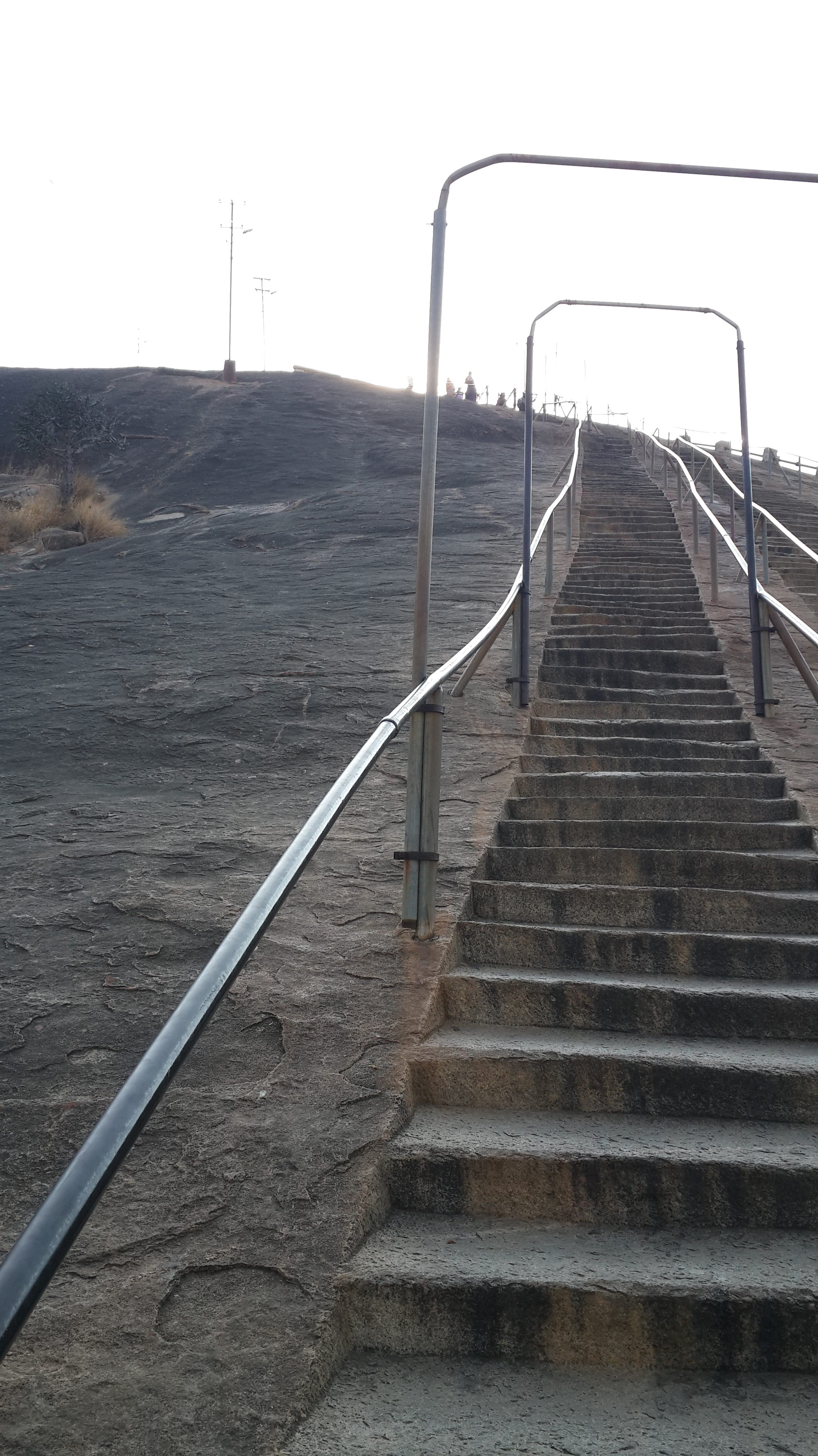 The impulse is an ancient one. Emperor Chandragupta Maurya is said to have meditated here after abdicating the throne in 298 BC. Sravanabelagola, the white pond of the Sravana (the colossal monolithic statue on the hilltop), is a site that exudes an undoubted sense of peace and sanctity, some of it induced no doubt by the need to rest after the strenuous climb to the top.
 Various inscriptions have been found at this site and are dated from 600 to 1800. The statue itself was erected around 981 AD. Some of these inscriptions attest to the rise and power of a succession of regional empires, including that of the Vijayanagar kings who ruled in nearby Hampi from around the 1300s to mid-1500s. More about Hampi in the next post.
 aviott